
Some parts of treatment are easier to understand once you step outside the usual setting. Equine therapy gives clients a chance to slow down, pay attention, and work through important treatment themes in a different environment.
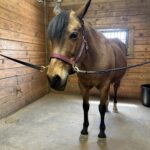
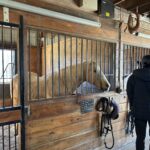
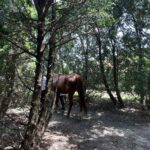
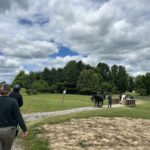
At TAL Behavioral Health, equine therapy (also known as horse therapy) is one of the experiential therapy modalities incorporated into our Mental Health Day Treatment Program. Offered through our partnership with Fieldstone Farms Therapeutic Riding Center in Chagrin Falls, sessions take place in Fieldstone Farms’ updated stable and along its walking trails.
Fieldstone Farms Therapeutic Riding Center provides the setting for TAL’s equine therapy programming in Chagrin Falls. Sessions take place in the updated stable and on the walking trails at the facility.
The horses at Fieldstone Farms are an important part of the experience. Some are retired racehorses. Some previously worked as Amish cart horses. One worked as a carriage horse in New York City. Before they are included in therapeutic programming, they go through an extensive training process, a trial period, and an evaluation to determine whether they are a good fit for working with clients.


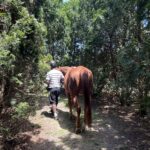
Equine therapy at Tal is not offered as a separate, stand-alone experience. It is built into a larger treatment program and tied directly to the topics clients are already working through in mental health day treatment.
The setting also matters. Through Tal’s partnership with Fieldstone Farms Therapeutic Riding Center in Chagrin Falls, clients take part in sessions in an updated stable and along on-site walking trails rather than in a traditional group room. That change in environment gives clients another way to engage with treatment themes in real time.
The horses themselves are another important part of the program. Fieldstone Farms works with retired horses from a range of backgrounds, including retired racehorses, former Amish cart horses, and a horse that once worked as a carriage horse in New York City. Before they are included in the program, each horse goes through an extensive training process, trial period, and evaluation to determine whether it is well suited to working with clients.
Equine therapy is offered every other week as part of TAL’s eight-week Mental Health Day Treatment Program. It is incorporated into the group curriculum so that each session reinforces topics clients are already exploring in treatment.
Participation is generally required for mental health day treatment clients unless a physician determines that it is not medically appropriate. When space permits, other TAL clients may also be offered an opportunity to participate. Each session can accommodate up to 12 clients.
Clients in the eight-week Mental Health Day Treatment Program typically participate in four equine therapy sessions.
Clients are introduced to the horses, the facility, and the expectations for participating in equine therapy.
By observing how horses interact as a herd, clients explore connection, social support, and the importance of having a supportive community.
Clients explore personal warning signs and patterns that may signal a return of mental health symptoms or other harmful behaviors they are working to change.
The final session focuses on managing stress, remaining present, and practicing mindfulness techniques while interacting with the horses.
A typical session lasts approximately two hours. Activities vary based on the mental health day treatment group’s current topic, but clients may:
No previous experience with horses is required. The program primarily involves guided interaction and groundwork rather than horseback riding.
Equine therapy gives clients a different way to work through themes that often come up in treatment. Because sessions are active, structured, and tied to the mental health day treatment curriculum, clients have a chance to practice skills in real time rather than only talking about them in a group setting.
Depending on the session and the client’s treatment goals, equine therapy may help support work around:
For some clients, horse therapy or equine-assisted therapy can make treatment themes feel more concrete. The experience does not replace other services at Tal, but it can give clients another setting in which to reflect, participate, and connect the work of treatment to what is happening in front of them.
For some clients, equine therapy may also support recovery work alongside mental health treatment. The structure of the sessions can help clients reflect on patterns, warning signs, stress responses, and the role of support systems in their lives.
Because the equine therapy curriculum includes topics such as social support, recognizing warning signs, and coping with stress, it may connect naturally to challenges that affect both mental health and substance use recovery. In this way, the experience can complement the broader treatment work clients are already doing at TAL.
Many clients at TAL are working through more than one challenge at the same time. For clients who are addressing both mental health concerns and substance use, equine therapy may provide another setting in which to practice presence, consistency, self-awareness, and connection.
Rather than replacing other treatment services, equine therapy is incorporated into a broader program of care. It can give clients an additional way to engage with the same themes they are already exploring in treatment, including stress management, behavior patterns, and support from others.
Transportation to and from Fieldstone Farms is provided by TAL Behavioral Health.
Clients should wear closed-toed shoes and clothing appropriate for the weather, as much of the facility is open to outdoor conditions. Boots and jackets are available when needed. Clients must also wear a helmet while inside the stable and working with the horses. Helmets are provided by the facility.
Equine therapy is primarily available to clients enrolled in TAL’s Mental Health Day Treatment Program. Other clients at the facility may be able to participate when space is available.
Clients do not need previous experience with horses. Those who have experienced a serious medical condition or recent significant medical episode may need clearance from a physician before participating. The treatment team and Fieldstone Farms staff can help determine whether participation is appropriate.
TAL Behavioral Health offers equine therapy for eligible clients enrolled in our Mental Health Day Treatment Program in Cleveland, Ohio. Sessions are held at Fieldstone Farms Therapeutic Riding Center in Chagrin Falls, with transportation provided directly from TAL Behavioral Health.
This program may be a convenient option for adults seeking equine therapy in Cleveland and surrounding Northeast Ohio communities. No previous experience with horses is required, and our team can help determine whether equine therapy is appropriate for your treatment needs.
Contact TAL Behavioral Health to learn more about mental health day treatment, equine therapy participation, and starting treatment in Northeast Ohio.
Equine therapy is offered every other week as part of TAL’s eight-week Mental Health Day Treatment Program.
A typical equine therapy session lasts approximately two hours.
Depending on the group’s current topic, clients may groom horses, lead them through the facility or along walking trails, observe herd behavior, participate in groundwork activities, and reflect on how the experience connects to treatment.
No. Previous experience with horses is not required.
Equine therapy may support clients who are also working on substance use recovery, especially when treatment includes themes such as stress management, warning signs, behavior patterns, and social support. At TAL, equine therapy is incorporated into broader programming rather than offered as a separate standalone addiction service.
Yes. TAL Behavioral Health provides transportation to and from Fieldstone Farms.
Clients should wear closed-toed shoes and clothing appropriate for the weather. Boots and jackets are available when needed.
Equine therapy is primarily available to clients in TAL’s Mental Health Day Treatment Program. Other clients may be able to participate when space is available.
Yes. Clients who have experienced a serious medical condition or recent significant medical episode may need physician clearance before participating.
Equine therapy is one part of TAL Behavioral Health’s Mental Health Day Treatment programming. If you have questions about whether this program may be a fit, our team can help you understand the next steps, including program eligibility, transportation, and insurance verification.