
There’s a quiet kind of unraveling that no one sees. The calendar’s full. The emails get answered. The deadlines are met. From the outside, everything looks polished. But when high-achievers step into an intensive outpatient program, we see what they’ve been carrying underneat—and the relief that comes from finally putting it down.
You’ve Been Holding It Together for a Long Time
“I’m not falling apart. I’m just… worn out.”
That’s what we hear most often. It’s not chaos. It’s chronic exhaustion. It’s using alcohol, Adderall, cannabis, or anything else to manage stress, sleep, or shutdown. It’s numbing just enough to stay productive—while inside, the pressure builds.
If you’re the one who gets things done, who shows up, who’s always “fine”—you’re also the one who’s hardest to spot when things aren’t.
High-functioning addiction and burnout don’t wave red flags. They whisper through skipped meals, late-night glasses of wine that turn into bottles, forgotten conversations, and the growing fear that something’s slipping—and you’re the only one who knows.
High-Functioning Doesn’t Mean Thriving
There’s a belief—deep and quiet—that if you’re doing well professionally, personally, publicly, then nothing can really be “wrong.”
That belief keeps people stuck longer than it should.
We’ve worked with lawyers, tech leads, parents, creatives, medical professionals, college students, entrepreneurs. All of them came in saying some version of:
“I haven’t hit bottom. But I can feel one coming.”
An intensive outpatient program is not for people who’ve failed. It’s for people who are tired of holding their breath. It’s for people who want to stay functioning—without hiding or hurting in the process.
The Shift from “Performing” to “Participating”
Early in IOP, high-functioning clients often default to what they know: performance. They’re on time. They participate. They reflect. They try to “get it right.” It’s admirable—and it’s also armor.
But therapy isn’t a test. Healing doesn’t grade on a curve.
One of the core shifts we support is helping people feel safe enough to stop performing and start participating—for real. That means:
- Admitting when you’re tired instead of powering through
- Saying “I don’t know” without shame
- Letting people see you without the polish
It’s not about losing your edge. It’s about reclaiming your center.
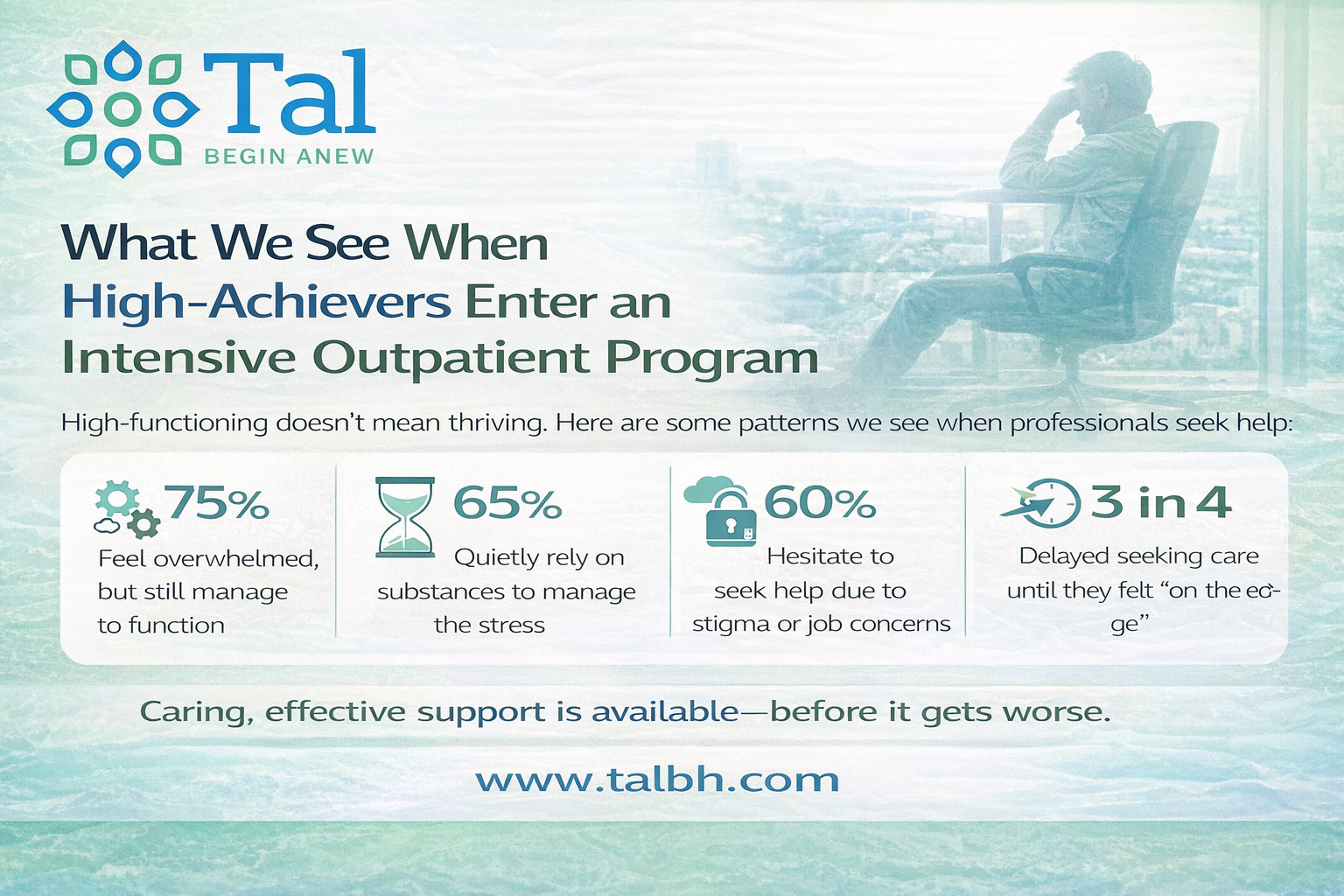
What We Commonly See: High-Achiever Patterns in IOP
If you’re wondering whether an IOP could really help someone like you, here are some of the patterns we often notice in our high-achieving clients:
1. Quiet Substance Use
It doesn’t look dramatic. It looks like wine to unwind, a pill to focus, something to sleep. But it’s every day now. Or almost.
2. Emotional Disconnection
You’re getting things done, but you’re not feeling much. Joy, grief, even stress—all seem muffled.
3. Hyper-Responsibility
You take care of everything and everyone, but asking for help? That feels impossible.
4. Controlled Isolation
You’re around people all the time—but very few really know how you’re doing.
5. Conditional Worth
You only feel valuable when you’re achieving, producing, or pleasing. Stillness feels like failure.
If this sounds familiar, you’re not alone. You’re not broken. And it’s not too soon to get support.
What Happens in an Intensive Outpatient Program?
An IOP offers structured support without requiring you to pause your entire life. At Tal Behavioral Health, our intensive outpatient program typically includes:
- Group therapy (3–4 days a week)
- Individual counseling
- Medication management, if needed
- Skills-based support (like emotional regulation, communication, or relapse prevention)
- A recovery plan tailored to your lifestyle and goals
You attend treatment several hours per day, while still being able to work, parent, or attend school. It’s designed for people who need more than weekly therapy—but not 24/7 inpatient care.
And yes, we work with your schedule. And no, it’s not all “share your feelings” in a circle (though connection does matter).
What Changes (That You Might Not Expect)
The most common shift we see? People start sleeping again.
Then:
They start telling the truth.
They start crying—for the first time in years.
They start laughing—for real.
They stop dreading Mondays.
They start feeling like themselves again.
In high-functioning people, the internal shift often happens before the external one. The change isn’t always visible right away. But the relief is unmistakable.
Whether you’re in Cleveland or seeking support in Falls, this kind of clarity is available.
A Note on Privacy (Because We Know You’re Wondering)
We get it. You’ve built a life. You’re respected. You don’t want your name on a list or your vulnerability exposed.
At Tal, confidentiality isn’t just a policy—it’s part of our culture. Whether you’re seeking care discreetly or need flexibility for work, we’ll meet you there.
Your story is yours. And you get to decide how it’s shared—or not shared at all.
You Deserve Support Before It Becomes a Crisis
You don’t need to lose your job, your family, or your health to qualify for care.
You don’t have to wait until things fall apart.
You don’t have to keep managing silently.
You can begin now.
IOP isn’t a step back—it’s a pause with purpose. It’s rest with structure. It’s your nervous system saying, “I can’t do this alone anymore.”
And for once, you don’t have to.
FAQ: High-Achieving Clients in IOP
Do I have to stop working to attend IOP?
Not necessarily. Many of our high-achieving clients continue working part-time or flex hours during IOP. We’ll collaborate with you to find a schedule that supports both your healing and responsibilities.
Will I be in a group with people very different from me?
Yes—and that’s part of the healing. IOP groups include people from all walks of life. Many clients say the diversity of stories is what helps them feel less alone—and more real.
What if I’m not sure I have a problem?
You’re not alone. Many people enter IOP feeling uncertain. That’s okay. Our clinical team will help you assess whether this level of care fits your needs. You won’t be pushed. You’ll be informed.
Is this confidential?
Yes. Completely. Your privacy is protected by law and by our values. If you have specific concerns (like professional licensure or legal matters), we’ll talk through those directly and clearly.
What if I try IOP and it doesn’t feel right?
Then we adjust. Sometimes it’s about timing, format, or even chemistry with a group. You’ll never be stuck—we’re here to get you the support that actually fits.
📞 You don’t have to prove you’re struggling to get help.
Call (216) 480-4860 or visit to learn more about our intensive outpatient program services in Cleveland and surrounding areas.