
They’re still working. Still smiling. Still hosting dinner. Still showing up—until they’re not.
At Tal Behavioral Health, we meet people right before the unraveling becomes visible. Our Intensive Outpatient Program in Beachwood, Ohio is often the first place they stop performing and start telling the truth.
This blog is for the person who looks “fine” on the outside… but feels hollow, tired, and two steps from losing control.
The Outside Still Looks Impressive—Until It Doesn’t
They’re not missing work. They’re not in legal trouble. They still hit the gym, post photos of family brunch, and deliver on that quarterly presentation.
That’s the part people see. What they don’t see is what happens behind the scenes:
- The fifth drink that doesn’t even register anymore
- The 3 a.m. wakeups, panic thudding in their chest
- The phone screen with 17 unread texts and zero desire to reply
Functioning doesn’t mean thriving. And for many, it’s becoming harder and harder to fake.
The Cracks Start Small—But They Multiply Fast
High-functioning adults don’t typically explode their lives overnight. What we notice is the slow erosion of stability. It often shows up in moments like these:
- Forgetting a meeting that really mattered
- Freezing up when their kid asks, “Are you okay?”
- Realizing they’re using alcohol or substances to recover from the day, not to enjoy it
- A weekend lost to fog, followed by a Monday panic spiral
These aren’t always dramatic collapses. They’re quieter—but just as dangerous.
Shame Doesn’t Show. Exhaustion Does.
The high-functioning hate being seen as broken. So they don’t let it show. They run faster, stay busier, and double down on control.
But we don’t meet people at their most shameful—we meet them when they’re bone-deep tired.
Tired of monitoring every sip.
Tired of lying.
Tired of waking up wondering who noticed.
Tired of living life like it’s one big cover story.
There’s a moment—right before treatment—when the exhaustion outweighs the fear. That’s when people call.
The Emotional Mask Starts to Slip
We notice irritability. Emotional distance. The “checked out” glaze in someone who used to light up a room.
Relationships get harder to manage:
- Small frustrations become big fights
- Texts go unanswered for days
- Eye contact feels unbearable
It’s not because they don’t care. It’s because connection requires presence—and substances are stealing that away.
Quiet Attempts at Control Have Already Failed
They’ve already tried to fix it quietly.
They’ve set rules: “Only on weekends,” “No drinking alone,” “Just weed, no pills.”
They’ve deleted delivery apps. Switched from whiskey to wine. They’ve done Dry January… and relapsed February 3rd.
By the time they’re considering IOP, they’ve already tried everything else.
That isn’t failure. That’s proof they care. Proof they’ve been trying to win a private war, without support, for too long.
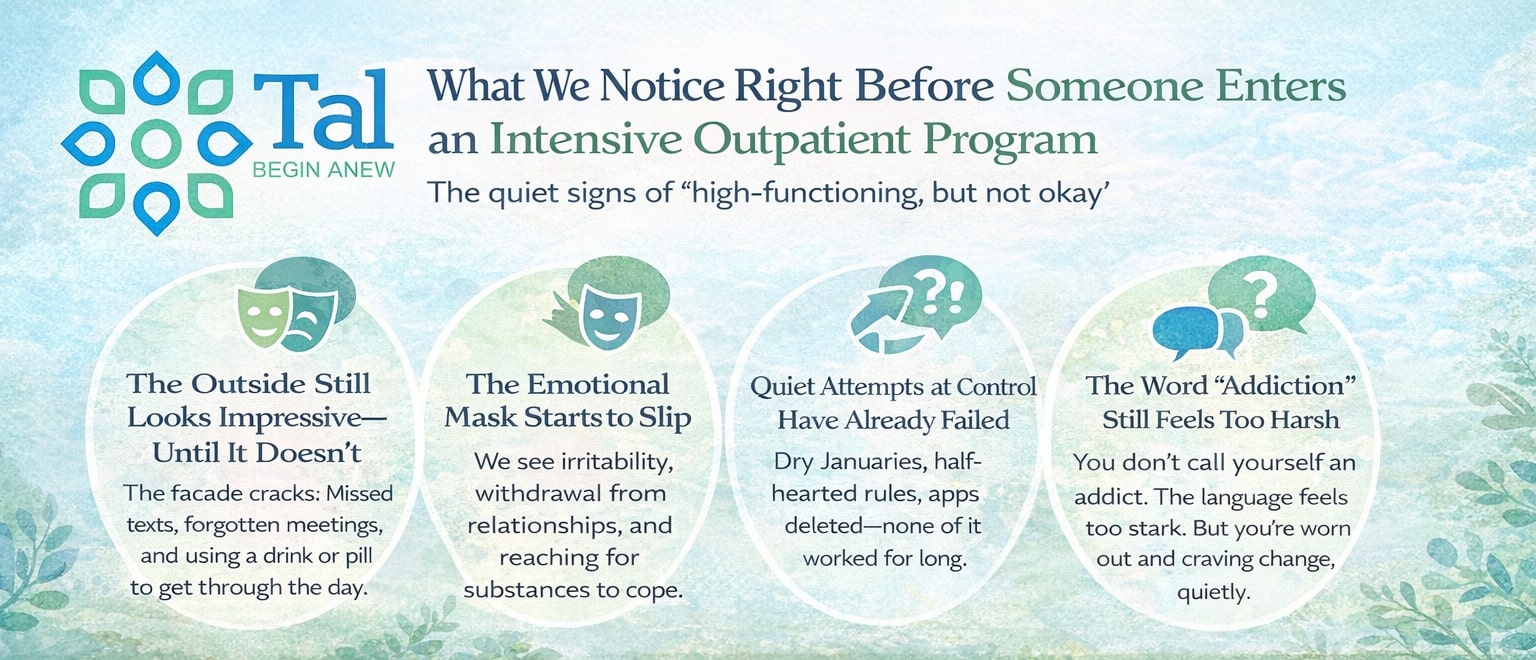
The Word “Addiction” Still Feels Too Harsh
Many of our high-functioning clients struggle with the language. They don’t feel like “addicts.” They haven’t hit a “bottom.” They don’t want to be seen as weak or incapable.
At Tal, we don’t lead with labels. We lead with honesty.
We ask:
- Is your substance use costing you more than it gives?
- Do you feel like you’re living a double life?
- Do you want something to change—even if you don’t know what?
That’s more than enough to start. You don’t have to call it addiction to say “I need help.”
Why an Intensive Outpatient Program Is the Right Fit
High-functioning people fear disruption. They worry about stepping away from work, kids, responsibilities.
That’s why IOP is often the perfect next step.
At Tal Behavioral Health, our intensive outpatient program in Beachwood offers:
- Flexibility: Day or evening schedules that fit your real life
- Privacy: No inpatient stay, no public announcements
- Structure: Group and individual therapy that digs beneath the surface
- Support: A team that sees through performance and honors your humanity
IOP lets people step out of survival mode—without stepping out of their lives.
What You Might Hear Yourself Say Before You Call
This part? It’s eerily common. Here are some actual phrases we’ve heard in first phone calls:
“No one knows how bad it’s gotten.”
“I don’t even know if this counts as addiction.”
“I’m not falling apart, but I’m not okay.”
“I feel like a fraud.”
If that sounds familiar—it’s not a coincidence. It’s a signal. And it’s okay to answer it.
FAQ: Intensive Outpatient Program for High-Functioning Adults
What exactly is an Intensive Outpatient Program?
An Intensive Outpatient Program (IOP) is a structured form of treatment that includes multiple therapy sessions per week—both group and individual—but doesn’t require an overnight stay. It’s designed to provide real care without pulling you out of your life completely.
Do I have to call myself an addict to qualify?
No. Labels are optional. What matters is your experience—if your substance use is interfering with your peace, relationships, or sense of self, IOP could help.
Can I keep working or taking care of my kids during IOP?
Yes. That’s one of the main benefits of outpatient care. Our team works with your schedule so you can keep showing up for what matters, while also getting the support you need.
What makes IOP different from just seeing a therapist?
IOP is more intensive. You’ll engage in multiple sessions each week, with a structured curriculum, group support, and a clinical team who monitors your progress. It’s a higher level of care designed for real change.
Will people find out I’m in treatment?
Your privacy matters. IOP is discreet, confidential, and designed with professionals, parents, and high-functioning clients in mind. We honor your need for both healing and discretion.
You Don’t Need a Breakdown to Deserve a Breakthrough
At Tal Behavioral Health, we’ve worked with lawyers, teachers, parents, pastors, business owners—people who never looked like they needed help… until they finally admitted they did.
You don’t have to crash to make a change.
📞 Call (216) 480-4860 or visit to learn more about our Intensive Outpatient Program services in Beachwood, Ohio. We’re here when you’re ready to stop pretending—and start healing.