
I remember the exact thought: This is it. I did it. Everything is going to be better now.
I had completed opioid addiction treatment. I had done the work. Detox. Therapy. Group. Accountability. The whole thing. I stayed. I listened. I participated. I meant it.
And it worked.
I stopped using.
The chaos ended.
The emergency quieted.
So why, a year later, did I feel like something was still missing?
If you’re a long-term alum and quietly asking yourself that question, this is for you.
I Thought Getting Clean Would Fix My Life
Not just my habits.
My life.
I thought sobriety would automatically:
- Heal my relationships
- Restore my confidence
- Erase my shame
- Give me direction
- Make me emotionally regulated
I thought once the substance was gone, the rest would rearrange itself into something peaceful and impressive.
That didn’t happen.
What did happen was subtler.
My nervous system stabilized.
My thinking got clearer.
The daily panic of “How am I going to manage today?” disappeared.
But underneath the crisis mode… there was still me.
And I hadn’t fully met that person yet.
The Letdown No One Warns You About
Early recovery has momentum.
There are milestones. Applause. Check-ins. Chips. Milestones again. You feel like you’re climbing something heroic.
Then one day, you look around and realize you’re not climbing anymore.
You’re just living.
And living—without the drama of addiction—can feel surprisingly flat at first.
No more adrenaline.
No more chaos.
No more extreme highs and crushing lows.
Just ordinary days.
For some of us, ordinary felt unfamiliar. Even boring.
And if you were someone who survived on intensity, that boredom can feel like loss.
I didn’t miss the substance.
I missed the emotional volume.
That scared me.
Sobriety Isn’t the Same as Fulfillment
Here’s the part I resisted admitting:
Treatment removed what was killing me.
It didn’t automatically build what would sustain me.
I was sober—but I hadn’t built a meaningful routine yet.
I was abstinent—but I hadn’t processed all my grief.
I was stable—but I hadn’t asked myself what I actually wanted my life to look like.
Sobriety is subtraction first.
Purpose is addition.
And addition takes time.
When people say opioid addiction treatment saved their life, I agree. It saved mine too. It gave me a foundation.
But foundations are not the house.
They’re what allow you to build one.
The Identity Gap
When I was using, my identity was survival.
When I was newly sober, my identity was recovery.
But what happens when you’re three, five, eight years in?
You’re not the crisis version of yourself.
You’re not the fragile early-recovery version either.
You’re just… a person.
With responsibilities. Bills. Relationships. Expectations.
The world stops asking how many days you have.
And sometimes, that’s when the existential questions get louder:
Who am I without the fight?
What do I want now?
Is this all there is?
That doesn’t mean you want to use.
It means you’re evolving.
Long-term recovery forces a deeper level of honesty than early sobriety ever did.
Feeling Stuck Doesn’t Mean You’re Slipping
This is critical.
Emotional flatness is not relapse.
Disconnection is not failure.
Needing more support is not weakness.
Sometimes your brain is still recalibrating after years of chemical disruption.
Sometimes trauma surfaces once the fog clears.
Sometimes depression that was masked by chaos finally has room to speak.
And sometimes you built your first year around “don’t use” and never revisited the question: “Now what?”
That’s not regression.
That’s growth asking for attention.
When You Quietly Start Wondering If Something’s Wrong
I remember sitting in my kitchen one night thinking:
“I did everything right. Why don’t I feel… free?”
It felt ungrateful to even think it.
But the truth was, I wasn’t struggling with cravings. I was struggling with meaning.
There’s a difference.
Cravings scream.
Emptiness whispers.
And whispers are easier to ignore.
Until they aren’t.
Why Some Alumni Step Back Into Care
There’s a myth that once you complete treatment, you shouldn’t need structured support again unless you relapse.
That myth keeps people silent.
Some of the strongest long-term alumni I know re-engaged in therapy or structured daytime care not because they were using—but because they were stuck.
They needed:
- Trauma work that wasn’t safe to do in early sobriety
- Help navigating burnout
- Support when mental health and substance use history started intersecting again
- A reset after a major life transition
Returning for care isn’t a reset to zero.
It’s refinement.
If you’re local and exploring deeper support, there are options for thoughtful care in Cleveland that meet you where you are—not where you were five years ago.
There’s also nuanced, alumni-sensitive care in Shaker Heights that recognizes long-term sobriety comes with different challenges than early recovery.
This isn’t about starting over.
It’s about going further.
The Danger of Settling for “At Least I’m Not Using”
I’ve heard it so many times:
“Well, at least I’m sober.”
Yes. That matters. It matters a lot.
But long-term recovery deserves more than bare minimum survival.
You deserve:
- Emotional connection
- Joy that isn’t chemically amplified
- Work that feels aligned
- Relationships built on honesty instead of damage control
If you’ve quietly accepted a life that feels smaller than what you hoped for—just because you’re not using—that’s worth examining.
Sobriety isn’t supposed to shrink your world.
It’s supposed to expand it.
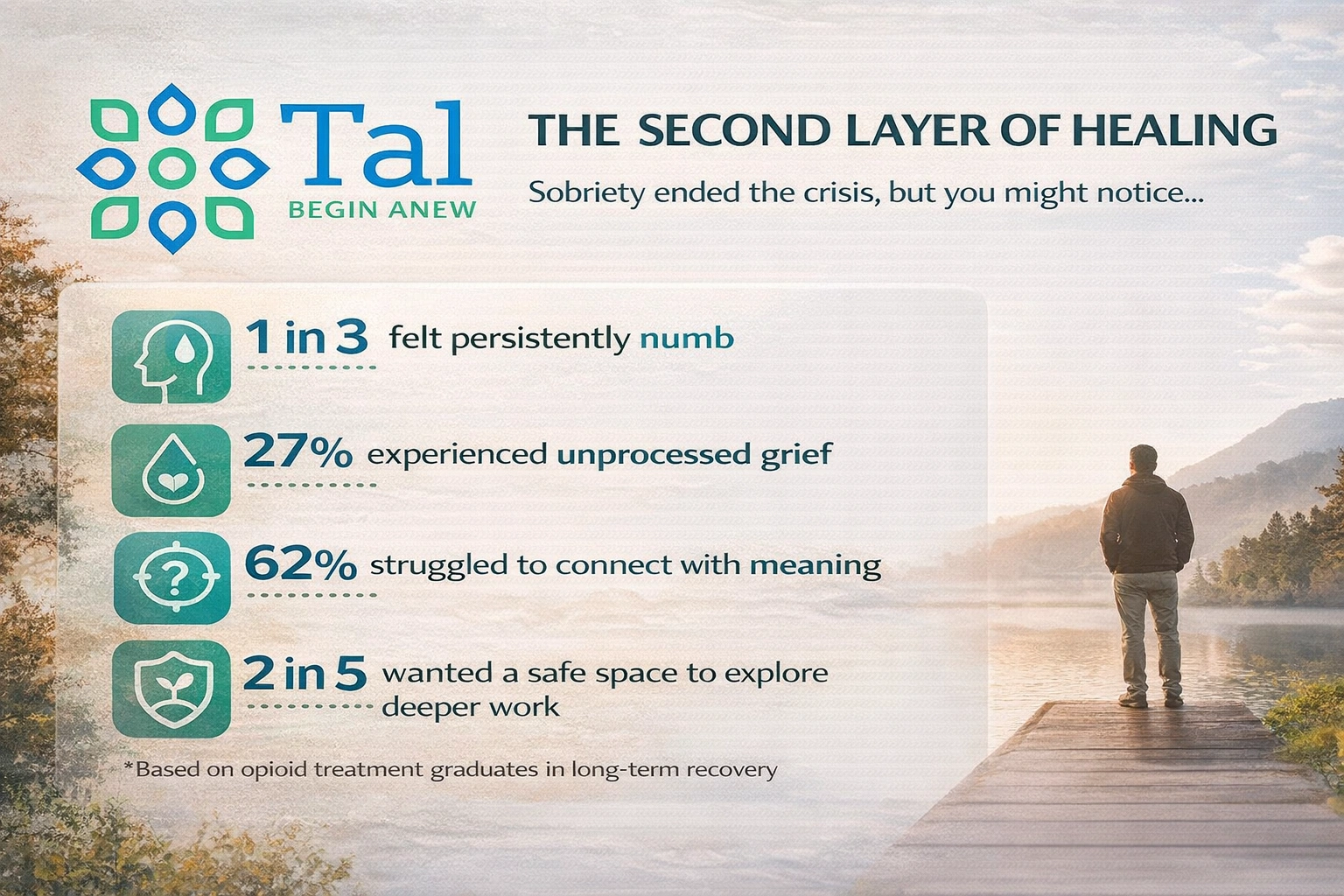
The Second Layer of Healing
Early recovery is about stabilization.
Long-term recovery is about integration.
Integration means asking:
- What parts of me did I numb?
- What grief have I postponed?
- What patterns am I still repeating?
- What am I afraid to feel fully?
This stage can feel less dramatic but more confronting.
There’s no substance to blame anymore.
It’s just you.
And that can be both terrifying and empowering.
The beautiful thing about having gone through opioid addiction treatment once is this: you already know you can do hard things.
You already know what accountability feels like.
You already know what change requires.
Now you’re applying it to deeper layers.
If You’re Afraid to Say This Out Loud
Let me say it for you.
“I’m sober. And I’m not as fulfilled as I thought I’d be.”
That doesn’t make you ungrateful.
It makes you honest.
And honesty is still the foundation.
The same courage that got you into recovery can carry you into this next phase.
But it may require support that looks different from what you expected.
Less crisis.
More clarity.
Less emergency.
More identity.
FAQs: Long-Term Sobriety and Feeling Disconnected
Is it normal to feel emotionally flat years after getting sober?
Yes. Emotional recalibration can take longer than most people expect. For some, unresolved trauma, depression, or burnout surfaces after the initial crisis stabilizes. It doesn’t mean recovery failed—it may mean deeper work is ready.
Does feeling stuck mean I’m heading toward relapse?
Not automatically. Feeling stuck is a signal, not a verdict. Ignored disconnection can increase risk over time, but addressing it directly—through therapy, community, or structured support—often strengthens long-term stability.
Why do I miss the intensity sometimes?
Substances often create artificial highs and dramatic emotional swings. When those disappear, normal emotional range can feel muted by comparison. Missing intensity doesn’t mean you want destruction back. It may mean you’re adjusting to steadiness.
Should I go back to treatment even if I haven’t relapsed?
You don’t need a relapse to justify support. Many alumni return for focused therapy, multi-day weekly treatment, or structured daytime care to address new layers of growth. It’s not about starting over. It’s about continuing.
What if I feel ashamed for not feeling “grateful enough”?
Shame thrives in silence. Gratitude and dissatisfaction can coexist. You can be thankful you’re sober and still want more from your life.
How do I know if I need more support?
Ask yourself:
- Am I isolating more than I used to?
- Do I feel persistently numb or disconnected?
- Have I lost interest in things that once mattered?
- Am I avoiding deeper conversations about how I feel?
If the answer is yes to several of these, it might be time to reach out.
You Didn’t Do It Wrong
Let’s end this clearly.
You didn’t misunderstand recovery.
You didn’t fail at healing.
You didn’t “miss something.”
Sobriety was step one. A massive one.
But it was never meant to be the final destination.
If you’re years in and realizing there’s another layer to address, that’s not a crisis.
It’s maturity.
It’s the difference between surviving and living.
And if you’re ready to explore what that next level looks like—whether that means reconnecting with opioid addiction treatment in a new way or building a different kind of support—you don’t have to justify it with a fall.
You’re allowed to want more than stability.
Call 216-480-4860 to learn more about our Opioid addiction treatment in Cleveland, Ohio.