
Sometimes the exit wasn’t dramatic.
No big announcement. No confrontation.
Just a missed session… then another. Messages that went unanswered. A quiet decision to step away because something inside felt too heavy, too complicated, or too embarrassing to explain.
If that happened to you, it doesn’t mean you failed.
It means something got hard.
As clinicians, we see this story often. People start treatment with real hope, then life intervenes—stress, shame, relapse, fear, exhaustion. Momentum slips. And once someone has been gone for a while, it can feel impossible to return.
But here’s the truth many people don’t hear enough: leaving treatment early doesn’t mean the work is over.
Many people rebuild their momentum through flexible support like multi-day weekly treatment that allows them to reconnect with care without starting from scratch.
If you stepped away and you’re wondering how to move forward again, these are the steps we often walk through with clients rebuilding their path.
Start by Accepting That Pausing Happens
One of the most damaging beliefs people carry after leaving treatment is that they “ruined their chance.”
But recovery is rarely a straight line.
People pause.
People relapse.
People disappear and come back.
These patterns are not unusual—they’re part of the human process of change.
Think about learning any new skill. When something becomes difficult, many people step away temporarily. That pause doesn’t erase what was learned.
The same applies here.
Even if you left weeks or months ago, the insight you gained during treatment is still stored in your memory and experience.
You’re not starting over.
You’re restarting.
And those two things are very different.
Identify What Actually Made You Leave
Many people tell themselves a simplified story about why they dropped out.
“I just didn’t try hard enough.”
“I wasn’t ready.”
“I messed it up.”
But the real reasons are often much more complicated.
Clients leave treatment early for many reasons, including:
- Emotional overwhelm during difficult sessions
- Feeling exposed in group therapy
- Scheduling conflicts with work or family
- Financial stress
- A relapse that created intense shame
- Fear of disappointing the treatment team
Understanding the real reason you stepped away matters.
Because once you identify the obstacle, it becomes possible to solve it.
Maybe you need a different schedule.
Maybe you need smaller steps.
Maybe you need to talk openly about what made the experience feel overwhelming.
Recovery becomes easier when treatment adapts to your life instead of demanding perfection.
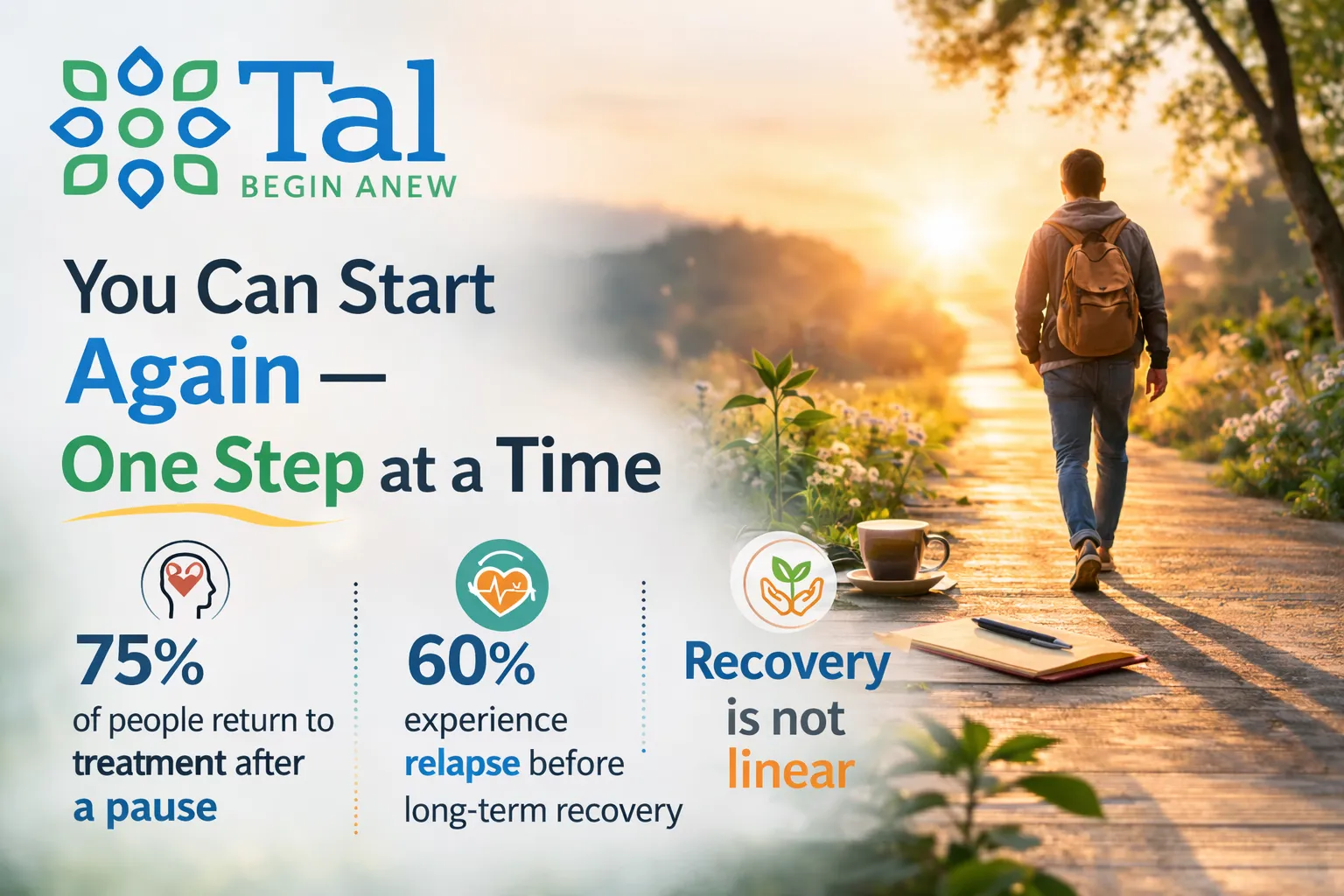
Take One Small Step Instead of Planning the Whole Comeback
When people think about returning to treatment, they often imagine a huge commitment.
Full attendance. Total discipline. Perfect motivation.
That pressure alone can stop someone from reaching out.
But rebuilding momentum rarely begins with big declarations.
Instead, it often starts with one small action.
That might be:
Sending a message to a counselor.
Scheduling a conversation about returning.
Attending one group session again.
Asking questions about what options exist now.
Momentum works like pushing a stalled car.
The first movement feels difficult. But once things start rolling, it becomes much easier to keep moving forward.
You don’t need to solve everything today.
You just need to start the engine again.
Understand That Shame Is Loud—but Often Misleading
Shame is one of the strongest emotions people experience after leaving treatment early.
It creates a painful internal dialogue.
They probably think I wasted their time.
Everyone else is doing better than me.
I don’t belong there anymore.
But the perspective inside treatment programs is very different.
Clinicians understand that people struggle. That’s why treatment exists in the first place.
When someone returns after a pause, the most common reaction from treatment teams isn’t frustration.
It’s relief.
Relief that the person came back.
Relief that they’re safe.
Relief that they’re willing to continue the work.
The story shame tells you about how others see you is rarely accurate.
Focus on Rebuilding Routine, Not Motivation
A common myth about recovery is that people need to feel motivated before they return to treatment.
In reality, motivation often grows after people reestablish routine.
Think about how habits form in other areas of life.
Exercise becomes easier once it’s part of a schedule.
Healthy eating becomes easier when meals are planned.
Sleep improves when bedtime becomes consistent.
Recovery works the same way.
Routine reduces the amount of emotional energy required to stay engaged.
Instead of relying on motivation, clients rebuild structure:
- Blocking treatment time on their weekly schedule
- Preparing transportation in advance
- Setting reminders for therapy days
- Communicating with supportive friends or family
These small systems make it easier to keep showing up—even on difficult days.
Allow Yourself to Re-Enter at a Different Pace
One reason some people leave treatment is that the pace feels overwhelming.
Too many emotions at once. Too many expectations. Too much happening too quickly.
When people return, we often encourage them to approach treatment differently.
Instead of trying to catch up with everyone else, they focus on what feels sustainable.
That might mean:
- Attending fewer sessions initially
- Prioritizing individual therapy before group discussions
- Setting smaller personal goals
- Giving themselves permission to learn gradually
Recovery isn’t a race.
It’s more like rebuilding balance after an injury. Slow, steady progress often leads to stronger long-term stability.
Reconnect With the Reason You Started
Somewhere inside you, there was a reason you entered treatment in the first place.
Maybe life had become exhausting.
Maybe relationships were suffering.
Maybe you were tired of feeling out of control.
Those reasons didn’t disappear when you stepped away.
Sometimes they simply got buried under shame or discouragement.
Taking time to reconnect with your original motivation can help rebuild momentum.
Ask yourself:
What did I hope would change?
What kind of life did I imagine?
What would stability feel like for me?
You don’t need to solve every problem today.
But remembering why you started can help you take the next step.
Remember That Support Still Exists
Many people who drop out believe they’ve lost access to help.
They assume programs move on or that returning would be awkward.
But treatment systems are designed to support people through real-life setbacks.
People return after weeks.
People return after months.
Sometimes people return after even longer breaks.
The door remains open far more often than people expect.
If you’re considering reconnecting with care, many individuals begin again through support in Summit or structured behavioral health help in Shaker Heights where treatment teams work with clients to rebuild stability at a manageable pace.
Re-entry isn’t unusual.
It’s part of the recovery process for many people.
Let Your Comeback Be Imperfect
There’s a quiet belief many people carry after leaving treatment:
If I go back, I need to prove I’m serious this time.
But proving something isn’t the goal.
Healing rarely happens through pressure.
It happens through honesty.
You can come back with questions.
You can come back feeling unsure.
You can come back even if things aren’t perfect right now.
The most important thing is simply reconnecting with support.
Because the path forward doesn’t require a flawless comeback.
It just requires another step.
Frequently Asked Questions
Is it common for people to leave treatment and come back later?
Yes. Many individuals pause treatment at some point due to stress, relapse, scheduling issues, or emotional overwhelm. Returning later is more common than people realize.
Will clinicians judge me for dropping out?
No. Treatment professionals understand that recovery is complicated. Their focus is on helping you move forward, not criticizing what happened in the past.
Do I have to explain everything that happened while I was gone?
You can share as much or as little as you feel comfortable discussing. The goal is understanding what support will help you now.
What if I relapsed after leaving treatment?
Relapse is something many people experience during recovery. Returning to treatment after a relapse can actually strengthen long-term recovery by addressing what made the situation difficult.
What if I’m nervous about group therapy?
That feeling is very common. Many clients initially feel uncomfortable sharing in group settings. Over time, most people find that hearing others’ experiences makes the process feel less isolating.
How do I know if I’m ready to return?
You don’t need complete certainty. Often the sign someone is ready is simply thinking about getting help again.
What should I do if I’m unsure where to begin?
Starting with a conversation can help clarify your options. Talking with a treatment team can help you understand what next steps might feel manageable.
Taking the First Step Back
If you stepped away from treatment, it may feel like the story ended there.
But for many people, that pause becomes a turning point rather than a final chapter.
Returning to support doesn’t require perfection. It doesn’t require a flawless explanation. It simply requires the willingness to try again.
If you’re thinking about rebuilding momentum, call 216-480-4860 or visit our Intensive Outpatient Program in Cleveland, Ohio to learn more about.
And if you’ve been carrying shame about leaving before, remember this:
Some of the strongest recovery stories begin with someone deciding to walk back through a door they once left.