Let’s be real: being young and sober can feel like having FOMO stamped on your forehead. You start noticing how many group chats revolve around “happy hours” that aren’t so happy for you anymore. It’s not just about saying no to drinks—it’s about figuring out where you do say yes. At Tal Behavioral Health, we work with young adults every day who are navigating early recovery in a world that seems to think alcohol is required for connection. Here’s what we’ve learned:
You don’t have to drink to belong. You just have to rebuild—intentionally.
1. Say Yes to Offbeat Invites—They’re Your New Gold
In recovery, comfort zones get redefined. The events that used to feel effortless—bar nights, pre-games, day drinking—might not serve you anymore. Instead of retreating into isolation, say yes to the unexpected. Go to that community board game night, attend a poetry slam, take your roommate up on that beach cleanup volunteer shift.
Every time you show up somewhere new, you’re practicing a different kind of courage: the kind that creates opportunity. This is how new people and new energy find you.
2. Own Your Sober Identity—Even When It Feels Uncool
There’s a voice in your head whispering, “They’ll think I’m boring.” You’re not alone. Many people in early recovery feel like they’ve lost their “fun card.” But let’s flip the script: it’s not boring to stand for something. It’s not awkward to have boundaries. It’s not lame to say no.
When you own your sobriety with confidence—even quiet confidence—you give others permission to respect it. You’ll start attracting people who appreciate the version of you who remembers every conversation and doesn’t ghost because they blacked out.
3. Find the No-Drink Zones in Your Community
Start scouting out spaces where alcohol isn’t the main attraction. Local climbing gyms, adult rec leagues, improv classes, open mic nights, board game cafes, or even late-night diners. These places attract people who are down to connect without the buzz.
If you’re near Beachwood, Ohio, keep an eye out for local sober events and community meetups—our team can even help connect you with groups that align with your interests and recovery needs.
4. Host Sober Hangouts—Even If It Feels Awkward at First
You don’t need a big apartment or a party playlist to build community—you just need intention. Try hosting a “mocktail & movie” night. A Taco Tuesday dinner. A Sunday morning hike. These moments don’t need alcohol to matter. You’re not just creating a vibe—you’re creating a space where people can actually connect without performing.
Want to level up? Make it a recurring thing. People crave consistency, and when you become the person who always hosts that chill Thursday night dinner, others will start showing up just for the connection.
5. Tap into the Online Sober World
Social media can be a comparison trap—but it can also be your secret weapon. Search for hashtags like #soberlife, #drysquad, or #soberissexy. You’ll find creators sharing honest stories, hilarious memes, and tips for making sobriety sustainable and fun.
Look for digital meetups, Discord groups, or Instagram Lives centered around sobriety. When the local scene feels thin, the online world can help you remember: you’re not alone, and you’re definitely not the only 20-something saying no to alcohol.
6. Plan Your Exits. Protect Your Energy. No Guilt.
Not every event will vibe with your recovery—and that’s okay. Before you go somewhere you know might be alcohol-soaked (weddings, family parties, work functions), have a plan.
- Drive yourself so you’re not stuck.
- Have a text buddy you can message if things feel off.
- Set a time limit in your head.
The truth is, you don’t need a dramatic excuse to leave. “I’m heading out, thanks for having me” is enough. Protecting your energy is a power move—not a weakness.
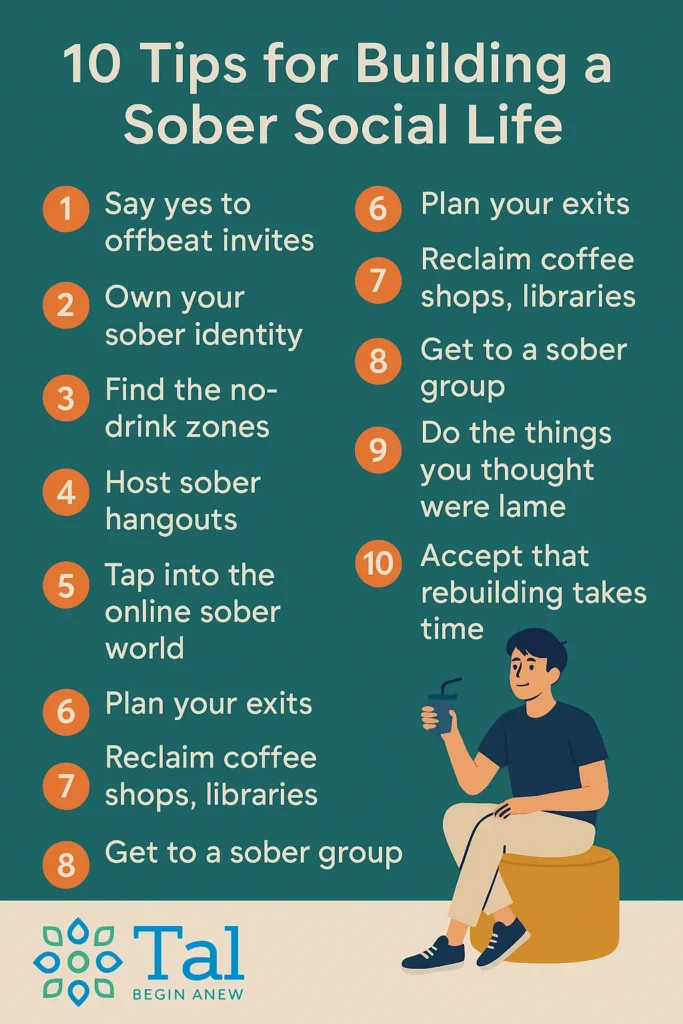
7. Reclaim Coffee Shops, Libraries, and Late-Night Diners
Before bars dominated the “where to hang” scene, there were coffee shops with acoustic sets, diners open ’til 2am, and rec centers with drop-in basketball. Bring it back.
Find a cozy spot with good lighting and open hours. Invite a friend. Study, chat, or read quietly next to each other. These low-pressure hangs can feel more nourishing than any packed club night. And bonus—you’ll actually remember what you talked about.
8. Get to a Sober Group—Even if You Think You Won’t Fit In
AA isn’t the only game in town. SMART Recovery, Refuge Recovery, and even some mental health support groups can offer social connection. You don’t need to walk in ready to bare your soul. Just go once. Listen. Observe.
You might find people who “get it” without you needing to explain. That feeling? It’s called relief. And it’s contagious.
9. Do the Things You Thought Were Lame While Using
You know those hobbies you used to mock? Knitting, geocaching, gardening, roller skating? Turns out, they slap. In recovery, your capacity for joy changes. You’re not chasing dopamine—you’re discovering it.
Try something tactile. Try something creative. Try something competitive but fun. And let yourself suck at it. Nobody becomes a master on day one. But everyone starts somewhere.
10. Accept That Rebuilding Takes Time—but It’s Worth It
Here’s the raw truth: it is going to feel lonely sometimes. You might have nights where you scroll Instagram and feel like everyone else is at the party you didn’t get invited to. You might question if it’s worth it.
And then—somewhere in the middle of a sober karaoke night or a 2am walk with a new friend—you’ll realize: you’re not on the outside anymore. You’re just on a different path. And it’s one where you actually belong.
FAQ: Building a Sober Social Life
Is it normal to feel lonely in early sobriety?
Yes. Loneliness is one of the most common and toughest parts of early recovery. You’re not imagining it—but you’re also not doomed to stay stuck there. Real connection comes when you stick with the awkward part long enough for the good stuff to start showing up.
What if my friends only want to hang out when drinking?
This is hard—but also revealing. True friends will make space for who you’re becoming, not just who you were when you were drinking. It may take time, but you’ll either find your friends adjusting or realize it’s time to meet new ones who support your sobriety.
Are sober people actually fun?
Absolutely. In fact, some of the most creative, hilarious, and emotionally present people we know are in recovery. The difference? Their fun doesn’t come with a hangover or a string of regrets.
Where can I meet other sober young people in Beachwood, Ohio?
You can start by calling us at Tal Behavioral Health. We often know of local groups, community events, and sober meetups that aren’t always listed online. If you’re in alcohol addiction treatment, we’ll work with you on building support networks beyond treatment.
Ready to Build Something Real?
Being young and sober can feel like starting from scratch—but what you build now will be solid, lasting, and yours. You don’t have to figure it out alone.
Call (216) 480-4860 or visit to learn more about our Alcohol Addiction Treatment services in Cuyahoga, Ohio.
Let’s build something better—together.