
A conversation I had with an alumnus recently started with a question he’d been carrying for weeks.
Not because he didn’t want answers.
Because he was afraid of what those answers might mean.
He looked at me and said:
“I don’t understand this. If I’m only a few hours late taking my pain pills, why do I feel like I have the flu?”
His confusion was genuine.
He wasn’t trying to avoid responsibility.
He wasn’t looking for excuses.
He simply couldn’t understand why missing a medication by a few hours seemed to affect him so dramatically.
As a clinician, I’ve heard versions of this question countless times.
And what strikes me most is how often people think they’re the only one experiencing it.
They’re not.
In fact, many individuals first begin questioning their relationship with opioid medications after noticing physical symptoms that appear when medication is delayed.
For some, those questions eventually lead them to explore opioid addiction treatment and learn more about what their body may be trying to communicate.
If you’ve been wondering why you feel so sick when you don’t take pain medication on time, know this:
The experience is more common than you think.
And it does not make you weak.
It Usually Starts With Confusion, Not Concern
Most people don’t wake up one morning believing they have a problem.
The realization often begins much smaller.
Someone oversleeps and misses a dose.
A prescription refill is delayed.
A busy workday throws off a schedule.
Then something strange happens.
Their body reacts.
Maybe they’re sweating.
Maybe their stomach feels unsettled.
Maybe anxiety suddenly appears for no obvious reason.
Maybe their muscles ache so intensely they assume they’re getting sick.
At first, many people don’t connect the symptoms to the medication.
They assume they’re fighting a virus.
They blame stress.
They blame poor sleep.
Only later do they notice a pattern.
The symptoms improve when medication returns.
That’s often when concern begins.
The Body Learns Faster Than Most People Realize
One thing people rarely talk about is how adaptable the human body really is.
The brain and nervous system are constantly adjusting to what’s happening around them.
When opioid medications are taken regularly, the body begins adapting to their presence.
This adaptation is not a character flaw.
It’s biology.
Over time, the body starts expecting the medication.
When those expected levels drop, the nervous system has to work harder to adjust.
That adjustment can create physical and emotional discomfort.
For many people, this realization feels shocking.
Especially when they’ve taken medication exactly as prescribed.
The Symptoms Can Feel Bigger Than Expected
One alumnus described it perfectly.
He told me:
“I expected pain. I didn’t expect everything else.”
That’s an important distinction.
Many people assume discomfort would be limited to the original reason they started taking medication.
Instead, they experience a wide range of symptoms.
Some notice:
- Body aches
- Chills
- Sweating
- Restlessness
- Nausea
- Trouble sleeping
- Anxiety
- Difficulty concentrating
- Fatigue
- Irritability
These experiences often cause people to start researching painkiller withdrawal symptoms because what they’re feeling seems much larger than missing a dose should explain.
The body’s response can feel surprising, especially for someone who never considered themselves dependent on medication.
Why Alumni Often Struggle With This Realization
For people who have already spent time in recovery, these moments can feel especially painful.
I think about one individual who had achieved ninety days of sobriety.
Ninety days mattered.
It represented hard work.
Commitment.
Healing.
Hope.
Then came a relapse.
The relapse itself was difficult.
The physical symptoms that followed felt even more confusing.
He found himself experiencing sensations he hadn’t felt in months.
The discomfort triggered memories of where he had been before.
But the hardest part wasn’t physical.
It was emotional.
He couldn’t stop judging himself.
He kept telling himself he should have known better.
He should have been stronger.
He should have done things differently.
Those thoughts created far more suffering than the symptoms themselves.
Shame Loves to Tell the Wrong Story
One of the biggest challenges after relapse is the story people begin telling themselves.
The story usually sounds something like:
“I ruined everything.”
“I’ve failed.”
“I wasted all that progress.”
As clinicians, we hear these statements all the time.
They’re understandable.
They’re also often inaccurate.
Recovery doesn’t disappear because someone struggles.
Progress doesn’t vanish because someone experiences a setback.
The lessons learned during treatment remain.
The skills remain.
The growth remains.
Relapse can interrupt recovery.
It does not erase recovery.
That’s an important difference.
The Moment Many People Start Hiding
Once symptoms begin appearing, many individuals start keeping secrets.
Not because they want to deceive anyone.
Because they’re scared.
They’re afraid family members will worry.
They’re afraid healthcare providers will judge them.
They’re afraid acknowledging the problem will make it real.
So they wait.
They tell themselves they’ll figure it out on their own.
Maybe tomorrow will be better.
Maybe next week will be different.
Maybe they can get things back under control without telling anyone.
Unfortunately, isolation often makes the situation harder.
Recovery tends to grow in connection.
Struggles tend to grow in silence.
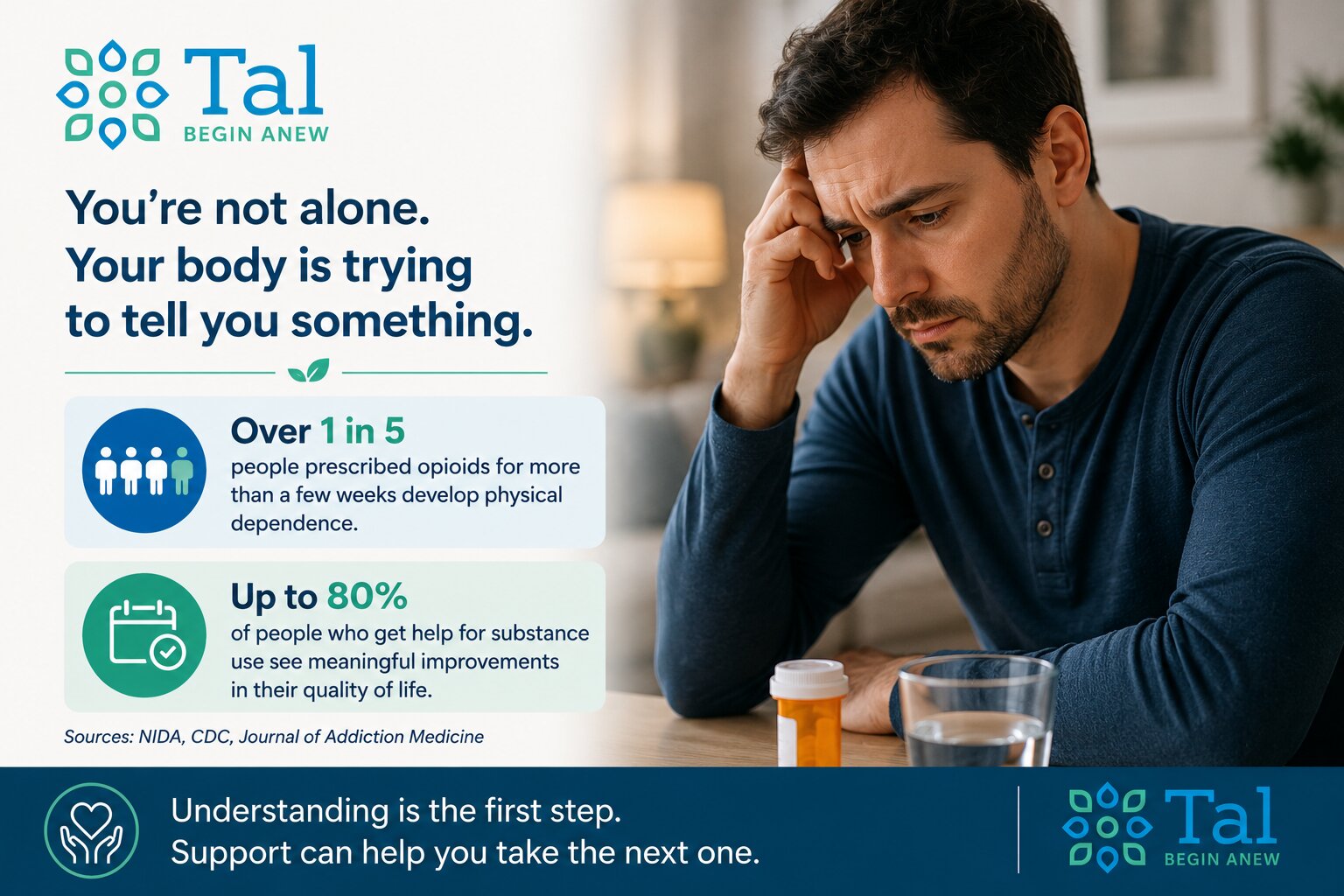
Your Body Isn’t Punishing You
I wish more people understood this.
Symptoms are not punishment.
They’re information.
Your body is not trying to hurt you.
It’s trying to adapt.
Think of a car dashboard.
When a warning light appears, the car isn’t attacking the driver.
It’s communicating.
It’s providing information about something that deserves attention.
Physical symptoms work similarly.
They’re signals.
They tell us something has changed.
Ignoring them doesn’t usually solve the problem.
Understanding them creates opportunities for action.
Why Early Support Matters
Many people wait until symptoms become overwhelming before reaching out.
That’s understandable.
But it isn’t necessary.
One of the advantages of seeking support earlier is having more options available.
Problems that feel manageable today often become harder tomorrow.
Conversations that feel uncomfortable today often become more difficult later.
The earlier someone receives guidance, the easier it often becomes to develop a plan that supports long-term recovery.
For individuals seeking care in Cleveland or looking for support in Shaker Heights, reaching out before a crisis develops can create a very different recovery experience.
Support isn’t reserved for emergencies.
It’s available for uncertainty too.
The Question Beneath the Question
When someone asks why they feel sick without pain pills, they’re usually asking more than one question.
They’re asking:
“What’s happening to me?”
But they’re also asking:
“Should I be worried?”
“Can I get better?”
“Have I already gone too far?”
Those questions deserve compassionate answers.
And the answer to that last question is important.
No.
You have not gone too far.
I’ve worked with people who felt trapped by symptoms.
People who felt ashamed.
People who believed recovery was no longer possible.
Many of those same individuals eventually rebuilt their lives.
Not because recovery was easy.
Because they stayed willing to keep moving forward.
Recovery Often Begins With Understanding
Before meaningful change happens, understanding usually comes first.
Understanding creates awareness.
Awareness creates choices.
Choices create change.
If you’ve noticed physical symptoms when medication is delayed, your body may be providing valuable information.
Information isn’t something to fear.
It’s something to learn from.
And learning from it may be the first step toward feeling better.
You are not the first person to ask this question.
You won’t be the last.
And you don’t have to figure out the answer alone.
Call 216-480-4860 or visit our opioid addiction treatment services to learn more about our addiction, opioid services in Cleveland, Ohio.
Frequently Asked Questions
Why do I feel sick if I don’t take my pain pills on time?
Regular opioid use can cause the body to adapt to the medication’s presence. When medication levels decrease, physical symptoms may occur as the body adjusts.
Does this mean I’m addicted?
Not necessarily. Physical dependence and addiction are different concepts. However, recurring symptoms should be discussed with a qualified healthcare professional.
Can missing one dose really cause symptoms?
For some people, yes. The timing and severity depend on the medication, dosage, duration of use, and individual factors.
Why do the symptoms feel like the flu?
Many people experience body aches, sweating, chills, nausea, and fatigue when medication levels drop, which can feel similar to a viral illness.
Is it common to feel anxious when I miss a dose?
Yes. Anxiety, restlessness, and irritability are commonly reported when the body is adjusting to lower opioid levels.
What if I’ve relapsed after a period of recovery?
A relapse does not erase previous progress. Many people return to recovery successfully after setbacks and continue building meaningful, healthy lives.
When should I seek professional support?
If symptoms are recurring, causing distress, affecting daily life, or making it difficult to manage medication use, professional guidance can help you understand your options and create a plan for recovery.