
There’s a specific kind of exhaustion that comes from trying to hold everything together while alcohol slowly takes up more space in your life. You still show up to work. You answer emails. You make it through meetings. But underneath all of that, something feels shaky.
Maybe you’ve started waking up anxious at 3am. Maybe you’ve promised yourself you’d cut back, only to pour another drink after a stressful day because your brain won’t slow down without it. Maybe people around you still think you’re “doing fine,” which somehow makes it lonelier.
If you’ve been searching for answers because your drinking got worse and you can’t afford to disappear from your responsibilities, you are not weak. You are overwhelmed. And there are ways to get help that don’t require blowing up your entire life.
For many people, support starts with flexible care options like multi-day weekly treatment that fit around work schedules, family obligations, and real-world responsibilities.
The Hardest Part Is Usually Admitting It to Yourself
A lot of people imagine alcohol problems looking dramatic and obvious. They picture losing jobs, getting arrested, or completely falling apart publicly.
But for many adults, it looks quieter than that.
It looks like sitting in your parked car for ten extra minutes before going inside because you need a drink to get through the evening.
It looks like mentally calculating whether you have enough alcohol at home before stores close.
It looks like saying, “I’m just stressed,” for the hundredth time while secretly wondering why stress feels impossible to tolerate sober anymore.
People who are still functioning at work often minimize what they’re carrying because they compare themselves to stereotypes. But pain does not have to become catastrophic before it deserves attention.
You can be successful and struggling at the same time.
In fact, many people dealing with problematic drinking become even more perfectionistic because they’re trying to outrun the growing fear that something is wrong.
Why So Many Working Professionals Delay Getting Help
One of the biggest reasons people avoid treatment is fear of what it will cost them professionally.
They worry about:
- Missing work
- Losing income
- Falling behind on responsibilities
- Coworkers finding out
- Looking unreliable
- Being judged by supervisors or family members
For people who’ve built their identity around being dependable, the idea of stepping back for help can feel terrifying.
That fear keeps many people stuck in a painful middle ground where they’re trying to manage worsening drinking completely alone.
But support is no longer limited to one-size-fits-all treatment models. Many programs are designed specifically for people balancing jobs, parenting, caregiving, or other responsibilities.
That’s why more people are looking into options for alcohol treatment while working before things become an emergency.
What Flexible Support Can Actually Look Like
A lot of people hear “treatment” and immediately imagine disappearing into a facility for a month. For some individuals, live-in care is the right fit. But it’s not the only path.
Flexible outpatient care can allow people to:
- Continue working
- Sleep at home
- Attend therapy several days a week
- Build healthier coping skills gradually
- Address drinking without leaving their entire life behind
For someone overwhelmed by the idea of “going away,” that can make help feel possible instead of impossible.
Some programs offer evening schedules specifically for working adults. Others provide structured daytime care with enough flexibility to coordinate around professional obligations.
The goal is not to punish your routine. The goal is to help you stabilize before things get worse.
And honestly, many people discover they were spending more energy hiding their struggle than treatment itself actually required.
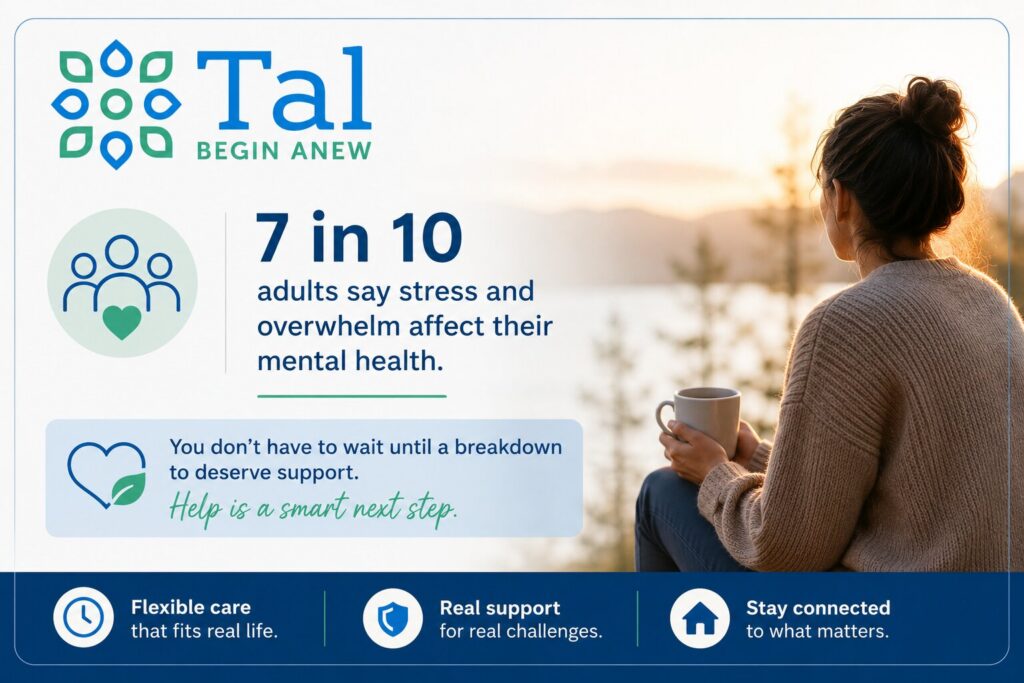
You Don’t Need to Hit Rock Bottom to Deserve Help
There’s a dangerous myth that people need to lose everything before reaching out.
That idea keeps countless people trapped in unnecessary suffering.
You do not need:
- A DUI
- A divorce
- Job loss
- Hospitalization
- Public humiliation
- A “wake-up call”
to justify asking for support.
Sometimes the clearest sign is simply this: your life keeps getting smaller around alcohol.
You stop enjoying things fully. Your emotional bandwidth shrinks. Your world quietly becomes organized around recovery from drinking, anticipation of drinking, or hiding drinking.
And maybe the scariest part is how normal it starts to feel.
One client once described it this way:
“Nothing dramatic happened. I just realized alcohol had become the center of my emotional survival.”
That realization matters.
Signs Your Drinking May Be Affecting More Than You Think
Some people assume they’d “know” if drinking became serious. But alcohol problems often build slowly over time.
Signs you might be struggling more than you realize:
- You think about drinking throughout the workday
- You feel anxious if alcohol isn’t available
- Your sleep quality has dropped significantly
- You’ve become more isolated or emotionally numb
- You regularly drink more than you intended
- You use alcohol to manage stress, loneliness, or burnout
- You feel guilty after drinking but repeat the pattern
- Your concentration and motivation are slipping
- You’ve tried to stop or cut back without lasting success
None of these signs mean you’re broken.
They may simply mean your nervous system is overwhelmed and alcohol has become the coping tool your brain reaches for first.
The good news is that coping patterns can change.
If You’ve Tried Before and Stopped, That Doesn’t Mean You Failed
A lot of people start treatment, therapy, or recovery support and then disappear for a while.
Shame convinces them they ruined their chance.
Maybe work got hectic. Maybe emotions came up too fast. Maybe drinking returned and they felt embarrassed. Maybe they missed a few sessions and assumed they weren’t welcome anymore.
That happens more often than people realize.
At Tal Behavioral Health, we understand that recovery rarely moves in a perfectly straight line. People pause. People backslide. People get scared.
That does not make them hopeless.
There’s a reason Scenario 14 — the person who ghosted treatment — resonates with so many people. Deep down, many individuals fear they’ve become “too much” or “not serious enough” for help.
But recovery spaces should not operate like exclusive clubs where one bad week disqualifies you.
The door can stay open.
Getting Help While Working Often Starts With One Honest Conversation
You do not need to have your entire future figured out before reaching out.
You do not need to commit to a lifelong identity.
And you do not need to walk into treatment with perfect confidence.
Sometimes the first step is simply asking:
- “What options exist?”
- “Can this fit around my schedule?”
- “What if I’m not sure how bad this is yet?”
- “What happens if I need flexibility?”
Those are normal questions.
A good treatment team understands that people often arrive emotionally exhausted, skeptical, and frightened. They’re not expecting polished speeches or certainty.
They’re meeting human beings who are tired of carrying everything alone.
For people exploring options locally, support may include programs near support in Cleveland or nearby care in Shaker Heights depending on what feels most accessible and manageable.
Recovery Often Starts Quieter Than People Expect
Movies make recovery look dramatic.
Real life is usually quieter.
Sometimes it begins with:
- Sleeping through the night for the first time in months
- Realizing your anxiety eases slightly without drinking
- Eating a real dinner again
- Laughing without feeling numb afterward
- Making it through a stressful workday without immediately reaching for alcohol
Small moments matter.
Recovery is not about becoming a different person overnight. Often, it’s about slowly reconnecting with the version of yourself that got buried under stress, survival mode, and exhaustion.
One of the most painful parts of problematic drinking is how isolated people become internally. Even surrounded by coworkers, family, or friends, they often feel alone inside their own mind.
Support interrupts that isolation.
And sometimes relief starts before sobriety even fully begins. Sometimes it starts the moment someone finally says, “I don’t think I can keep doing this alone.”
FAQ: Getting Help for Drinking While Keeping Your Job
Can I go to treatment without quitting my job?
Yes. Many outpatient programs are specifically designed for people who need to continue working while receiving support. Scheduling options may include evening sessions or flexible daytime care.
What if my drinking isn’t “bad enough” for treatment?
You do not need to hit a catastrophic low point to ask for help. If alcohol is affecting your stress levels, sleep, emotions, work performance, or relationships, support may still be beneficial.
Will my employer find out if I seek help?
Treatment providers prioritize privacy and confidentiality. Many people receive care without coworkers or employers knowing the details unless they choose to share them.
What happens during outpatient alcohol treatment?
Programs vary, but treatment often includes individual therapy, group support, coping skill development, stress management, and relapse prevention planning. The focus is helping people stabilize while continuing daily life responsibilities.
What if I already tried treatment before?
That does not disqualify you from getting help again. Many people return to support after stopping previously. Recovery is rarely linear, and needing another attempt does not mean you failed.
How do I know if I need more support than I’m currently getting?
If drinking feels harder to control, emotionally necessary, or increasingly tied to daily functioning, it may be time to explore additional support. You do not have to wait for a crisis to reassess what you need.
Is outpatient care enough for serious drinking problems?
For many people, yes. Others may need more intensive support depending on safety concerns, withdrawal symptoms, or mental health needs. A professional assessment can help determine the right level of care.
What if I’m scared to start?
Most people are.
Fear does not mean you’re incapable of change. It usually means part of you understands something important needs attention.
Call (216) 480-4860 or visit our multi-day weekly treatment programs to learn more about our programs and iop services in Cleveland.