
Relapsing after 90 days sober can mess with your head in ways people don’t talk about enough.
Not because you forgot everything you learned. Not because you didn’t care. Usually, it’s because something slowly stopped working underneath the surface, and by the time you realized it, you were already slipping.
A lot of people come back from relapse feeling embarrassed and overwhelmed trying to figure out what level of support they actually need now. Weekly therapy may not feel like enough anymore. But going back into full live-in treatment may feel too intense, too expensive, or emotionally impossible.
That middle space can feel confusing.
For many people, the next step involves looking at options like structured daytime care or multi-day weekly support to figure out what level of accountability and connection actually feels stabilizing — not punishing.
Relapse Usually Starts Long Before the Substance Comes Back
Most relapses don’t begin with a drink, a pill, or a bad decision.
They begin quietly.
You stop talking honestly.
You stop asking for help.
You isolate a little more.
Meetings start feeling optional.
Stress gets heavier.
Sleep gets worse.
Your brain gets louder.
And eventually substances stop sounding dangerous and start sounding relieving again.
That’s why relapse can feel so disorienting afterward. People look back and realize the emotional part started weeks or months before the physical relapse itself.
One person once described it this way:
“I didn’t relapse in one night. I slowly disappeared from recovery first.”
That sentence hits a lot of alumni hard because it’s true for so many people.
And if that’s where you are right now, it doesn’t mean you failed recovery forever.
It may simply mean you need more support than you had the first time around.
Shame Makes People Pick the Wrong Level of Care
This happens constantly.
People relapse and immediately start negotiating with themselves:
- “I don’t want to overreact.”
- “I should be able to handle this.”
- “I don’t need that much help.”
- “I already went to treatment once.”
Underneath those thoughts is usually shame.
Shame tells people needing more structure means they’re weak.
Shame tells people they “should know better by now.”
Shame tells people asking for help again is embarrassing.
But recovery is not measured by how little support you need.
Sometimes the healthiest decision a person makes is admitting:
“What I was doing before isn’t enough anymore.”
That honesty matters.
Because a lot of people relapse again not because treatment failed, but because they returned to normal life without enough ongoing structure to support what they were carrying emotionally.
More Support Is Not the Same Thing as Starting Over
This is one of the biggest fears alumni carry.
They think returning to treatment erases all previous progress.
It doesn’t.
You still have everything you learned.
You still have insight.
You still have recovery experience.
You still have the memory of what life felt like sober.
None of that disappears because you struggled.
In fact, many people return to treatment with a deeper level of honesty than they had the first time. The performance drops. The need to “look good” fades. The focus becomes less about proving something and more about surviving honestly.
One alumnus once said:
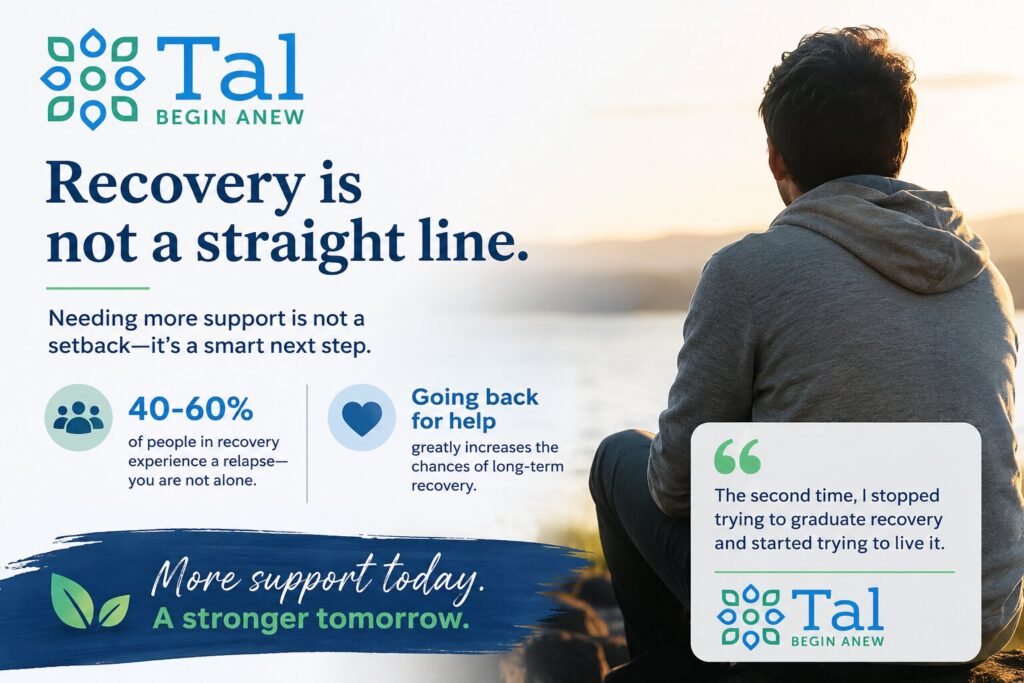
“The second time, I stopped trying to graduate recovery and started trying to live it.”
That shift changes things for a lot of people.
The Real Question Is Usually: How Much Support Helps You Feel Safe Again?
When people compare IOP vs day program options, they’re often asking practical questions about schedules and hours.
But emotionally, the real question is usually:
“How much support do I need to stop spiraling again?”
That answer is different for everyone.
Multi-day weekly treatment can work well for people who:
- Have some stability at home
- Can manage cravings with consistent support
- Need accountability while maintaining responsibilities
- Want regular therapeutic connection throughout the week
Structured daytime care often makes more sense for people who:
- Feel emotionally overwhelmed most days
- Recently relapsed after a period of sobriety
- Need more therapeutic contact and structure
- Are struggling to stay emotionally grounded between sessions
- Feel unsafe, unstable, or deeply isolated
And honestly, people often know the answer before they fully admit it out loud.
Usually it shows up in the difference between how they look externally and how chaotic things feel internally.
White-Knuckling Sobriety Is Exhausting
A lot of people technically stay sober while feeling emotionally miserable.
Every day feels like resistance.
Every craving feels enormous.
Every stressful moment feels dangerous.
That level of emotional strain wears people down over time.
One thing people rarely say openly is that some relapses happen because recovery became too lonely, too rigid, or too exhausting to sustain the way they were doing it.
Not because they didn’t care.
Because they were trying to survive recovery entirely through willpower.
And willpower gets tired.
That’s where more structure can help.
Not because treatment magically removes cravings or emotional pain overnight. But because support reduces isolation. It gives people accountability, routine, therapeutic connection, and emotional stabilization while the nervous system recalibrates.
Sometimes people need more hours simply because they’ve been carrying too much alone.
More Treatment Hours Can Feel Like Relief, Not Restriction
A lot of alumni panic when they hear they may need more intensive support.
They imagine punishment.
Restriction.
Loss of freedom.
Starting over from scratch.
But many people actually experience more support as relief.
Relief from managing cravings alone.
Relief from pretending they’re okay.
Relief from constantly negotiating with their own brain.
For some people, structured daytime care creates enough consistency and emotional containment to interrupt relapse cycles before things escalate further.
It also creates space to address deeper issues that may not fully surface in lower levels of care:
- Trauma
- Chronic stress
- Anxiety
- Depression
- Burnout
- Emotional isolation
- Relationship patterns
- Shame
Especially when mental health and substance use collide together, people often need more therapeutic contact than they initially expected.
And there’s nothing weak about that.
Recovery Needs Change as Life Changes
One of the hardest parts about recovery is accepting that your needs may evolve over time.
Sometimes people leave treatment genuinely stable. Then life changes:
- A relationship ends
- Work stress increases
- Mental health worsens
- Isolation creeps back in
- Grief surfaces
- Burnout takes over
Suddenly the level of support that once worked no longer feels sufficient.
That doesn’t mean you’re hopeless.
It means you’re human.
Recovery is not static. Support systems sometimes need adjusting the same way medications, routines, or coping strategies do.
The healthiest thing people can do is respond honestly to what they need now instead of clinging to what “should” be enough.
You’re Allowed to Come Back Before Everything Falls Apart
A lot of people wait too long after relapse because they think they need to hit another catastrophic bottom before returning to care.
They tell themselves:
“It’s not bad enough yet.”
“I can still fix this myself.”
“I don’t want to disappoint anyone.”
Meanwhile, things slowly worsen.
One of the strongest recovery decisions a person can make is returning for support before life completely implodes.
That is not weakness.
That is self-awareness.
Good recovery communities understand something important:
People relapse because they’re struggling, overwhelmed, isolated, hurting, or unsupported — not because they’re morally broken.
And many alumni who re-enter care later discover something surprising:
The second experience often feels more honest, more grounded, and more sustainable than the first.
Not because they became perfect.
Because they stopped pretending they could carry everything alone.
The Part of You Looking for Help Is Still Alive
If you’re comparing levels of care right now, part of you still wants recovery.
Even if you’re ashamed.
Even if you’re exhausted.
Even if substances are back in your life.
Even if you’re scared people will judge you.
That hopeful part did not disappear.
It may feel buried underneath disappointment right now, but it’s still there.
And honestly, the fact that you’re asking questions about support instead of fully giving up matters more than you realize.
For people exploring help in Cleveland or nearby support in Shaker Heights, additional structure may feel far less overwhelming than continuing to carry relapse alone.
FAQ: Choosing Between Different Levels of Support After Relapse
What’s the main difference between a day program and multi-day weekly treatment?
Structured daytime care generally involves more hours of therapy and support throughout the week, while multi-day weekly treatment offers a lower level of structure with fewer weekly hours.
How do I know if I need more support after relapse?
If you feel emotionally unstable, isolated, overwhelmed, unable to stay sober consistently, or unable to manage daily life safely, a higher level of support may help provide stability and accountability.
Does returning to treatment mean I failed?
No. Many people return to treatment after relapse. Recovery is rarely linear, and needing additional support does not erase previous progress.
What if I’m embarrassed to come back?
That feeling is extremely common. Most treatment professionals understand relapse as part of many people’s recovery journeys, not proof that someone is hopeless or unwilling.
Can structured care help if I already know recovery skills?
Yes. Knowing coping skills and consistently applying them during stress are very different things. More structure often helps people reconnect with tools they already learned but struggled to maintain alone.
Is more intensive support only for severe relapse?
Not necessarily. Many people seek additional care early specifically to prevent relapse from becoming more severe.
What if I don’t think I need live-in treatment?
Many people benefit from outpatient levels of care that provide meaningful structure and therapeutic support while still allowing them to live at home.
What if I’m scared treatment won’t work again?
That fear makes sense after relapse. But recovery support is not about guaranteeing perfection. It’s about helping people stabilize, reconnect, and build a more sustainable path forward.
Call (216) 480-4860 or visit our structured daytime care programs to learn more about our Partial Hospitalization Program services in Cleveland.