If you’re searching for addiction treatment in Ohio and worried about how to pay for it, you’re not alone. A lot of people assume rehab is only possible with private insurance or thousands of dollars upfront. That assumption keeps many people stuck far longer than they need to be.
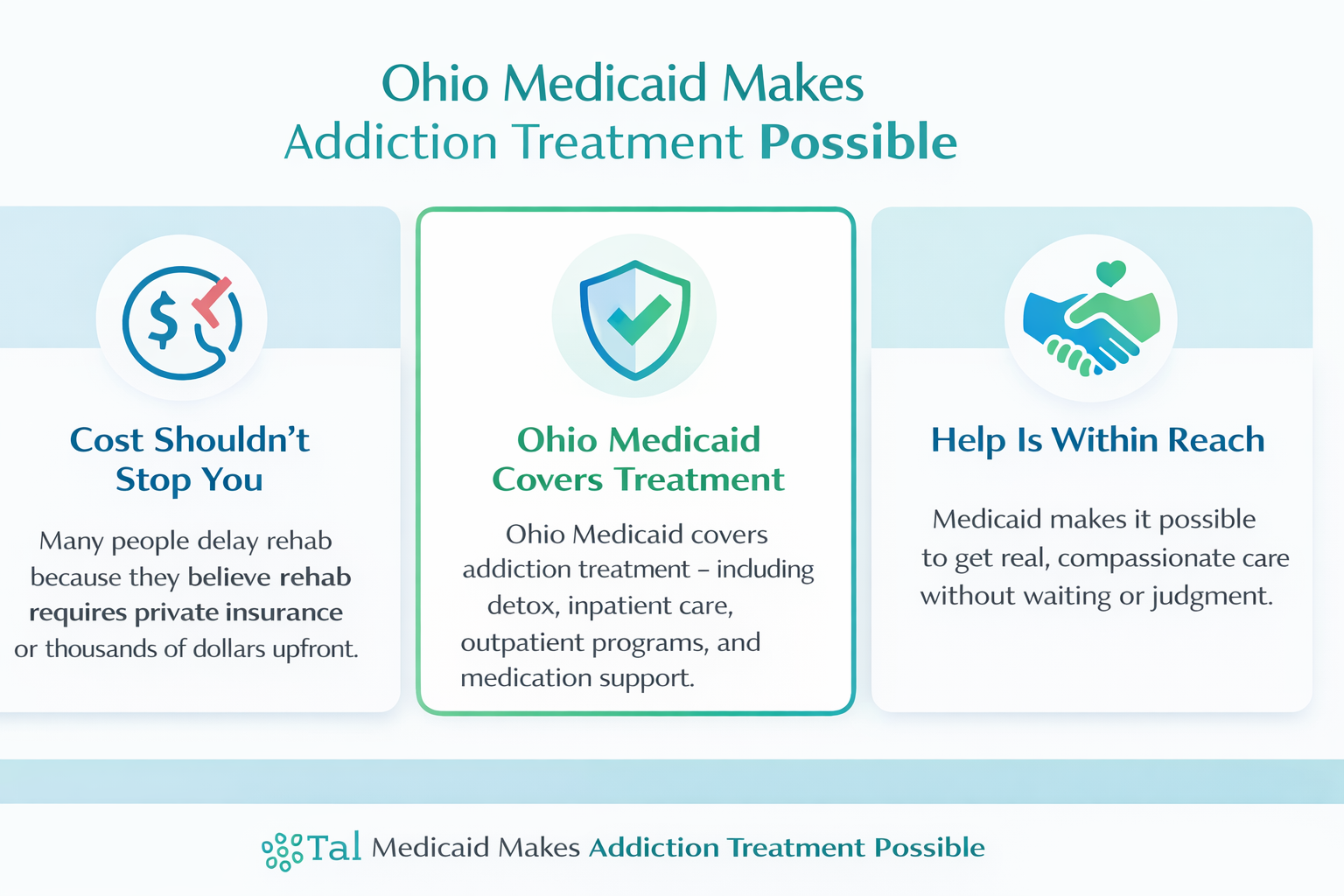
Here’s the truth: Ohio Medicaid covers addiction treatment, and for many people, it’s the reason they’re able to get help at all.
Whether you’re looking for support for yourself or someone you love, this guide will walk you through what Medicaid covers in Ohio, how quickly treatment can begin, and what to do next if things feel urgent.
Does Ohio Medicaid Cover Addiction Treatment?
Yes. Ohio Medicaid covers medically necessary treatment for substance use disorders. That includes care for alcohol addiction, opioid use, and other substance-related conditions, as well as treatment for co-occurring mental health concerns.
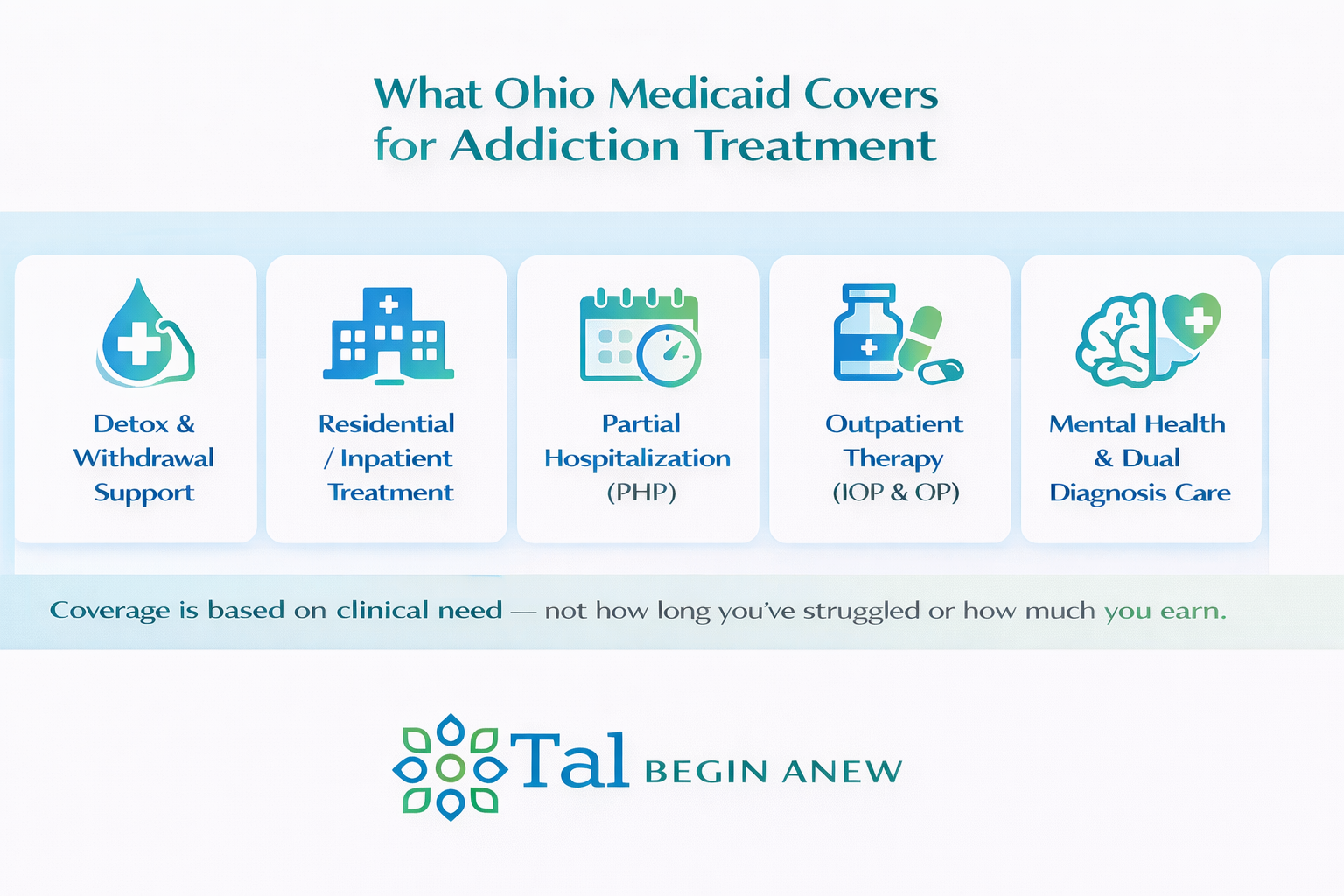
Coverage can include detox, residential or inpatient treatment, structured day programs, outpatient therapy, and medication-assisted treatment. What’s covered depends on your clinical needs, not your income level or how long you’ve been struggling.
For many people, this is a relief to hear. Addiction treatment through Medicaid isn’t about proving you’re “bad enough.” It’s about getting the level of care that matches what you’re dealing with right now.
Which Ohio Medicaid Plans Work at Rehab Centers?
Ohio Medicaid is managed through several insurance plans, and most treatment centers that accept Medicaid work with one or more of them. Common plans include CareSource, Buckeye Health Plan, Molina Healthcare of Ohio, UnitedHealthcare Community Plan, and Paramount Advantage.
If you’re not sure which plan you have — or whether it will be accepted — you don’t need to figure that out on your own. Most treatment centers can verify your Medicaid benefits quickly and explain what your plan covers before you commit to anything.
What Medicaid-Funded Rehab in Ohio Is Really Like
A common fear is that Medicaid-funded treatment will be bare-bones or impersonal. In reality, many Ohio addiction rehab centers that accept Medicaid provide structured, clinically sound care that looks very similar to privately funded programs.
People are often surprised to find consistent medical oversight, therapy, psychiatric support when needed, and a clear plan for what comes after the initial phase of treatment. Instead of just getting through a crisis, the goal is to help people stabilize and build something sustainable.
For some, this is the first time their physical health, mental health, and substance use are addressed together instead of in fragments. Others don’t need around-the-clock care, and benefit from a partial hospitalization program that provides consistent daytime support while allowing them to return home each evening.
Thinking About Taking the Next Step?
You don’t have to decide everything today. If you’re even considering treatment, a quick call can help you understand your options — without pressure or judgment. Medicaid makes it possible. The right team will make it easier.
How Quickly Can You Get Into Rehab With Medicaid?
This is one of the biggest concerns, especially when things feel like they’re getting worse.
In many cases, treatment can begin quickly. Detox admissions are often available the same day, and other levels of care may start within a few days. If there’s a medical or safety concern, urgency is taken seriously.
Having Medicaid does not automatically mean waiting weeks for help. Reaching out sooner can make a real difference in how fast things move.
What If You Don’t Have Medicaid Yet?
If you live in Ohio and don’t currently have Medicaid, you may still have options. Ohio residents can apply online, and some people qualify for emergency or presumptive coverage that allows treatment to begin while paperwork is being finalized.
If insurance feels confusing or overwhelming, you’re not failing at adulthood — you’re dealing with a system that’s hard to navigate. Many treatment centers are used to helping people through this part and can walk you through next steps without pressure.
For Anyone Feeling Hesitant or Ashamed
This deserves to be said plainly.
A lot of people delay treatment because they feel embarrassed about using Medicaid, or afraid they won’t be taken seriously. Those fears usually come from past experiences of being dismissed or misunderstood.
But addiction is a medical condition. Using Medicaid to get help doesn’t say anything negative about you — it says you’re taking care of yourself with the resources available.
Many people in long-term recovery will tell you that Medicaid is how they got their foot in the door when nothing else felt possible.
What to Do Next
If you’re ready to explore treatment in Ohio and you have Medicaid, the next step doesn’t have to be complicated. A confidential phone call can help you understand your options, verify coverage, and figure out what level of care makes sense right now.
You don’t need perfect clarity. You don’t need the “right” words. You just need to reach out, call (216)930-1957 for support.
You’re Allowed to Ask for Help
If addiction is affecting your life, help may be closer — and more accessible — than you think.
Ohio Medicaid exists to make treatment possible. The right treatment center will help you use it with respect, transparency, and care — not judgment.
FAQ
Can I still go to rehab if I don’t have my Medicaid card with me?
Yes. Most treatment centers can look up your coverage using your name, date of birth, and other basic information. You don’t need to wait for paperwork to start the process.
What if I’m waiting to find out if I qualify for Medicaid?
Some Ohio providers offer presumptive eligibility, which means you can start treatment while your application is being processed. Ask the admissions team if that’s an option.
Does Medicaid cover transportation to rehab in Ohio?
In some counties, yes. Non-emergency medical transportation (NEMT) is available through many Ohio Medicaid plans. A treatment center can help coordinate if needed.
Is Medicaid addiction treatment the same as “free rehab”?
Not exactly. Medicaid pays for your care if you qualify — it’s not free because of lower quality, but because it’s state-supported health coverage.