
Many people begin addiction treatment believing that if they can simply stop drinking or using drugs, everything else will eventually improve.
For some individuals, that is true.
For others, sobriety is only the beginning.
If someone has lived through a traumatic event, removing alcohol or drugs does not automatically stop nightmares, flashbacks, panic attacks, emotional numbness, or the constant feeling that something terrible is about to happen. Those symptoms may continue long after substance use ends, making recovery feel much harder than expected.
This is why PTSD and substance abuse are so often connected.
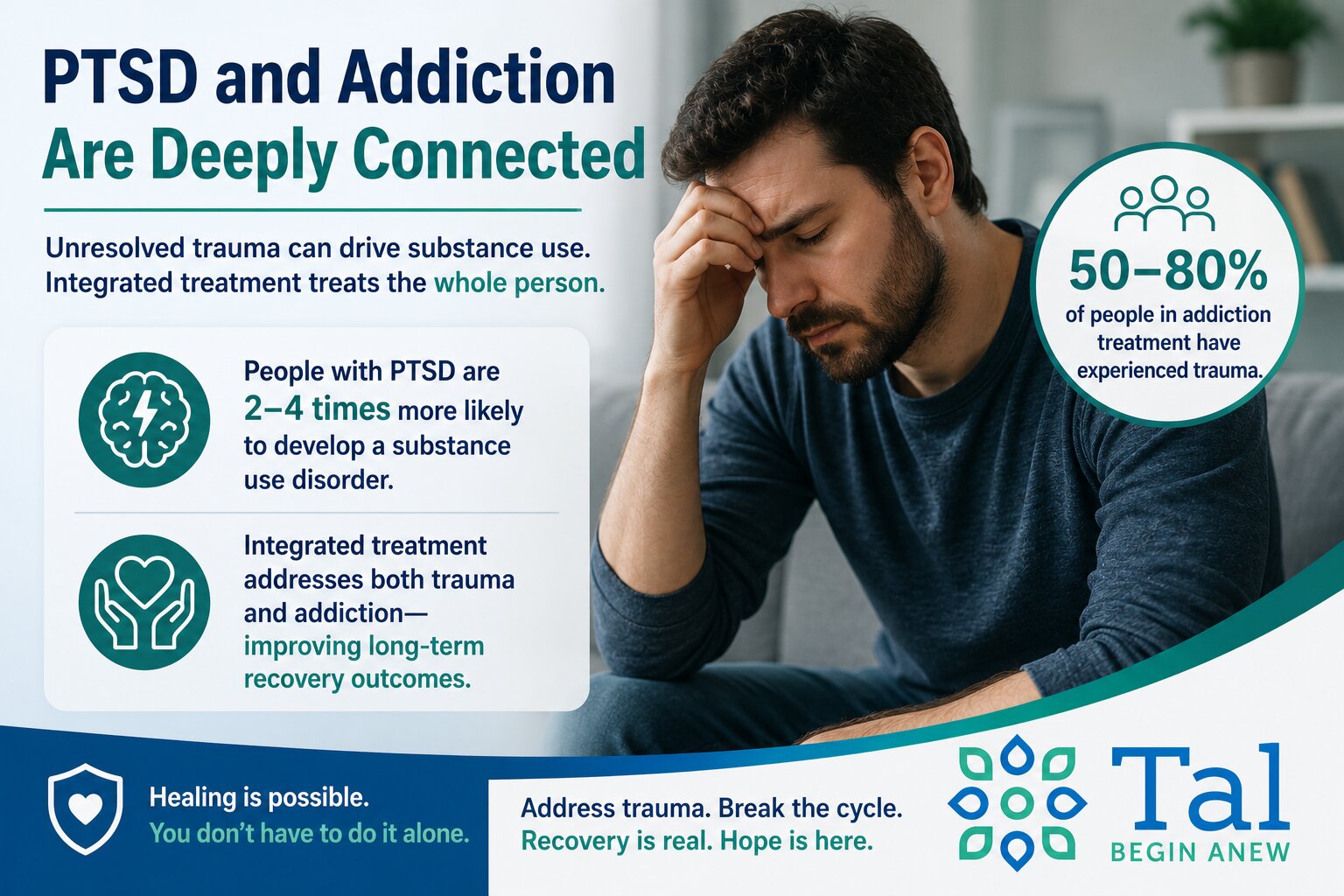
Post-traumatic stress disorder (PTSD) and substance use disorders frequently occur together, creating a cycle that can be difficult to break without comprehensive treatment. A person may begin using alcohol or drugs to cope with trauma-related symptoms, but over time, substance use often worsens mental health, increases stress, and makes PTSD more difficult to manage.
The encouraging news is that recovery is possible.
Today, many behavioral health programs recognize that addiction and trauma should not be treated as separate problems. Instead, integrated care focuses on both conditions at the same time, giving individuals the opportunity to heal physically, emotionally, and psychologically. If trauma has become part of your addiction story, seeking dual diagnosis treatment can provide the comprehensive support needed for lasting recovery.
The PTSD–Substance Abuse Connection
PTSD is a mental health condition that can develop after experiencing or witnessing a traumatic event.
Trauma may result from:
- Military combat
- Physical assault
- Sexual violence
- Domestic abuse
- Serious accidents
- Childhood neglect or abuse
- Natural disasters
- Sudden loss of a loved one
- Medical emergencies
- Community violence
Not everyone who experiences trauma develops PTSD. Many people gradually recover with time, support, and healthy coping strategies.
For others, trauma continues affecting everyday life for months or even years.
Common PTSD symptoms include:
- Intrusive memories
- Flashbacks
- Recurring nightmares
- Avoiding reminders of trauma
- Hypervigilance
- Difficulty concentrating
- Irritability
- Sleep disturbances
- Anxiety
- Emotional numbness
- Feeling detached from family and friends
These symptoms are not simply unpleasant.
They can interfere with work, relationships, parenting, physical health, and daily functioning.
Living with constant emotional distress can become exhausting.
Many people begin looking for anything that offers temporary relief.
Unfortunately, alcohol and drugs often seem to provide exactly that.
Someone who has not slept well in weeks may discover alcohol helps them fall asleep.
Someone overwhelmed by panic may misuse prescription medications to feel calmer.
Someone experiencing emotional numbness may turn to stimulants in an attempt to feel energized or connected again.
Although these substances may reduce symptoms temporarily, they never address the trauma itself.
Instead, they often create a second condition—addiction—that becomes just as difficult to overcome.
Why PTSD and Addiction Co-Occur So Often
The connection between trauma and addiction has been extensively studied.
Researchers believe several factors contribute to why these disorders frequently appear together.
Self-medication of emotional distress
One of the most widely accepted explanations is self-medication.
Many individuals are not trying to become addicted.
They are trying to survive difficult symptoms.
PTSD can cause overwhelming anxiety, fear, shame, guilt, sadness, and emotional pain.
Substances may seem like a way to quiet those emotions.
Examples include:
- Drinking alcohol to reduce anxiety
- Using opioids to escape emotional pain
- Taking sedatives to sleep
- Misusing stimulants to combat depression or fatigue
While this strategy may appear helpful initially, it eventually creates dependence while leaving PTSD untreated.
Hyperarousal never turns off
PTSD keeps the brain’s stress response activated.
Some people describe feeling as though they are constantly waiting for danger.
This state of hyperarousal may include:
- Increased heart rate
- Muscle tension
- Constant alertness
- Difficulty relaxing
- Feeling unsafe in ordinary situations
- Being startled easily
Living in this state every day can become mentally and physically exhausting.
Alcohol or drugs may temporarily slow this heightened stress response, making continued use increasingly appealing.
Nightmares and insomnia
Sleep disturbances are among the most common PTSD symptoms.
Many individuals experience:
- Nightmares
- Frequent awakenings
- Difficulty falling asleep
- Fear of going to sleep
- Chronic exhaustion
Without quality sleep, emotional regulation becomes much harder.
Some people begin relying on alcohol or drugs simply to make it through the night.
Unfortunately, substances often disrupt healthy sleep cycles, leading to even greater fatigue over time.
Emotional numbness
Not everyone with PTSD experiences overwhelming fear.
Some people feel disconnected instead.
They describe life as emotionally flat.
Activities they once enjoyed no longer bring happiness.
Relationships feel distant.
Instead of escaping emotions, some individuals begin using substances to experience emotions again.
Although temporary relief may occur, addiction ultimately deepens emotional disconnection.
Trauma affects brain function
Trauma can change how the brain processes fear, memory, emotions, and stress.
Repeated substance use also changes brain chemistry.
When both conditions occur together, they reinforce one another.
Trauma increases substance use.
Substance use worsens emotional regulation.
Poor emotional regulation increases PTSD symptoms.
The cycle continues until both conditions receive treatment.
Why Treating One Without the Other Often Leads to Relapse
One of the biggest reasons relapse occurs is that the underlying reason for substance use remains untreated.
Imagine someone who successfully completes detox.
They stop drinking.
Their withdrawal symptoms improve.
Physically, they feel healthier.
But emotionally?
They still experience:
- Nightmares every night
- Panic attacks
- Flashbacks
- Constant anxiety
- Emotional numbness
- Difficulty trusting others
Without healthier coping strategies, those symptoms can eventually become overwhelming.
The brain remembers that alcohol or drugs once provided temporary relief.
Cravings increase.
Relapse becomes more likely.
Now imagine the opposite.
Suppose someone begins therapy for PTSD while continuing heavy substance use.
Alcohol or drugs may interfere with:
- Memory
- Emotional regulation
- Concentration
- Participation in therapy
- Learning healthy coping skills
Progress becomes difficult because addiction continues affecting recovery.
This illustrates why treating only one condition often leaves the other free to continue driving unhealthy behaviors.
Recovery becomes much stronger when both are addressed together.
What Integrated Treatment Looks Like
Integrated treatment recognizes that trauma and addiction are connected.
Rather than separating mental health from addiction care, clinicians develop one coordinated treatment plan.
Comprehensive assessment
Treatment begins with understanding the whole person.
A comprehensive evaluation may include:
- Substance use history
- Trauma history
- PTSD symptoms
- Mental health concerns
- Medical history
- Previous treatment experiences
- Family history
- Recovery goals
This helps clinicians design care that addresses both conditions together.
Trauma-informed care
Trauma-informed care acknowledges that many people entering addiction treatment have experienced significant trauma.
Instead of asking,
“Why are you behaving this way?”
providers ask,
“What experiences may have contributed to these struggles?”
This approach helps create an environment focused on:
- Safety
- Trust
- Respect
- Collaboration
- Empowerment
Many individuals feel more comfortable participating in treatment when they know their experiences will be approached with compassion rather than judgment.
Individual therapy
Therapy provides an opportunity to explore how trauma continues affecting everyday life.
Treatment may focus on:
- Identifying trauma triggers
- Managing anxiety
- Developing healthier coping skills
- Building emotional regulation
- Processing difficult experiences at an appropriate pace
Trauma-focused therapy is carefully introduced based on each person’s readiness and overall stability.
Addiction counseling
Addiction counseling remains an important part of recovery.
Sessions often include:
- Understanding triggers
- Preventing relapse
- Developing coping skills
- Managing cravings
- Building healthy routines
- Strengthening motivation for recovery
When trauma symptoms increase, these skills become especially valuable.
Medication management
Some individuals benefit from medications that help manage PTSD symptoms, anxiety, depression, or cravings related to substance use.
Medication is always individualized and monitored by qualified medical professionals as part of a comprehensive treatment plan.
Group therapy
Many people living with PTSD feel isolated.
Group therapy helps individuals realize they are not alone.
Hearing others describe similar struggles often reduces shame while creating opportunities to learn new coping strategies and build supportive relationships.
Family involvement
Trauma and addiction affect entire families.
When appropriate, family education and therapy may help:
- Improve communication
- Rebuild trust
- Establish healthy boundaries
- Strengthen long-term support
Recovery often becomes more sustainable when loved ones understand both PTSD and addiction.
Why Integrated Care Supports Long-Term Recovery
Recovery is about much more than achieving sobriety.
It is about building a life that no longer depends on substances to manage emotional pain.
Integrated treatment helps individuals:
- Understand the relationship between trauma and substance use
- Learn healthier coping skills
- Reduce PTSD symptoms
- Improve emotional regulation
- Build stronger relationships
- Increase confidence
- Develop relapse prevention strategies
- Improve overall quality of life
When trauma begins healing, the urge to rely on substances often becomes easier to manage.
Likewise, maintaining sobriety creates greater stability for continued trauma recovery.
Each supports the other.
Getting Help at Tal Behavioral Health
If you have been trying to stay sober but continue struggling with nightmares, anxiety, flashbacks, emotional numbness, or overwhelming stress, it does not necessarily mean treatment has failed.
It may mean there is another condition that also deserves attention.
PTSD and addiction often become deeply connected, making it difficult to fully recover when only one condition is treated.
At Tal Behavioral Health, care recognizes that many individuals need support for both mental health and substance use. Treatment plans are designed to address the emotional impact of trauma while also helping individuals build practical recovery skills, strengthen resilience, and reduce the risk of relapse.
Healing from trauma takes time.
Recovery from addiction takes time.
When both are treated together, lasting recovery becomes much more achievable.
Call Tal Behavioral Health today at 216.930.1957 to speak with a caring team member and learn about your treatment options. The right support can help you recover safely and confidently.
Frequently Asked Questions
Does PTSD cause addiction?
PTSD does not directly cause addiction, but it significantly increases the risk of developing a substance use disorder. Many people begin using alcohol or drugs to cope with symptoms such as anxiety, flashbacks, insomnia, or emotional distress. Over time, this coping strategy can develop into dependence or addiction.
Can you treat PTSD and addiction at the same time?
Yes. Current clinical practice supports treating both conditions together whenever appropriate. Integrated treatment addresses substance use and trauma simultaneously, helping individuals develop healthier coping strategies while reducing the likelihood of relapse.
What is dual diagnosis treatment?
Dual diagnosis treatment is an integrated approach designed for individuals who have both a substance use disorder and a mental health condition, such as PTSD. Instead of treating each condition separately, clinicians coordinate care so both disorders are addressed within one comprehensive treatment plan.
Why does untreated trauma increase relapse risk?
Untreated trauma can leave symptoms such as anxiety, nightmares, emotional distress, and hypervigilance unresolved. These symptoms may become powerful triggers for substance use, increasing the likelihood that someone returns to alcohol or drugs as a way to cope.
Is recovery possible if I have both PTSD and addiction?
Absolutely. Many people successfully recover from both conditions with professional, integrated care. Recovery often involves addressing trauma, learning healthier coping skills, participating in therapy, building a strong support system, and following a personalized treatment plan that focuses on both mental health and addiction together.