
I didn’t think I’d ever be the person who came back. Not after 90 days. Not after celebrating “making it.” Not after posting my chip on Instagram with a shaky caption and teary gratitude.
But relapse doesn’t care about your milestone posts. It doesn’t care about your calendar.
Mine came quietly. No rock bottom. No dramatic spiral. Just one decision made in isolation, and then another. I didn’t even feel rebellious—I felt numb. Tired. Like someone slowly backing out of their own life.
And when I realized I was using again, I didn’t spiral into despair. I just… went quiet. Told myself maybe it wasn’t that bad. That I didn’t have to go back to treatment. That I could fix it on my own.
But fixing it alone didn’t work. What did work—what met me differently—was returning to a Partial Hospitalization Program. And not just any PHP. One that knew how to meet someone who was hurting, but not broken. Ashamed, but still willing.
Coming Back Was Harder Than Walking In the First Time
I wish more people talked about that.
The first time I entered treatment, I was terrified—but I had momentum. I had people cheering me on. I was doing the brave thing.
Coming back after relapse felt like failure. Like maybe I wasn’t the “success story” everyone thought I was.
I sat in the car outside the building for fifteen minutes before going in. I rehearsed what I’d say: “It wasn’t a full relapse,” “It was just a lapse,” “I’m fine, I just need a reset.” Every version was a half-truth. Every version tried to dodge the shame.
But when I walked into the Partial Hospitalization Program, no one asked me to justify my return. They just asked, “How can we support you differently this time?”
This Time, I Wasn’t Starting Over—I Was Starting From Experience
There’s this lie we tell ourselves: that relapse resets the clock. That we go back to zero. That everything we learned is lost.
But that’s not how it felt.
The second time through PHP, I brought knowledge. I knew my patterns. I had names for the things that tripped me up: social isolation, untreated anxiety, pressure to be “the strong one.”
Before, I moved through the schedule like a good student. Group therapy, skills training, check-ins. I did it all.
This time, I used it.
I let myself cry in group. I named my fear out loud. I told the psychiatrist the truth about how I’d been white-knuckling it through every week.
That wasn’t a reset. That was growth.
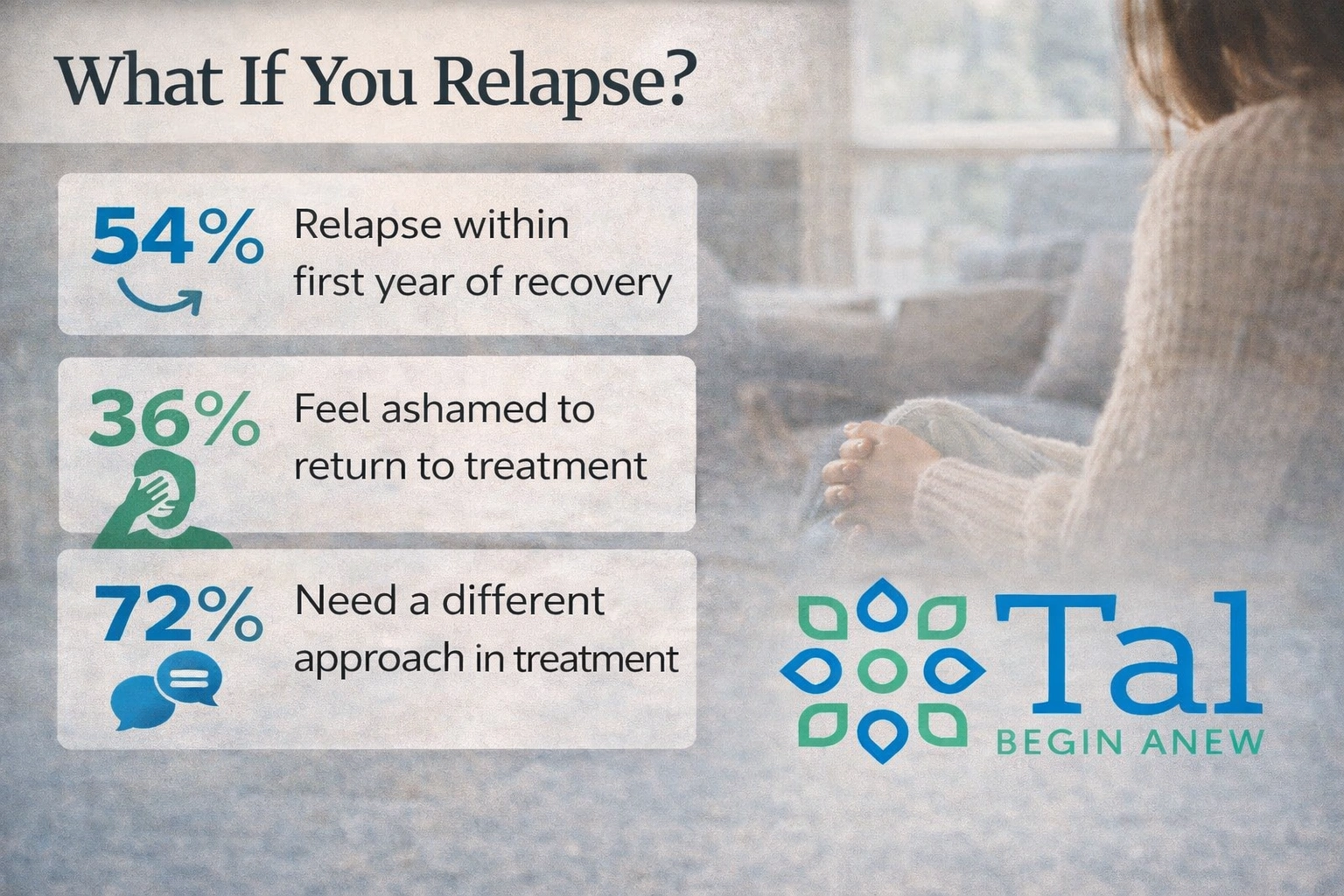
I Knew the Language—But Now It Meant Something
You can memorize all the terms: triggers, coping skills, HALT, relapse prevention. I had.
But the difference between knowing the terms and living them—that showed up in relapse.
This time, I didn’t sit in group talking about hypothetical triggers. I talked about the real ones: Friday nights alone, scrolling old texts, pretending to be okay so people wouldn’t worry.
The PHP team didn’t treat me like a box to check or a statistic. They heard the nuance. They gave me space to say, “I thought I was okay. I wasn’t.”
And they didn’t try to fix it. They walked beside me while I worked it out.
Shame Didn’t Get Erased—But It Got Rewritten
I had to say it out loud. In front of a circle of people I didn’t know yet:
“I relapsed.”
My voice shook. My stomach churned. And then someone across the room said, “Same.”
That moment was everything.
Not because it excused my relapse—but because it reminded me I wasn’t alone. That being back didn’t make me defective. That some of the strongest people I know in recovery have returned more than once.
The shame didn’t vanish. But it got shared. And when you share shame in the right room, it doesn’t grow. It shrinks.
I Asked for Different Help—and Got It
First time through, I tried to do everything “right.” I said the right things. I nodded. I journaled. I performed recovery instead of living it.
This time, I asked for specific support:
- I requested more one-on-one time when groups felt overwhelming.
- I asked for morning check-ins because that’s when cravings hit hardest.
- I worked with a therapist who understood the layers of relapse—not just substance use, but the self-betrayal that comes with it.
The Partial Hospitalization Program wasn’t static. It shifted with me.
Because the truth is, treatment isn’t one-size-fits-all—and it definitely isn’t one-size-fits-once.
PHP Was the Right Place to Return To
Some people think PHP is for when things are really bad.
But what I learned is this: PHP can be the exact right space when you’re caught in the in-between. Not in crisis, but not safe. Not spiraling, but not steady.
I didn’t need to be hospitalized—but I couldn’t trust myself to go it alone. I needed structure, support, daily accountability, and clinical care. PHP gave me that without making me feel like I’d failed.
It gave me time to reconnect—not just with recovery, but with myself.
If you’re in Ohio and feeling like you’re slipping, there’s help in Cleveland and care in Shaker Heights that meets you where you are—not where you “should” be.
My Second Time Through Looked Different—Because I Was Different
I wasn’t trying to prove anything this time. Not to the staff. Not to my family. Not to myself.
This time, I was trying to listen.
To my needs. My limits. My internal cues.
And that changed everything.
Because when you stop trying to look like a “success story,” you start becoming someone who can sustain recovery on your own terms.
What You Think You’ve Ruined—You Can Still Repair
Relapse doesn’t have to mean ruin.
It can be a checkpoint.
A brutal, painful, humbling checkpoint—but still a point you move from, not a point you end at.
I know that now. And I know that because the Partial Hospitalization Program met me again—not as a dropout, not as a disappointment, but as someone worth returning to.
You are, too.
Frequently Asked Questions (FAQs)
What is a Partial Hospitalization Program (PHP)?
A Partial Hospitalization Program (PHP) is a structured mental health or substance use treatment program that provides intensive therapy and support during the day—usually 5–6 hours daily, several days a week—while allowing clients to return home in the evening. It bridges the gap between inpatient and outpatient care.
Is PHP only for people who are new to treatment?
Not at all. Many people return to PHP after a relapse or a tough stretch in recovery. It’s not a punishment or a sign of failure—it’s a place to stabilize, reflect, and recalibrate with support.
Can I go back to PHP even if I’ve already completed it before?
Yes. In fact, many programs—including Tal’s—are designed to support alumni returning after relapse. Your previous experience doesn’t disqualify you—it helps personalize your care even more.
What’s the difference between PHP and IOP?
While both are outpatient programs, PHP offers more intensive care. PHP typically involves full-day treatment (like 9am–3pm), whereas an Intensive Outpatient Program (IOP) usually runs in the evenings or for fewer hours per day. PHP is a stronger fit when you need more structure and clinical involvement.
Will I be judged for relapsing?
No. Good programs understand that relapse is part of many people’s recovery paths. At Tal Behavioral Health, you’ll be met with compassion, not shame. Your relapse doesn’t define you—your willingness to return does.
What if I don’t feel “sick enough” for PHP?
If you’re asking that question, you’re probably carrying more than you realize. PHP isn’t just for crisis—it’s for anyone who needs structured, therapeutic support to stay well. You don’t have to hit rock bottom to deserve care.
The Door’s Still Open
If you’ve been through treatment and slipped, you’re not broken. You’re human. And you deserve support that doesn’t start from scratch—but builds from where you are now.
Call (216) 480-4860 to learn more about our Partial Hospitalization Program in Cleveland, Ohio. We’re here—and we’ll meet you where you are, again.