You were told that detox was the hardest part.
You counted the days, watched them stabilize, celebrated that first week clean.
Maybe you even started to breathe again.
But now, weeks—or even months—have passed. And something feels… wrong.
They’re not using, at least not openly. But they’re not thriving either. You’re watching them isolate, react, unravel. You’re hearing “I’m fine” through gritted teeth. And that hope you clung to so tightly after detox is starting to tremble.
If this is where you are, you’re not alone. And you’re not imagining things.
Sometimes recovery stalls because the care plan isn’t complete. A medication taper or a short stay in treatment might clear the body—but true healing takes more. When opioid use and emotional distress overlap, it’s not just addiction. It’s survival strategy, trauma response, mental health—and it needs integrated support.
Here’s how to recognize when your child’s journey requires more than what detox or maintenance treatment can provide—and how to get them (and yourself) the right help.
For families facing this turning point, we offer integrated treatment support that holds all of it—substance use, mental health, trauma, and family care.
1. The Substance Is Gone, But the Symptoms Aren’t
Opioids may be out of their system. But they still can’t get out of bed. Or they can’t sit still. Or they go from numb to overwhelmed in seconds.
This isn’t about weakness or noncompliance. It’s about what happens when the coping tool (the substance) is gone—and the underlying distress is still there.
If you’re seeing things like:
- Depression that doesn’t lift
- Panic attacks or severe anxiety
- Constant irritability or outbursts
- Emotional flatness
- Sleep or appetite disruption
These are signs that something deeper is at play. This isn’t something that detox alone can touch. It’s what integrated care was built for.
2. Relapse Happens Without a Clear “Why”
Maybe they were doing okay. Attending groups. Taking medication. Living at home. And then—out of nowhere—they used again.
You asked what happened. They shrugged.
“I don’t know.”
It’s not an excuse. It’s the truth. Because when people haven’t worked through what they’re carrying underneath, triggers can hit without warning—and they don’t know why they’re hurting until it’s too late.
This is where insight work, trauma treatment, and mental health care make the difference. Not to prevent all relapse—but to stop the confusion and shame that follows it.
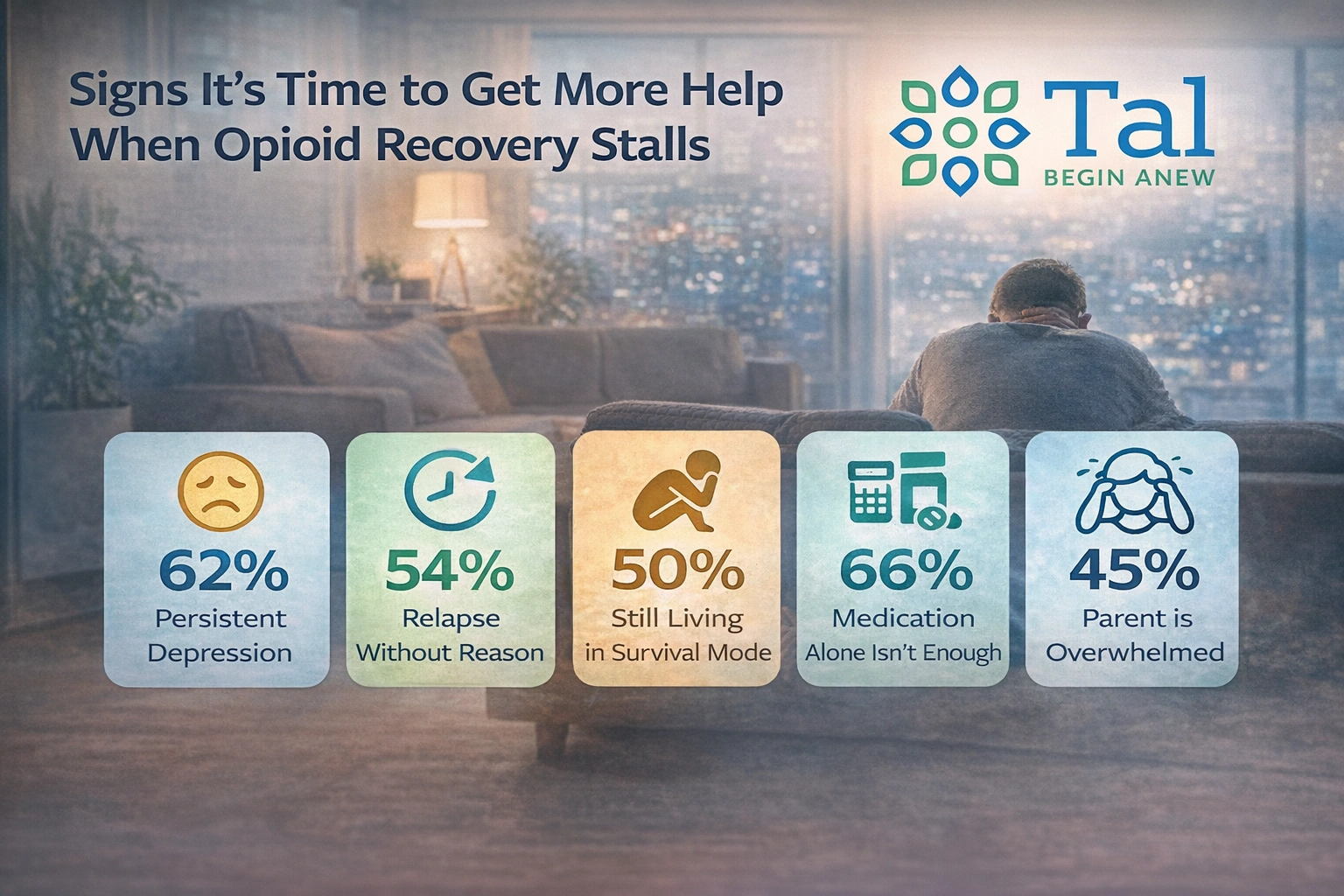
3. They’re Still Living Like They’re in Survival Mode
Watch how they move through the day. Is their body tense? Are they emotionally guarded? Do they scan the room? Avoid eye contact? Stay up late and sleep all day?
These aren’t just bad habits. They’re survival strategies.
And for many people who’ve used opioids, especially young adults, those survival strategies formed long before the drug use began. Integrated treatment doesn’t try to shut that down—it gently helps them build a life where they don’t have to live on high alert anymore.
Healing doesn’t mean pretending the pain never happened. It means helping them feel safe in a way that opioids never could.
4. Medication Is Managing Symptoms—But Not Improving Life
Medication-assisted treatment (MAT) can be life-saving. But it’s only one piece of the puzzle.
If your child is stable on MAT but still disengaged, unmotivated, or emotionally volatile, the medication is doing its job—but the rest of the care plan isn’t.
This isn’t a failure. It’s a sign that it’s time to add therapy, peer connection, and a structured, emotional container where they can explore more than symptoms. They need a place to build identity, meaning, and stability—something MAT alone can’t offer.
5. You’re Doing All the Emotional Labor
When your child’s care team only focuses on medical management, it often leaves you—the parent—carrying everything else:
- Monitoring their moods
- Managing tension at home
- Trying to figure out what’s “normal” recovery behavior
- Wondering when to push and when to back off
You should not be the sole emotional support system. And you shouldn’t feel like you’re doing this alone.
Integrated care means the emotional burden is shared—with professionals who understand how complex this phase can be, and how to hold both the client and the parent in the process.
If you’re in Northeast Ohio, we offer that kind of care in Shaker Heights and treatment options in Cleveland that support both individual and family healing.
6. Their Emotions Don’t Match Their Milestones
They’ve hit the “right” recovery markers: Clean for 30+ days. Following their treatment plan. Checking in with a prescriber.
But they’re emotionally flat. Or anxious. Or angry. And you’re not sure what happened to the version of them that smiled at the idea of healing.
This disconnect is real—and common.
Recovery milestones don’t mean much if your child doesn’t feel alive inside them. If they can’t feel joy, safety, or connection, relapse becomes more likely—not because they want to use, but because they still don’t know how to live.
7. You Keep Wondering: Is This As Good As It Gets?
The thought might sneak in quietly.
You’re afraid to say it out loud.
But here it is:
Is this all the help they’re going to get?
If that question keeps you up at night, listen to it.
You’re not asking for perfection. You’re asking for depth. Sustainability. A care plan that supports growth, not just abstinence. That honors the complexity of what your child has been through—and what they still need to face.
At Tal, we believe in that kind of care. Not one-and-done. Not fix-the-symptom. But stay-with-it care. Care that evolves with your child. And includes you, too.
Frequently Asked Questions
What exactly is integrated treatment?
It’s care that addresses substance use, mental health, and trauma all at once—because they’re often intertwined. It includes therapy, psychiatry, recovery support, and family involvement in a unified plan.
How is this different from standard outpatient or MAT?
Standard care often focuses on medication or sobriety milestones. Integrated care supports the full emotional and psychological picture—especially important when co-occurring mental health issues are present.
Does my child have to go to inpatient to receive this?
Not necessarily. We offer structured outpatient options where your child can receive daily support while continuing to live at home or in the community.
Will I be involved in their care?
Yes. Family education and support are part of the process—because you’re part of the system of healing. We work with parents to clarify boundaries, provide updates, and ensure you’re not carrying this alone.
What if my child doesn’t want more treatment?
That’s common—and workable. Our team specializes in meeting clients with resistance or ambivalence and helping them reconnect to their own motivation for healing.
You’re Not Asking for Too Much
You want your child to feel safe. To feel whole. To feel more than just “not using.”
That’s not overreacting. That’s parenting through pain. And you deserve a team that takes that seriously.
You’ve walked them through detox, through relapse, through late nights and early fear. You’ve stayed steady when everything around you shook.
Now let us help.
Call 216-480-4860 to learn more about Opioid addiction treatment in Cleveland, Ohio. We’ll help you take this next step—not with panic, but with a plan that meets the full reality of what your child is facing.