
You didn’t fail. You paused. And whether you’re thinking about returning to treatment or exploring a new path, there’s room for you here.
If you’re wondering whether to rejoin an Intensive Outpatient Program or try something different, take a breath. This isn’t about what you should do—it’s about what’s true for you, right now. Let’s sort through that, gently.
You’re Not Alone for Dropping Out
Leaving treatment midstream can feel like a secret shame. But here’s the truth: many people step away from IOP. Life gets overwhelming. Sessions get heavy. Burnout creeps in. Or sometimes, you just hit an internal wall that says: not today.
That doesn’t make you weak. It makes you real.
You didn’t fail the program—and the program didn’t necessarily fail you. You paused. And you’re allowed to come back.
Why You Left Matters—But Only a Little
Sometimes the reasons for dropping out are crystal clear. Other times, they’re a blurry mix of fatigue, resistance, logistics, and pain. Either way, your reasons are valid—and revisiting them without judgment can offer clues about what you need next.
Ask yourself:
- Did the group format feel too overwhelming or too shallow?
- Were you emotionally activated and didn’t feel supported through it?
- Was the timing or commute unsustainable?
- Did you feel out of sync with the people or pace?
You don’t need perfect clarity. But even a little insight can guide your next step.
What’s Shifted Since You Left?
Time creates space. And that space changes things.
Maybe your life circumstances have shifted—new stressors, losses, or realizations. Maybe your pain got louder. Or maybe you just realized you want more support, even if you’re scared to ask for it.
Returning to treatment doesn’t mean things got worse. It might mean you’re ready for better.
Returning to an IOP Isn’t Starting Over
If you’re considering returning to the same intensive outpatient program, know this: you’re not starting from scratch. You’re coming back with more awareness, more experience, and maybe even more willingness.
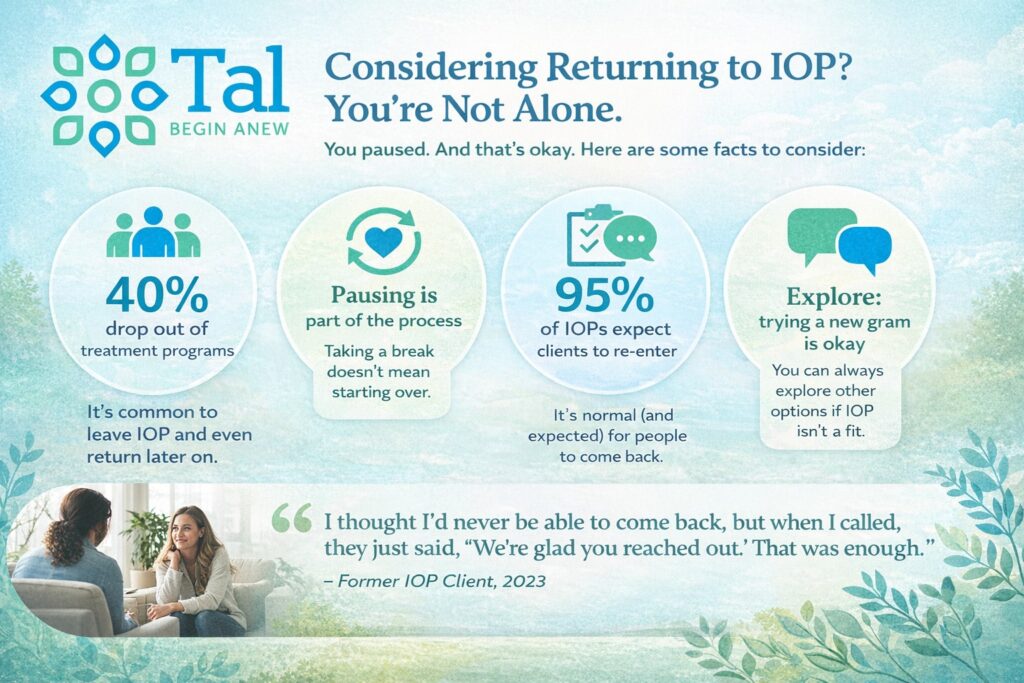
Most quality IOPs (like ours at Tal) expect people to leave and return. It’s not a red flag. It’s just part of the rhythm of real recovery. Life doesn’t happen in straight lines—and neither does healing.
If shame or fear is holding you back, hear this: we don’t need an explanation. You don’t have to perform readiness. Just show up. We’ll meet you from wherever you’re at.
Not Ready to Go Back? You Still Have Options
Let’s say you’re not feeling IOP again—and that’s okay too. The goal isn’t to check a box. The goal is to get the support that actually works for you.
Here are some possible directions to consider:
1:1 Therapy
If group felt overwhelming, a one-on-one therapist might offer the safety and flexibility you need to go deeper without distraction.
Trauma-Informed Care
If you hit painful material during IOP that you weren’t ready for, specialized trauma treatment might help you process that at your own pace.
Partial Hospitalization (PHP)
Need more structure than IOP? PHP offers daily support without overnight stays. It can be helpful for stabilizing after a tough stretch.
Peer Support or Community-Based Groups
Sometimes we just need to feel seen. Community groups (12-step, SMART Recovery, mental health peer groups) can offer connection and momentum without the clinical structure.
Choosing something new isn’t giving up. It’s growing forward.
You Can Re-Enter Quietly
There’s this belief that if you return to treatment, it has to be some big “I’m back” moment. That’s not true.
You don’t have to explain where you’ve been. You don’t have to promise you’ll stay. You can start small:
- A phone call
- A question
- A first appointment
Even the smallest “yes” can reopen the path. You don’t need to be fully ready—just curious enough to reach out.
Peer Quote
“I left halfway through IOP because I couldn’t deal. I thought I’d never be able to come back. But when I called, they just said ‘We’re glad you reached out.’ That was enough.”
– Former IOP Client, 2023
Your Next Step Can Be a Gentle One
This decision doesn’t need to be dramatic. It just needs to be honest. Whether you return to your intensive outpatient program or try something different, the most important thing is that it feels possible.
And if you’re not sure yet? That’s okay, too. Wondering is a form of readiness. Stay with the question.
If You’re in Beachwood, Ohio
Tal Behavioral Health offers a supportive, nonjudgmental Intensive Outpatient Program in Beachwood, Ohio for people navigating exactly this. We’re not keeping score. We just care that you feel seen, safe, and supported.
FAQ: Intensive Outpatient Program Decisions After Dropping Out
Can I return to IOP after ghosting or missing weeks of treatment?
Yes. Most programs—including ours—expect that life happens. You’re welcome back, even if it’s been a while. No explanations required.
What if I’m afraid the same problems will come up again?
That’s a valid fear. In many cases, talking to a therapist or intake staff before rejoining can help clarify what needs to shift. Sometimes a different group, schedule, or approach can make a huge difference.
Is it okay to try a different program instead?
Absolutely. You’re not obligated to return to the same IOP. If something didn’t work for you before, it’s okay to explore other formats or providers.
How do I know if IOP is still the right level of care?
If you’re functioning day to day but struggling emotionally, IOP might still be a good fit. If things feel totally unmanageable, you might need a higher level of care like PHP. A clinical assessment can help guide that.
Will I be judged by staff or other clients?
Not at Tal. We’re used to people re-entering. Everyone here knows healing isn’t linear. You’ll be welcomed, not questioned.
Ready When You Are
You don’t have to explain why you left. You just have to let us know if you’re ready to come back—or want to try something new.
Call (216) 480-4860 or visit to learn more about our Intensive Outpatient Program services in Beachwood, Ohio. Whether you’ve been here before or it’s your first time, the door is open.