
Some days, the second you step outside that therapy room, the world hits differently.
Maybe you meant to come back. Maybe you missed one session… and then three… and now it feels like you’ve ghosted the whole thing. It happens more often than you think. You’re not broken. You’re not banned. You’re just in the middle of a moment that deserves care.
This isn’t about being perfect. It’s about staying tethered—especially in those long in-between hours when treatment feels far away and real life comes in fast. If you’ve stepped away from your intensive outpatient program in Beachwood, or you’re trying to stay connected between sessions, this is for you.
Let’s talk about how to build a routine that grounds you, even if you feel like you’re starting over.
Start With Something Ridiculously Small
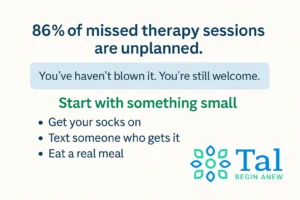
If your brain keeps shouting “get your life together,” try this instead: get your socks on.
Seriously. Pick one tiny action and let that be your “win” for the day. Take a shower. Step outside. Text someone who gets it. Eat a real meal, not just coffee and panic.
A grounding routine isn’t built all at once. It starts with a single anchor—something that tells your body, “I’m here. I’m real. I care.”
Quick Tips to Start Small:
- Set your phone background to a calming image or affirmation
- Put a water bottle next to your bed each night
- Choose one song as your “reset” track and play it daily
- Pick one “go-to” snack that helps you feel nourished
- Keep a notebook or notes app for just 3 words a day: “How am I?”
Create a Reset Corner (Not a Productivity Zone)
You don’t need a Pinterest-worthy space. Just a spot that’s yours—a place to catch your breath.
Maybe it’s one end of the couch. Maybe it’s the front seat of your car after group. Wherever it is, let it be the opposite of judgment. A reset spot is where you go when you’re spiraling, zoning out, or just trying not to scroll yourself into numbness.
This is your “come back to yourself” space.
It doesn’t have to be tidy. It just has to be yours.
Use the In-Between Hours With Intention
When you’re in IOP, the time between sessions is part of the work—even if no one says that out loud.
That’s where the integration happens. That’s where the old patterns creep in. That’s where you either forget or remember what you’re trying to heal.
Try building in short check-ins. Ten minutes, tops. Ask:
- What am I feeling?
- What just happened that made me want to shut down?
- What would help me stay present?
These aren’t performance checklists. They’re connection points.
“Sometimes I forget that I don’t have to feel okay all day. I just have to not disappear on myself.”
– Former IOP client, 2023
Let Simple Things Mark Your Day
When every day feels like mush, routines don’t have to be rigid—they just have to exist.
One client once said, “I use oatmeal to remind me it’s morning.” That’s it. That’s the whole routine.
Let music, meals, movement, or moments of quiet serve as your bookmarks.
Here’s what that might look like:
- A short walk around the block before starting your afternoon
- Playing the same song each evening to shift from “survival” mode to “still here” mode
- Eating lunch at the same spot each day—not because it’s exciting, but because it’s stable
- Writing one sentence each night before bed
Tiny patterns = mental footholds.
Normalize the Return (Even If You’ve Ghosted)
If it’s been a while since your last session, you might be thinking:
“They probably don’t want me back.”
“What’s the point now?”
“I already blew it.”
Pause.
We promise—missing sessions doesn’t erase your progress. And it definitely doesn’t erase your place.
You’re still welcome.
You don’t need to explain your absence unless you want to. There’s no entrance exam to come back. No shame checklist. Just show up. Or call. Or even just read this post and know the door’s open.
A lot of people drift in and out. It’s not failure. It’s life.
Have a Plan for the Really Hard Days
Not every day will be “drink tea and stretch” kind of gentle. Some days are loud. Some days are foggy. Some days, everything feels impossible.
That’s why it helps to have a plan—not a full routine, just a safety net.
Try this:
- One emergency contact you can text, even with just a thumbs-up emoji
- A playlist titled “Just Breathe”
- A sticky note near your bed that says, “Today is survivable.”
- A pre-recorded voice memo to yourself reminding you why you started treatment
You don’t need to function. You just need to make it through.
Progress Isn’t a Performance
This one matters most. Read it twice if you need to.
You’re not being graded.
Your routine doesn’t have to look like a morning wellness influencer. It doesn’t have to be aesthetic or impressive.
If all you did today was eat a sandwich and stay alive, that’s enough.
You are not the number of sessions you attend. You are not your to-do list. You are not a failure for needing help—again.
This isn’t about getting your life “together.” It’s about getting your self back. Slowly. Kindly. One small pattern at a time.
FAQs: Grounding Routines & Intensive Outpatient Programs
What is an intensive outpatient program (IOP)?
An intensive outpatient program is a structured form of mental health treatment that allows people to receive therapy and support while continuing to live at home. Most IOPs include several group and individual sessions per week, focusing on skills-building, emotional regulation, and support.
Learn more about Tal’s intensive outpatient program in Cuyahoga.
Can I still benefit from a routine if I’ve dropped out of IOP?
Absolutely. Even if you’ve missed sessions or stopped attending, routines help anchor your nervous system, build emotional regulation, and give your brain a sense of predictability. You can re-engage with support at any time—and your routine can help make that return feel less overwhelming.
What’s the difference between a routine and a schedule?
Schedules are rigid. Routines are rhythm. A schedule might say “journal at 8am.” A routine says “check in with yourself in the morning.” Think flexibility, not perfection.
What if I’m too depressed or numb to care about a routine?
Start with the smallest possible win. Put your socks on. Brush your teeth with the lights off. Sit by the window for two minutes. You don’t need motivation to start. You just need one small thing that reminds your body you’re alive—and worth the effort.
You Haven’t Blown It. You’re Still Welcome.
Whatever brought you here—whether it’s been a week, a month, or longer since you last showed up—know this:
You haven’t messed up too badly. You haven’t waited too long. You haven’t lost your spot.
You can come back. You can try again. You can start small—today, even—by building a tiny routine that says, “I care about me.”
Need help reconnecting?
Call (216) 480-4860 to learn more about our intensive outpatient program services in Beachwood, Ohio. You’re not alone—and we’re still here.