
Klonopin (generic name clonazepam) is a prescription benzodiazepine commonly used to treat anxiety disorders, panic disorder, and certain seizure conditions. For many people, it is an effective medication when taken exactly as prescribed.
However, Klonopin also affects the brain in ways that can lead to physical dependence, especially after regular or long-term use.
When someone who has become physically dependent suddenly stops taking the medication, the brain can struggle to adjust. This can trigger a range of withdrawal symptoms, from anxiety and insomnia to more serious complications such as seizures.
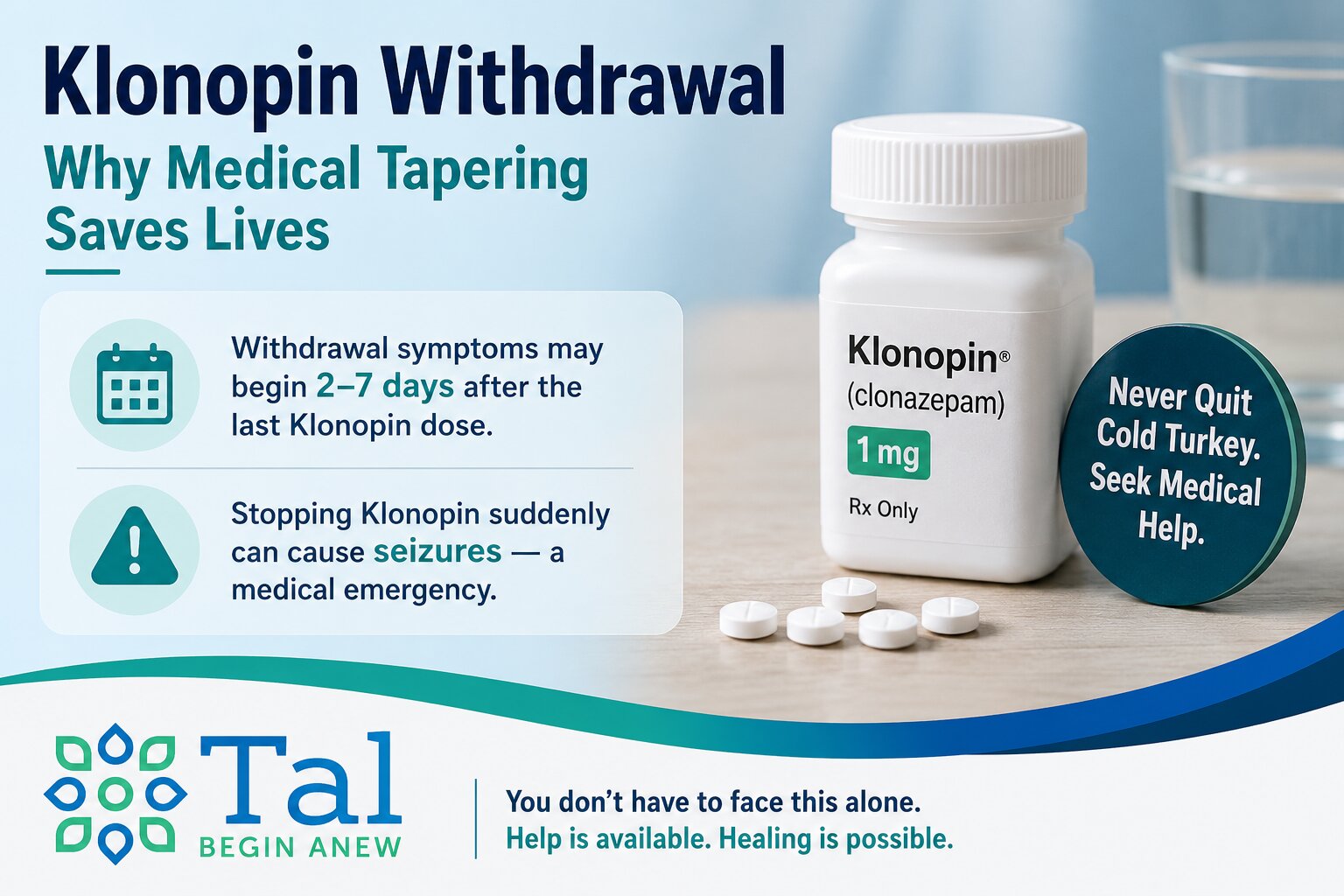
Unlike some other medications, Klonopin withdrawal does not always begin immediately. Because Klonopin remains in the body longer than many other benzodiazepines, withdrawal symptoms may not appear for several days. This delayed onset sometimes causes people to believe they have avoided withdrawal, only to experience increasingly severe symptoms later.
For this reason, healthcare professionals strongly advise against stopping Klonopin without medical guidance. If Klonopin use has become difficult to control or physical dependence has developed, seeking professional benzodiazepine addiction treatment can provide a safer path toward recovery.
What Klonopin Withdrawal Is
Klonopin belongs to a class of medications called benzodiazepines.
These medications work by increasing the activity of gamma-aminobutyric acid (GABA), a neurotransmitter that helps slow activity in the brain and nervous system.
This calming effect can reduce:
- Anxiety
- Panic attacks
- Muscle tension
- Certain seizure disorders
Over time, however, the brain adapts to the presence of the medication.
As a result, the nervous system may begin relying on Klonopin to maintain normal functioning.
If the medication is suddenly stopped or reduced too quickly, the brain temporarily loses that calming influence.
Instead of remaining balanced, the nervous system can become overactive.
This overactivity causes withdrawal symptoms that range from uncomfortable to potentially life-threatening.
Physical dependence can develop even when Klonopin is taken exactly as prescribed, particularly with long-term use. Dependence is not the same as addiction, but both require careful medical evaluation before making changes to the medication.
Symptoms of Klonopin Withdrawal
Withdrawal symptoms vary from person to person.
Several factors influence severity, including:
- Length of use
- Daily dosage
- Individual health
- Other medications
- History of benzodiazepine use
- Co-occurring medical or mental health conditions
Common withdrawal symptoms include:
Anxiety rebound
Many people originally begin taking Klonopin for anxiety.
During withdrawal, anxiety often returns and may temporarily feel more intense than it did before treatment began.
This is known as rebound anxiety.
Symptoms may include:
- Constant worry
- Restlessness
- Racing thoughts
- Panic attacks
- Feeling overwhelmed
Insomnia
Difficulty sleeping is one of the most common withdrawal symptoms.
People may experience:
- Trouble falling asleep
- Frequent waking
- Vivid dreams
- Nightmares
- Poor sleep quality
Lack of sleep can also make other withdrawal symptoms feel worse.
Tremors
Many individuals notice shaking or trembling during withdrawal.
These tremors often affect:
- Hands
- Arms
- Legs
- Entire body
They may become more noticeable during periods of stress.
Sweating
Excessive sweating frequently occurs because the nervous system becomes increasingly active during withdrawal.
People may notice:
- Night sweats
- Chills
- Hot flashes
- Clammy skin
Increased heart rate
Some individuals experience:
- Rapid heartbeat
- Heart palpitations
- Elevated blood pressure
- Feelings of intense nervousness
These symptoms can be frightening and sometimes resemble panic attacks.
Difficulty concentrating
Withdrawal may temporarily affect cognitive function.
People often report:
- Brain fog
- Poor concentration
- Memory difficulties
- Feeling mentally slowed
Irritability
Mood changes are common.
Small frustrations may feel overwhelming.
Some people experience:
- Irritability
- Anger
- Mood swings
- Emotional sensitivity
Nausea and digestive symptoms
Withdrawal can also affect the digestive system.
Possible symptoms include:
- Nausea
- Loss of appetite
- Stomach discomfort
- Vomiting
- Diarrhea
Sensory sensitivity
Some people become unusually sensitive to:
- Bright lights
- Loud sounds
- Crowded environments
- Physical touch
This heightened sensitivity usually improves as withdrawal progresses.
Seizure risk
The most serious complication of benzodiazepine withdrawal is seizure activity.
Withdrawal-related seizures are a documented medical emergency.
Although not everyone experiences seizures, the risk increases when Klonopin is stopped suddenly, especially after prolonged or high-dose use.
This is one of the primary reasons healthcare providers strongly recommend medical supervision during withdrawal.
The Klonopin Withdrawal Timeline
Every person’s experience is different.
The exact timeline depends on factors such as dosage, duration of use, metabolism, and overall health.
Because Klonopin has a relatively long half-life, withdrawal often begins later than many people expect.
Days 1–2
Many individuals experience few or no symptoms immediately after the last dose.
Because Klonopin remains in the body for an extended period, people sometimes mistakenly believe they will not experience withdrawal.
Days 2–7
Withdrawal symptoms commonly begin during this period.
People may notice:
- Anxiety
- Insomnia
- Restlessness
- Tremors
- Sweating
- Headaches
- Difficulty concentrating
Symptoms often continue increasing over several days.
This delayed onset can catch people off guard, especially if they stopped the medication without medical guidance.
Week 2
For many individuals, withdrawal symptoms reach their peak.
This may include:
- Severe anxiety
- Panic attacks
- Significant sleep disruption
- Muscle tension
- Tremors
- Increased seizure risk
Medical supervision remains especially important during this stage.
Weeks 3–6
Acute withdrawal symptoms often begin improving.
Sleep gradually becomes more consistent.
Physical symptoms slowly decrease.
However, emotional symptoms may continue.
Longer-term recovery
Some individuals experience lingering symptoms for several weeks or, less commonly, several months.
These may include:
- Mild anxiety
- Sleep difficulties
- Trouble concentrating
- Fatigue
- Increased stress sensitivity
This period is sometimes referred to as protracted withdrawal.
Not everyone experiences prolonged symptoms, but continued medical follow-up can help support recovery when they occur.
Why You Must Taper Medically—Never Stop Cold Turkey
One of the most dangerous misconceptions about benzodiazepines is that people can simply stop taking them once they decide they are ready.
Unlike many other medications, abruptly stopping Klonopin after physical dependence has developed can be dangerous.
Sudden discontinuation may increase the risk of:
- Severe withdrawal symptoms
- Panic attacks
- Hallucinations
- Confusion
- Dangerous elevations in heart rate and blood pressure
- Seizures
Because seizure risk can be life-threatening, medical professionals strongly advise against stopping Klonopin without supervision.
Instead, healthcare providers develop individualized tapering plans based on:
- Current dosage
- Duration of treatment
- Overall health
- Medical history
- Other medications
- Individual response during treatment
A medically supervised taper allows the brain time to gradually adjust while reducing the likelihood of severe withdrawal complications.
It is important not to create a tapering schedule independently or make medication changes without speaking to a qualified healthcare provider.
Factors That Can Affect Withdrawal Severity
No two people experience withdrawal exactly the same way.
Several factors may influence the intensity and duration of symptoms.
These include:
- Higher daily doses
- Long-term use
- Previous benzodiazepine withdrawal
- Taking multiple substances
- Alcohol use
- Co-occurring anxiety disorders
- Physical health conditions
- Individual metabolism
Because these variables differ greatly between individuals, professional evaluation is essential before making changes to Klonopin use.
Getting Help at Tal Behavioral Health
Deciding to stop Klonopin can be an important step toward improving your health, but how you stop matters just as much as the decision itself.
Withdrawal from benzodiazepines should never be approached casually.
The delayed onset of symptoms, combined with the possibility of serious complications such as seizures, makes medical supervision an essential part of safe recovery.
At Tal Behavioral Health, treatment plans are designed to support individuals experiencing benzodiazepine dependence through compassionate, evidence-based care. The goal is to help people safely navigate withdrawal, address the underlying factors contributing to substance use, and build a strong foundation for long-term recovery.
If Klonopin use has become difficult to manage, seeking professional guidance can help protect your health while making the recovery process safer and more manageable. You don’t have to face withdrawal alone. Call Tal Behavioral Health today at 216.930.1957 to speak with a caring team member and learn about your treatment options. The right support can help you recover safely and confidently.
Frequently Asked Questions
How long does Klonopin withdrawal last?
The timeline varies from person to person. Because Klonopin has a long half-life, withdrawal symptoms often begin between two and seven days after the last dose. Acute symptoms may last several weeks, while some people experience milder symptoms that gradually improve over a longer period.
Is Klonopin withdrawal dangerous?
Yes. Klonopin withdrawal can be dangerous, particularly if the medication is stopped suddenly after long-term or high-dose use. Serious complications, including seizures, can occur and require emergency medical attention. Medical supervision is strongly recommended.
Can you quit Klonopin cold turkey?
No. Healthcare professionals generally advise against stopping Klonopin abruptly because of the risk of severe withdrawal symptoms and seizures. If you want to stop taking Klonopin, speak with your prescribing healthcare provider to develop a medically supervised plan.
Why does Klonopin withdrawal start later than some other medications?
Klonopin stays in the body longer than many other benzodiazepines because of its relatively long half-life. As a result, withdrawal symptoms are often delayed, sometimes not appearing until several days after the last dose.
Can someone become physically dependent on Klonopin even if they take it as prescribed?
Yes. Physical dependence can develop during long-term prescribed use and does not necessarily mean someone has an addiction. However, dependence still requires careful medical management because withdrawal can be serious if the medication is stopped too quickly.