
Many people expect cocaine to affect the brain, heart, or energy levels.
What often surprises them is how quickly it can affect the nose.
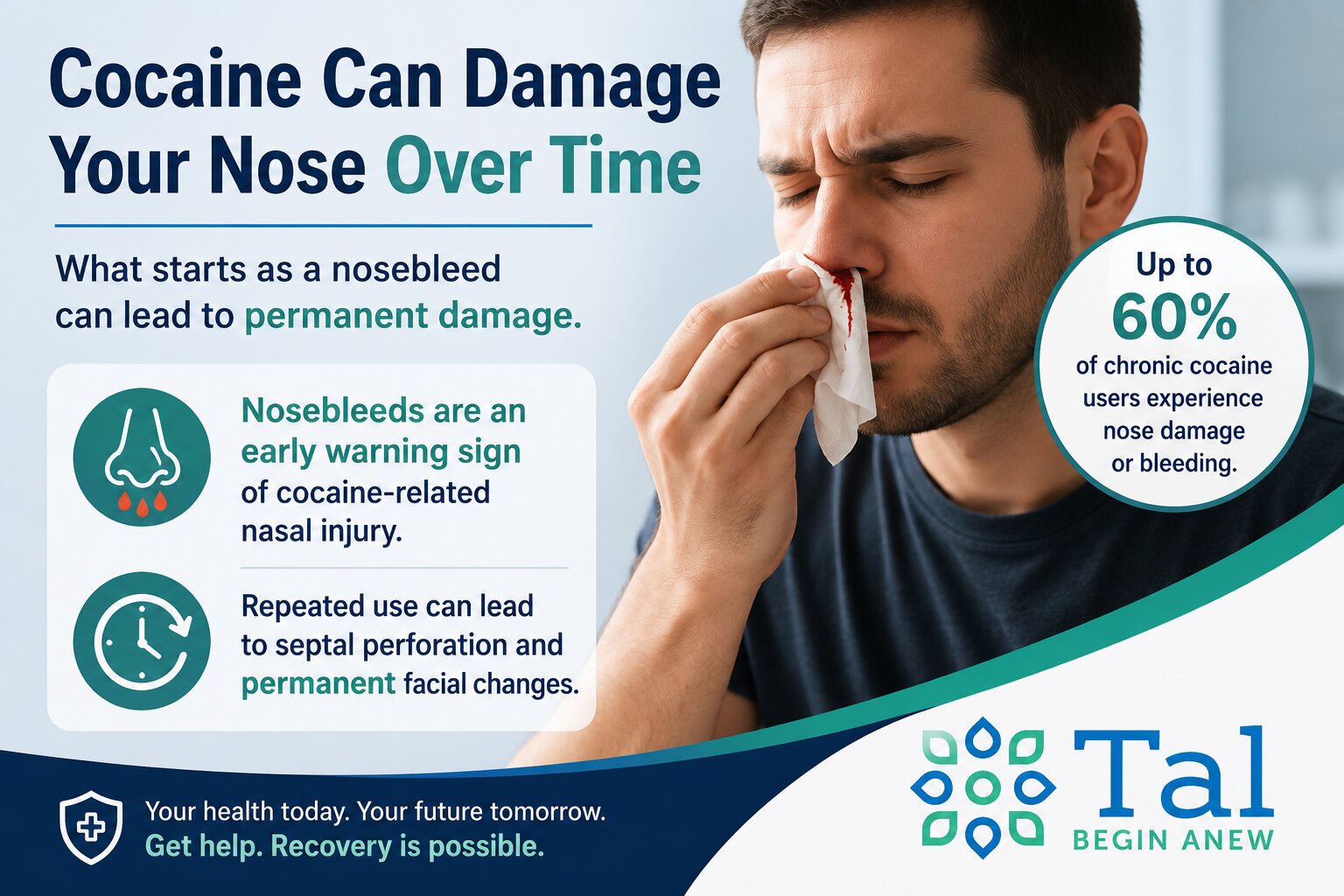
A nosebleed after using cocaine may seem like a minor inconvenience at first. It might happen only occasionally, stop within a few minutes, and be easy to ignore. But when nosebleeds become frequent or are accompanied by congestion, pain, or difficulty breathing through the nose, they may be a sign that cocaine is damaging the delicate tissues inside the nasal passages.
A cocaine nosebleed is more than an isolated symptom. For some people, it is one of the earliest visible signs that repeated cocaine use is affecting blood flow and causing injury to the nasal lining. If cocaine use continues, that damage can progress over time and, in some cases, become permanent.
Understanding why this happens can help people recognize the risks before more serious complications develop. If cocaine use has become difficult to stop, seeking professional cocaine addiction treatment can help address both the physical and psychological effects of ongoing use.
Why Cocaine Causes Nosebleeds
The inside of the nose contains delicate tissues supplied by a network of tiny blood vessels. These tissues help warm, humidify, and filter the air we breathe.
When cocaine is snorted, it comes into direct contact with this sensitive lining.
One of cocaine’s primary effects is vasoconstriction, which means it causes blood vessels to narrow.
Although this contributes to the drug’s immediate effects, it also reduces blood flow to the nasal tissues.
Healthy tissue depends on a constant supply of oxygen and nutrients delivered through the bloodstream.
When blood flow decreases repeatedly:
- The nasal lining becomes dry.
- Small blood vessels become fragile.
- Irritation increases.
- Tiny cracks can develop.
- Bleeding becomes more likely.
At first, the bleeding may be minor.
Someone may notice a small amount of blood when blowing their nose or wiping after use.
As cocaine use continues, however, repeated injury makes nosebleeds more common.
Other factors can further irritate the nose, including:
- Frequent snorting
- Dry indoor air
- Allergies
- Repeated rubbing or picking of the nose
- Adulterants or contaminants mixed with cocaine
These factors can work together with reduced blood flow, increasing the likelihood of bleeding.
The Nasal Damage Progression
Not everyone who experiences a nosebleed after cocaine use develops severe nasal damage.
However, repeated cocaine exposure can create a gradual pattern of injury that becomes more serious over time.
Stage 1: Occasional nosebleeds and irritation
The earliest symptoms often include:
- Mild nosebleeds
- Nasal dryness
- Burning sensations
- Frequent congestion
- Crusting inside the nose
These symptoms may come and go, making them easy to dismiss.
Stage 2: Ongoing tissue irritation
As blood flow continues to decrease, healing becomes more difficult.
People may notice:
- More frequent bleeding
- Persistent congestion
- Pain inside the nose
- Thick crusts
- Recurrent sinus infections
The nasal lining may become increasingly inflamed and fragile.
Stage 3: Tissue erosion
Over time, reduced blood supply can cause portions of the nasal lining to break down.
Instead of healing normally, damaged tissue may gradually deteriorate.
This can lead to:
- Larger areas of irritation
- Open sores
- Chronic discomfort
- Persistent drainage
- Increased bleeding
At this stage, damage often becomes more noticeable.
Stage 4: Septal perforation
The nasal septum is the wall that separates the two nostrils.
Repeated cocaine exposure can damage the cartilage and tissue that make up this structure.
Eventually, a hole may develop.
This complication is called septal perforation.
Symptoms may include:
- Whistling sounds while breathing
- Frequent nosebleeds
- Crusting
- Difficulty breathing through the nose
- Ongoing nasal discomfort
Septal perforation is a well-documented complication of chronic intranasal cocaine use.
Stage 5: Structural collapse (“saddle nose”)
In severe cases, continued tissue destruction weakens the support structures of the nose.
This can cause the bridge of the nose to collapse, creating what is sometimes called a “saddle nose” deformity.
Although this outcome is uncommon, it illustrates how serious untreated nasal damage can become when cocaine use continues for extended periods.
When Nasal Damage Becomes Serious
An occasional nosebleed does not automatically mean someone has severe cocaine-related injury.
Many nosebleeds result from dry air, allergies, minor irritation, or other common causes.
However, anyone experiencing repeated nosebleeds alongside ongoing cocaine use should not ignore the possibility of progressive nasal damage.
Medical evaluation becomes especially important if someone experiences:
- Frequent or heavy nosebleeds
- Bleeding that is difficult to stop
- Persistent nasal pain
- Increasing congestion on one side
- Foul-smelling drainage
- Visible holes inside the nose
- Whistling while breathing
- Changes in the shape of the nose
These symptoms deserve prompt evaluation by a healthcare professional.
Early recognition may help limit further damage while identifying the most appropriate treatment options.
What Cocaine Nosebleeds Signal About the Pattern of Use
For many people, nosebleeds develop gradually.
Because they often begin as a minor inconvenience, they can be easy to ignore.
Over time, however, recurring nosebleeds may indicate that cocaine use is becoming more frequent or that the body is no longer recovering between episodes.
Someone may begin noticing that:
- They bleed after nearly every use.
- Bleeding lasts longer than before.
- Congestion never completely improves.
- The nose feels sore even on days without cocaine use.
- They continue using despite obvious physical harm.
These changes can be an important warning sign.
They suggest that cocaine is no longer affecting only the brain’s reward system but is also causing visible damage to the body.
Many people continue using despite recognizing these physical consequences because cocaine dependence can make stopping extremely difficult.
Cravings, withdrawal symptoms, and psychological dependence often outweigh concerns about long-term health.
This is one reason professional evaluation can be so valuable.
Other Health Effects of Snorting Cocaine
Although the nose is directly exposed, cocaine affects far more than the nasal passages.
Repeated use may also increase the risk of:
- Chronic sinus infections
- Loss of sense of smell
- Frequent headaches
- Mouth and throat irritation
- Cardiovascular complications
- Elevated blood pressure
- Heart attack
- Stroke
- Anxiety
- Depression
- Sleep disturbances
Recognizing these effects early provides an opportunity to seek help before more serious medical complications develop.
Getting Help at Tal Behavioral Health
Seeing blood after using cocaine can be unsettling.
For some people, it becomes the first clear sign that cocaine is affecting more than their mood or energy level.
Repeated nosebleeds, persistent irritation, or worsening nasal symptoms may indicate that continued cocaine use is causing ongoing tissue damage.
While medical care can evaluate nasal injury, addressing cocaine use itself is often an important step toward preventing further harm.
At Tal Behavioral Health, treatment focuses on helping individuals understand the physical, emotional, and behavioral factors contributing to cocaine use. Through personalized care, individuals can begin building healthier coping strategies, reduce dependence, and work toward lasting recovery.
The earlier someone seeks support, the greater the opportunity to protect both their overall health and their future well-being.
Frequently Asked Questions
Does cocaine cause nosebleeds?
Yes. Cocaine commonly causes nosebleeds because it narrows blood vessels inside the nose, reducing blood flow to the delicate nasal tissues. Repeated exposure can dry out and damage the lining, making bleeding more likely.
Is nasal damage from cocaine permanent?
Some irritation and inflammation may improve after cocaine use stops. However, more severe complications—such as septal perforation or structural collapse of the nose—may be permanent and sometimes require surgical evaluation. Early medical care can help reduce the risk of long-term damage.
What is septal perforation?
Septal perforation is a hole in the nasal septum, the wall that separates the two nostrils. Chronic intranasal cocaine use can damage the tissue and cartilage that support the septum, leading to this complication. Symptoms may include whistling sounds while breathing, frequent nosebleeds, crusting, and nasal discomfort.
Can a single cocaine use cause a nosebleed?
It can. Cocaine immediately reduces blood flow and irritates the nasal lining, so even one episode of snorting cocaine may cause minor bleeding in some individuals. However, repeated use significantly increases the risk of ongoing tissue damage and more serious complications.
When should I see a doctor about a nosebleed after cocaine use?
You should seek medical evaluation if nosebleeds are frequent, severe, difficult to stop, or accompanied by persistent pain, nasal blockage, foul-smelling drainage, whistling while breathing, or changes in the shape of your nose. These symptoms may indicate more significant nasal injury that requires professional assessment.