
For years, I thought my paycheck was proof I didn’t have a problem.
I showed up every day.
I answered emails.
I met deadlines.
I paid my bills on time.
From the outside, I looked exactly like someone who had everything under control.
Inside was a different story.
Every morning started with promises.
Tonight I’ll drink less.
This weekend will be different.
Next month I’ll finally get things under control.
Every evening seemed to end the same way.
More drinks than I planned.
More excuses than I wanted to admit.
More exhaustion than anyone around me could see.
If you’re searching for help that can fit around work responsibilities, there’s a good chance you’ve had similar conversations with yourself. You may have already started looking at flexible addiction treatment programs because part of you recognizes something important:
The issue isn’t whether you’re functioning.
The issue is how much it’s costing you to keep functioning this way.
Success Can Become the Perfect Hiding Place
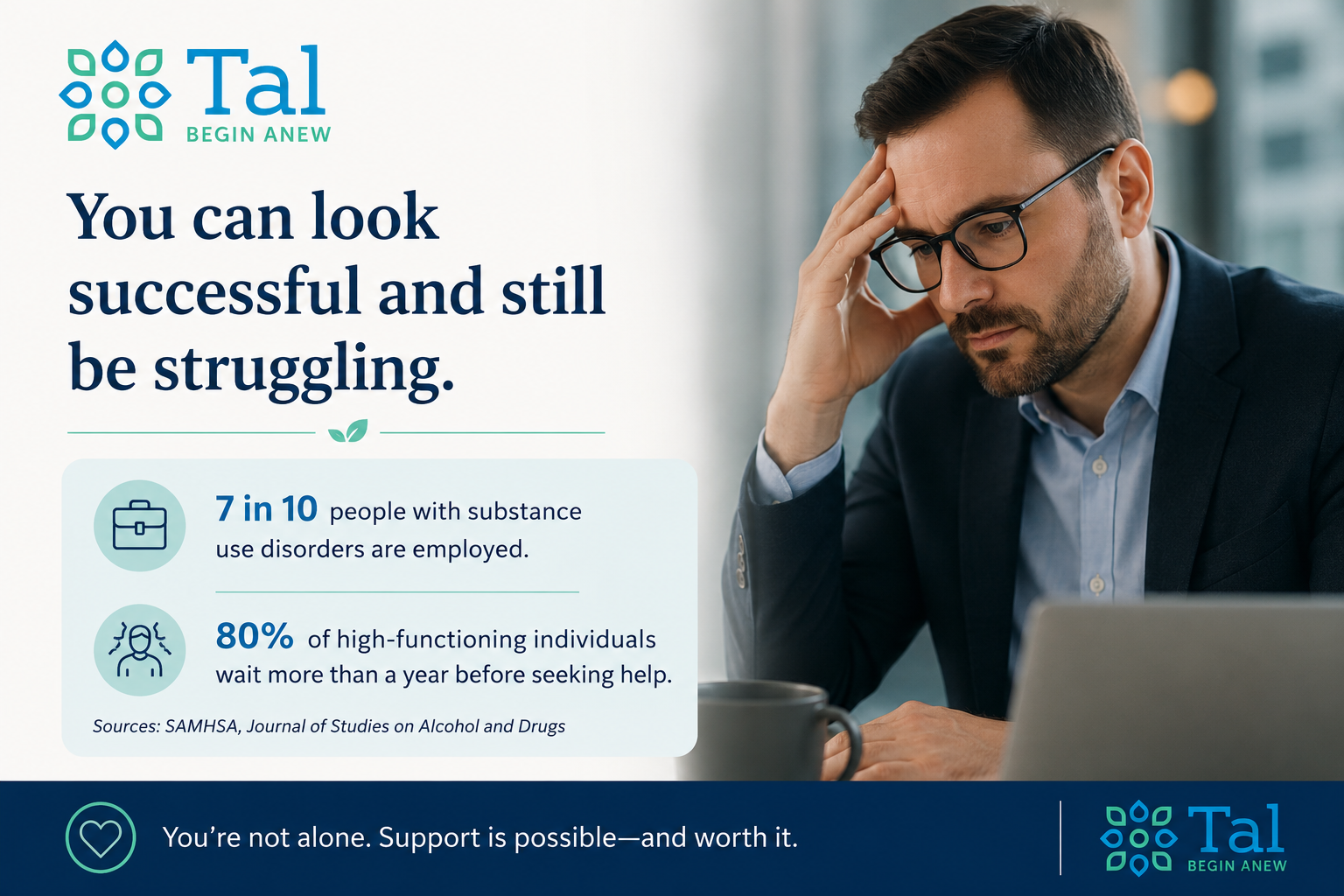
One of the most dangerous things about being high-functioning is that success can disguise suffering.
When someone loses a job because of addiction, people notice.
When someone gets arrested, people notice.
When someone’s life falls apart publicly, people notice.
But when someone keeps performing?
The struggle often remains invisible.
I know because I lived it.
People complimented my work ethic during the same period I was privately wondering whether alcohol controlled more of my life than I wanted to admit.
My performance reviews looked good.
My mental health didn’t.
My career was advancing.
My peace of mind wasn’t.
That’s the hidden cost many professionals carry.
The outside story and the inside story become completely different.
The Problem Wasn’t Work
For a long time, I blamed my career.
I told myself anyone would drink this much under the same pressure.
The deadlines.
The meetings.
The stress.
The expectations.
It felt logical.
The problem was that alcohol remained in my life even when work wasn’t stressful.
Weekends looked the same.
Vacations looked the same.
Celebrations looked the same.
Eventually I had to admit something uncomfortable.
Work wasn’t causing every problem.
Work was simply helping me avoid looking at one.
That realization wasn’t easy.
But it was necessary.
High-Functioning Doesn’t Mean Healthy
This is something I wish more people understood.
Being able to maintain responsibilities doesn’t automatically mean everything is okay.
Many people use success as evidence that their situation isn’t serious.
I certainly did.
I told myself:
“I’m still working.”
“I’m still paying bills.”
“I’m still handling my responsibilities.”
All those statements were true.
What wasn’t true was the assumption that those things meant I was healthy.
A person can be productive and exhausted.
Responsible and unhappy.
Successful and struggling.
Those realities can exist at the same time.
Unfortunately, many people don’t realize it until they are carrying far more than they can manage.
The Exhaustion Builds Slowly
The strange thing about addiction is that it often develops quietly.
There isn’t always a dramatic turning point.
Sometimes it’s a thousand small compromises.
One more drink.
One more excuse.
One more promise pushed to tomorrow.
Eventually, I realized I was spending enormous energy managing my drinking rather than managing my life.
I was calculating.
Planning.
Hiding.
Recovering.
Repeating.
Every day felt like carrying a backpack that got slightly heavier without me noticing.
Then one day I realized I was exhausted.
Not physically.
Emotionally.
Mentally.
Spiritually.
The weight had become impossible to ignore.
Why So Many Professionals Delay Treatment
When I first considered getting help, I wasn’t worried about recovery.
I was worried about logistics.
Could I keep working?
Would treatment require me to disappear?
Would my employer find out?
Would I lose opportunities?
Would people think less of me?
These fears are incredibly common.
In fact, they stop many people from reaching out.
The irony is that the same individuals who are skilled at solving complex professional problems often struggle to solve this one.
Not because they’re incapable.
Because addiction convinces them there are only two options:
Keep going.
Or lose everything.
Neither is necessarily true.
The Discovery That Changed Everything
I remember the moment my perspective shifted.
I learned that treatment didn’t always mean putting life on hold.
That may sound simple.
For me, it was life-changing.
I had spent years assuming recovery required disappearing from my responsibilities.
I imagined leaving work indefinitely.
Walking away from obligations.
Starting over from scratch.
Instead, I discovered that some people receive significant support while continuing to maintain important parts of their daily lives.
That realization gave me something I hadn’t felt in a long time.
Possibility.
For many people searching for an intensive outpatient Cleveland evening option, that’s exactly what they’re hoping to find.
Not a way to escape responsibility.
A way to keep their responsibilities while finally addressing what’s happening underneath them.
The Goal Wasn’t to Save My Job
At first, I thought recovery was about protecting my career.
Looking back, I see things differently.
My career wasn’t actually what needed saving.
I did.
The substances were affecting far more than my work performance.
They were affecting my relationships.
My confidence.
My sleep.
My health.
My ability to enjoy life.
Recovery helped me realize something important:
Success feels very different when you’re actually present for it.
Before recovery, achievements felt temporary.
I immediately moved on to the next source of stress.
The next reason to drink.
The next distraction.
After recovery, I began experiencing moments instead of rushing through them.
That change was difficult to describe but impossible to miss.
Why Waiting Often Costs More Than Treatment
One belief kept me stuck longer than anything else.
I thought waiting would make things easier.
I thought I’d eventually find the perfect time.
A less stressful season.
A quieter month.
A better opportunity.
That time never arrived.
Life remained busy.
Responsibilities remained.
Stress remained.
The only thing that changed was the amount of energy required to keep pretending everything was okay.
Eventually I realized something important:
Waiting wasn’t protecting my career.
Waiting was putting it at risk.
The longer I ignored the problem, the more room it had to grow.
Seeking help wasn’t the disruption.
The addiction already was.
If You’re Still Showing Up, You’re Exactly Who This Is For
Many people assume addiction treatment is designed only for people whose lives have completely unraveled.
That’s simply not true.
Some of the people who benefit most from support are still showing up every day.
Still working.
Still parenting.
Still leading teams.
Still paying bills.
Still carrying enormous weight in silence.
If that’s you, know this:
You do not have to prove you’re struggling enough.
You do not need a dramatic rock-bottom story.
You do not need public consequences before your concerns become valid.
The fact that you’re searching for answers may already be telling you something important.
The Strongest Decision I Made Didn’t Happen at Work
For years, I thought strength meant handling everything myself.
Pushing through.
Working harder.
Ignoring discomfort.
Managing problems privately.
Eventually I learned a different definition.
Strength sometimes looks like making a phone call.
Asking a difficult question.
Admitting something isn’t working.
Accepting support.
That decision changed my life far more than any promotion ever did.
For individuals exploring treatment options in Cleveland or seeking support in Shaker Heights, help may be more accessible and flexible than you realize.
If you’ve been trying to carry everything alone, consider this:
The goal isn’t to choose between recovery and your career.
The goal is to build a future where both can exist together.
Call 216-480-4860 or visit our flexible addiction treatment programs to learn more about our programs, iop services in Cleveland, Ohio.
Frequently Asked Questions
Can I keep working while getting addiction treatment?
Many people do. Treatment options vary, and some programs are designed to help individuals receive support while maintaining employment and other responsibilities.
What if my job is the reason I haven’t asked for help?
You’re not alone. Fear of losing income, missing work, or damaging a career is one of the most common reasons people delay treatment.
Do high-functioning professionals really struggle with addiction?
Yes. Many individuals maintain successful careers while privately battling alcohol or drug use. Success does not eliminate the possibility of addiction.
How do I know if I’m high-functioning or simply in denial?
A helpful question is whether substances are creating consequences that you’re minimizing, rationalizing, or working hard to hide. Honest self-reflection can reveal patterns that are easy to overlook.
Will my employer find out if I seek treatment?
Treatment is generally confidential. Specific privacy protections depend on individual circumstances and applicable laws.
Do I need to hit rock bottom before getting help?
No. Many people seek support long before experiencing severe consequences. Early intervention often creates more options and better outcomes.
What if I’m scared that treatment won’t work?
That’s a common concern. Most people feel uncertain before taking the first step. Recovery isn’t about certainty. It’s about being willing to explore a different path.
What if I’ve tried to quit before and couldn’t?
Many people make multiple attempts before finding lasting recovery. Previous struggles don’t mean future success is impossible. They often provide valuable lessons for the next step forward.