
There is a moment many people experience that rarely gets talked about.
It usually happens early in the morning.
The night before seemed fairly normal. Maybe you had drinks with friends. Maybe you relaxed at home after a stressful day. Maybe you told yourself it was just another evening.
Then morning arrives.
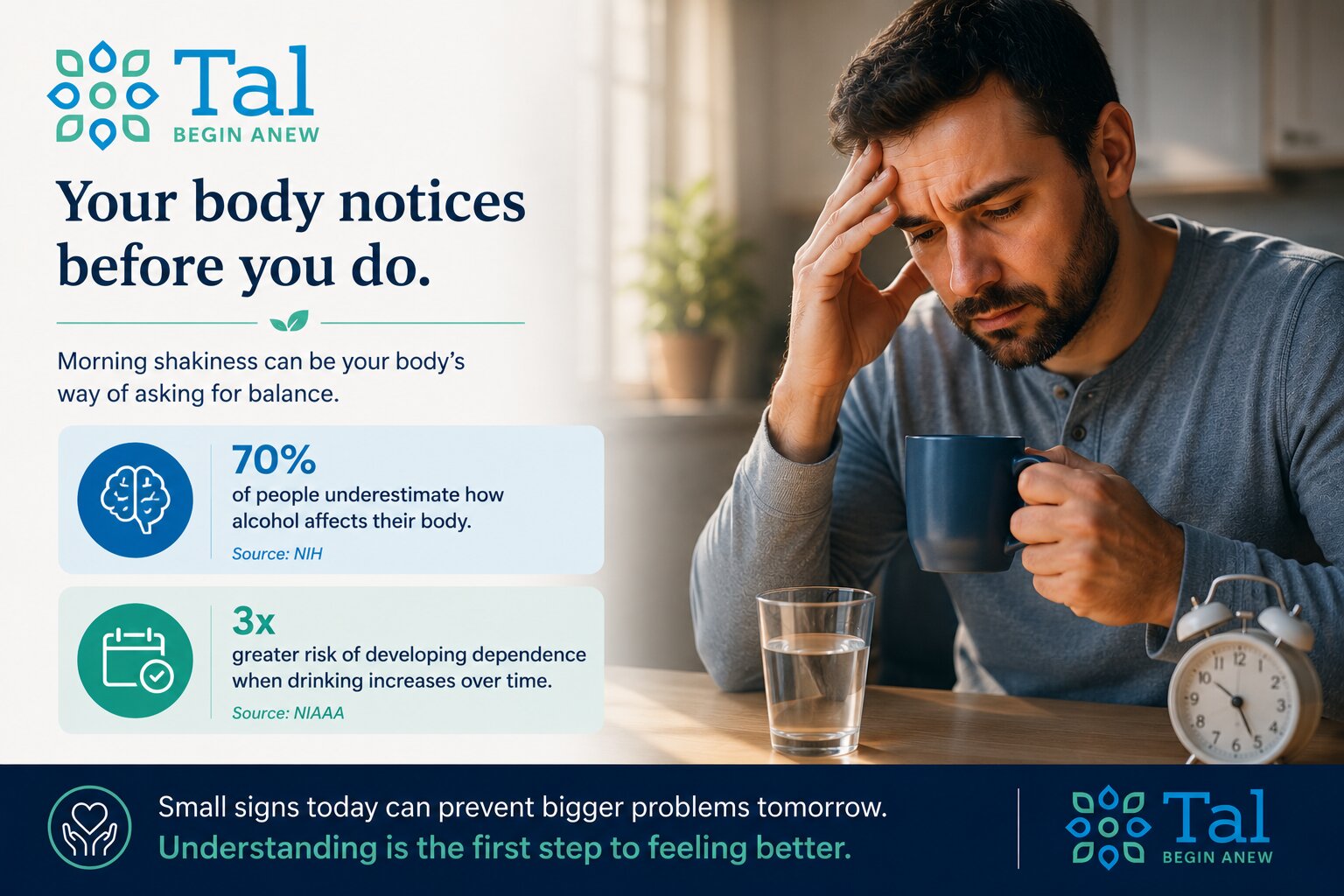
You reach for your coffee mug and notice your hand isn’t as steady as usual.
At first, you brush it off.
Maybe you’re tired.
Maybe you need food.
Maybe it’s just caffeine.
But when it happens again a few days later—or next weekend, or the following month—you begin asking a different question:
“Why is this happening?”
If you’ve found yourself wondering why your hands shake after a night of drinking, you’re not alone. Many people begin questioning their relationship with alcohol after noticing physical symptoms they didn’t expect.
For some, that curiosity eventually leads them to learn more about alcohol treatment options and the ways alcohol can affect the body over time.
The good news is that noticing a change does not automatically mean something is seriously wrong.
But it does mean your body may be asking for your attention.
Your Body Is Always Trying to Communicate
One of the most common mistakes people make is assuming symptoms appear out of nowhere.
In reality, the body often provides subtle clues long before a major problem develops.
Alcohol affects the brain, nervous system, sleep cycle, hydration levels, blood sugar, and stress response systems.
While drinking, alcohol slows certain processes down. As it leaves the body, those systems begin adjusting again.
That adjustment period can sometimes create symptoms such as:
- Shaky hands
- Sweating
- Increased anxiety
- Restlessness
- Nausea
- Difficulty concentrating
- Racing thoughts
- Fatigue
For many people, these symptoms feel surprising because they occur after drinking rather than during it.
The experience can feel confusing.
You expected a headache.
Instead, your body feels unusually unsettled.
Why the Morning Often Feels Worse
Many people notice symptoms shortly after waking up.
There are several reasons for this.
Alcohol disrupts sleep quality, even when it initially makes you feel sleepy. You may spend less time in restorative sleep stages and wake up feeling less refreshed.
Alcohol can also contribute to dehydration and fluctuations in blood sugar levels.
When combined with poor sleep, these effects can make mornings feel particularly difficult.
Some people describe waking up feeling nervous before they even know why.
Others report feeling physically shaky, emotionally sensitive, or unusually uncomfortable.
The combination can create a powerful sense that something isn’t quite right.
When Occasional Symptoms Become a Pattern
One shaky morning may not mean much on its own.
Repeated episodes deserve more attention.
Patterns often tell a more meaningful story than isolated experiences.
Ask yourself:
- Is this happening more frequently?
- Have the symptoms become more noticeable over time?
- Am I drinking more than I used to?
- Have I started thinking about alcohol earlier in the day?
- Do I feel relief when I know I’ll be able to drink later?
These questions aren’t designed to create shame.
They’re designed to help you recognize trends that can be difficult to see while living through them.
Many people are surprised to realize that their drinking habits changed gradually over months or years.
Because the change happened slowly, it felt normal.
Until the body started speaking up.
The Difference Between Concern and Panic
One reason people avoid thinking about alcohol-related symptoms is fear.
They worry that noticing a problem means they must immediately accept a label they aren’t comfortable with.
That isn’t true.
Curiosity is not the same thing as panic.
You don’t need to decide today whether alcohol is causing every challenge in your life.
You don’t need to have all the answers.
You simply need to be willing to ask honest questions.
Sometimes awareness alone creates positive change.
Sometimes people reduce their drinking and notice improvements.
Sometimes they realize alcohol has become a bigger part of their life than they intended.
Either outcome provides valuable information.
Other Signs People Often Notice
Shaking hands are rarely the only symptom someone experiences.
Many people who begin questioning their alcohol use report a collection of smaller concerns that gradually add up.
These may include:
Difficulty Sleeping
Many people fall asleep quickly after drinking but wake up repeatedly throughout the night.
Over time, poor sleep can affect mood, concentration, energy, and overall well-being.
Increased Anxiety
Some individuals notice they feel unusually anxious the morning after drinking.
What initially felt relaxing the night before may be followed by heightened stress the next day.
Changes in Mood
Irritability, frustration, low motivation, and emotional ups and downs can sometimes become more noticeable.
Difficulty Focusing
Tasks that once felt simple may require more effort.
Conversations become harder to follow. Productivity drops.
Drinking More Than Planned
Many people intend to have one or two drinks but consistently exceed that goal.
This pattern often causes concern long before anyone else notices.
When several of these experiences appear together, they can create a strong sense that something deserves attention.
What You Can Do If You’re Concerned
If you’ve recently experienced shakiness after drinking, try approaching the situation with curiosity instead of judgment.
Pay attention to patterns.
Keep a simple record of:
- How much alcohol you consume
- How often symptoms occur
- Sleep quality
- Energy levels
- Stress levels
- Mood changes
Many people discover connections they never noticed before.
You may find symptoms appear after specific drinking patterns.
You may notice they become stronger during stressful periods.
You may discover that reducing alcohol improves how you feel more quickly than expected.
Information creates clarity.
And clarity helps people make better decisions.
Seeking Support Doesn’t Mean You’ve Failed
One of the most damaging myths about alcohol concerns is that people should wait until everything falls apart before seeking help.
In reality, many individuals seek support while still maintaining careers, relationships, responsibilities, and routines.
From the outside, life may appear perfectly stable.
Inside, however, they feel exhausted from wondering whether their drinking is becoming a problem.
Early conversations often feel less overwhelming than waiting until symptoms become impossible to ignore.
For people exploring treatment options in Cleveland or looking for help in Shaker Heights, speaking with a professional can provide guidance without pressure.
Support isn’t about judgment.
It’s about understanding what’s happening and identifying options.
Paying Attention Today Can Change Tomorrow
Many people who eventually seek help say they wish they had listened to earlier warning signs.
Not because those signs guaranteed a serious problem.
Because they represented an opportunity to learn more about themselves.
Your body has an incredible ability to adapt.
It also has an incredible ability to communicate when something feels out of balance.
A shaky hand in the morning may not tell the entire story.
But it might be the beginning of one.
And sometimes the most important step is simply deciding to listen.
If you’ve been experiencing morning shakes after drinking, know that you’re not alone. Understanding what your body may be communicating can help you make informed decisions about your health and well-being.
Call 216-480-4860 or visit our alcohol treatment services to learn more about our services, alcohol treatment services in Cleveland, Ohio.
Frequently Asked Questions
Are shaky hands after drinking normal?
Occasional shakiness can happen for several reasons, including dehydration, poor sleep, stress, or alcohol’s effects on the nervous system. If it happens repeatedly, it may be worth paying closer attention and discussing it with a healthcare professional.
Why do my hands shake more in the morning?
Many people notice symptoms after waking because alcohol has fully left the body, sleep quality has been disrupted, and dehydration or blood sugar changes may be present.
Should I be worried if this only happens occasionally?
An occasional episode may not indicate a serious issue. However, if symptoms become more frequent, more intense, or are accompanied by other physical or emotional changes, it may be helpful to seek guidance.
Can anxiety cause shaking after drinking?
Yes. Many people report feeling more anxious the day after drinking alcohol. Increased anxiety can sometimes contribute to physical symptoms such as trembling or shakiness.
Does drinking more alcohol stop the shaking?
Some people notice temporary relief after drinking again, but this does not address the underlying cause. If this pattern develops, it may be a sign that professional support could be beneficial.
When should I seek help?
Consider reaching out if symptoms are recurring, affecting daily life, causing concern, or making it difficult to control your drinking. Early support often provides more options and better outcomes.