
The call came on a Monday morning. I could tell something was off in my son’s voice before he even said the words: “I slipped.”
It had been months since he left treatment. He’d been doing “okay” — not thriving, not spiraling. Just… hovering. I thought maybe that was normal. Maybe recovery looked like that.
But now he was admitting what I had feared. He was using again. And I had no idea what to do next.
Do we send him back to residential? Is outpatient even enough this time? Or are we just delaying the inevitable?
These are the questions I hear from parents every single week. The heartbreak is real — but so is the confusion. So let’s slow it down. If your adult child has relapsed, here’s what you deserve to know about what structured daytime care can actually offer — and why it might be enough.
At Tal Behavioral Health, we help families through this every day. And we believe relapse doesn’t mean giving up. It means it’s time to respond differently.
The Panic Is Real — But You Don’t Have to Let It Drive the Decision
Relapse triggers fear — not just in the person using, but in their family.
Fear of what’s next. Fear of slipping back into the chaos. Fear of “losing them” for good.
That fear often pushes families into all-or-nothing thinking: either we send them away somewhere intensive, or nothing changes. And if we do anything less than full-time residential care, we’re not taking it seriously.
But that’s not true.
Sometimes, the bravest and most effective thing you can do as a parent is pause. Breathe. And ask: What’s the right level of care for who they are right now?
Relapse Doesn’t Always Mean a Total Collapse
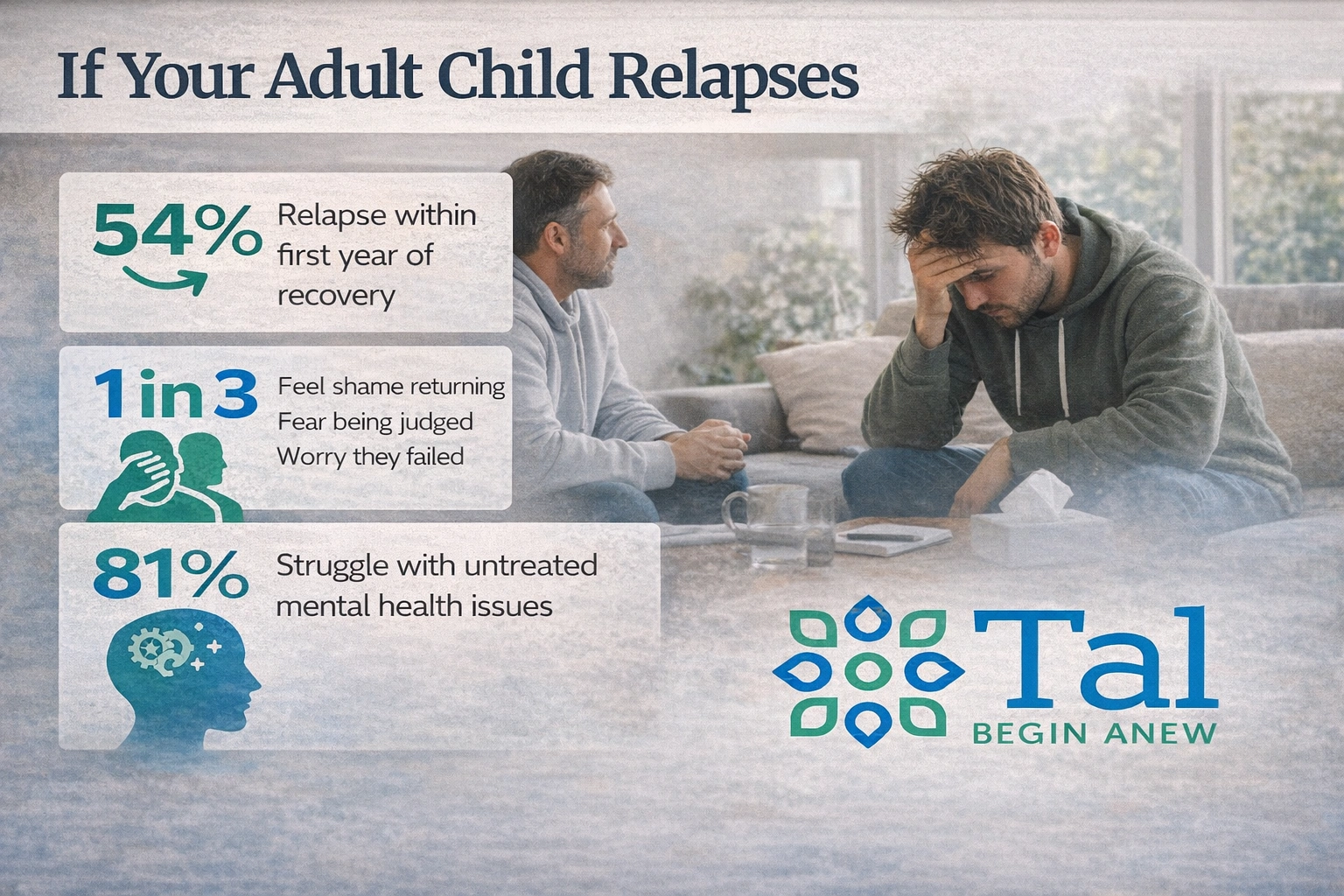
It’s easy to assume that any return to use means everything has failed. But that’s not how recovery usually works.
Relapse is often a signal — not of defeat, but of unfinished work. It can mean:
- Their support system wasn’t strong enough
- They were trying to “white knuckle” sobriety without daily help
- Their mental health symptoms weren’t being managed
- Or they weren’t emotionally ready to carry all the weight of life post-treatment
That doesn’t mean they’re back at square one. It means something needs adjusting — not erasing.
This is where structured daytime care can step in to meet them without overwhelming them.
What Structured Daytime Care Actually Offers
Parents often misunderstand outpatient treatment. They hear “daytime” or “not live-in” and assume it’s optional, lightweight, or not meant for serious struggles.
In reality, programs like ours provide a deeply structured environment with real clinical oversight. Here’s what that can include:
- Daily group therapy to rebuild connection and resilience
- Individual therapy sessions to address relapse factors
- Psychiatric evaluation and medication support if needed
- Urine screens and accountability measures
- Case management for school, work, or legal involvement
- Family support sessions so you’re not left out of the process
This isn’t just “talk therapy.” It’s focused, consistent care that meets people where they are — not just when they hit rock bottom.
For families looking for accessible, real-world support near home, we offer care in Cleveland and help in Shaker Heights that bridges the gap between inpatient and doing it all alone.
They Don’t Have to Be 100% Willing — Just Willing Enough
A common concern I hear is: “They said they’d go, but they’re not exactly excited about it. Is that a red flag?”
Not necessarily.
After relapse, a person might feel ashamed, defensive, or shut down. But if they’re showing up — even with hesitation — that’s workable.
In structured daytime care, we work with the parts of them that want to try again, even if they’re quiet or conflicted. Our job isn’t to wait for perfect readiness. It’s to make room for real, messy, imperfect return.
Why Jumping Back Into Residential Might Not Be the First Step
Sometimes, residential care is needed — if your child is in active crisis, danger, or completely disengaged.
But many parents feel pressured into choosing it simply because it sounds “stronger.”
What they don’t realize is that a less intensive program might be a better clinical fit — especially if:
- The person still has some structure in life (school, job, home)
- They’re not a danger to themselves or others
- They want support but fear losing freedom
- You want to avoid triggering their shame or resistance with drastic measures
We’ve seen many young adults respond better to treatment when they’re not uprooted entirely.
They can stay connected to family, maintain some sense of independence, and still receive daily, expert-level care.
This Isn’t About “Backing Off”—It’s About Building Back
Your child’s relapse may feel like a setback. And it is. But it’s also a chance to rebuild — with new scaffolding, better insight, and a deeper understanding of what’s really needed.
Structured daytime care is not the “easy way out.”
It’s hard work. It’s daily commitment. It’s showing up to face what hurt enough to trigger the relapse in the first place.
And for many families, it’s the level of care that actually helps things stick long-term.
How Do You Know If It’s “Enough”?
This is the question parents ask most.
And the truth is, you might not know until you try.
But here’s what we look for as green lights:
- They’ve admitted the relapse (fully or partially)
- They’re willing to show up for an intake
- They’re not currently in immediate medical danger
- They have some motivation to change, even if it’s faint
- You, as a parent, are ready to support — not rescue
If those pieces are in place, structured daytime care may be more than enough. And if it’s not, we’ll help you know that too.
Your Role Shifts — But It’s Still Important
One of the hardest parts of relapse is feeling like you’re back in charge of saving them.
But this isn’t about saving anymore.
Your role now is to guide, hold boundaries, and offer the kind of calm, structured presence they can borrow strength from.
Let the treatment team handle the clinical load.
You’re not alone. And you shouldn’t have to carry this by yourself again.
Frequently Asked Questions
Is this level of care enough after a relapse?
In many cases, yes. If your adult child is not in acute crisis, structured daytime care can provide the clinical support, routine, and accountability needed to get back on track.
What if they relapse again during treatment?
Relapse during care isn’t a failure — it’s information. The treatment team will adjust the plan, provide closer support, and assess whether a higher level of care is needed.
Do they have to quit work or school?
Not always. Some programs offer flexible scheduling or evening options. That said, in the early days of recovery, pulling back from stressors like work or school can be helpful.
How long do these programs last?
It varies, but many structured programs run for 3 to 6 weeks at a time, with the option to step down to less frequent sessions once stability improves.
Will I be involved?
Yes. At Tal, we encourage appropriate family involvement through updates, optional family sessions, and boundary coaching — so you feel informed, but not overburdened.
Hope Isn’t Foolish. It’s the First Step Back.
If your child relapsed, that doesn’t mean you’re back at zero.
It means there’s still work to do. And with the right level of support, that work doesn’t have to feel like starting over. It can feel like reentering—stronger, clearer, wiser.
You don’t have to send them away to help them heal.
You just have to give them the structure, care, and clinical consistency that meets them where they are now.
Call 216-480-4860 to learn more about Partial Hospitalization Program in Cleveland, Ohio. Your child’s relapse isn’t the end—and you don’t have to face it alone.