
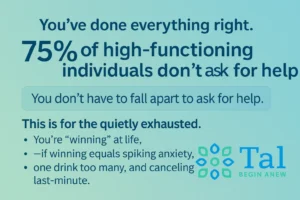
You’ve done everything right.
Your inbox is managed. Your bills are paid. You’re parenting, partnering, producing. From the outside, it looks like you’re winning at life.
But inside, it’s not fine. Not even close.
You wake up tired. You hold your breath through the workday. You pour one drink to quiet the noise, then another to feel anything at all. You cancel plans. You over-commit. You crash. You repeat.
And because you haven’t lost your job, your marriage, or your status—because you’re still “functioning”—you talk yourself out of getting help.
That’s where many people stop.
But some—those ready to be honest, even if it’s quietly—end up in a place like an intensive outpatient program. And for them, it’s often the first place where healing starts to feel possible.
You Don’t Have to Fall Apart to Ask for Help
The biggest myth about treatment is that you have to hit bottom to deserve it.
That’s not true.
You don’t need to be unemployed or publicly unraveling to need support. High-functioning doesn’t mean healthy. And exhaustion isn’t a personality trait—it’s a warning sign.
At Tal Behavioral Health, we meet so many clients who say, “My life looks fine, but I’m not okay.” And that’s enough. That’s a valid reason to reach out. That’s a reason to walk through our doors.
IOP is built for this exact situation—for people whose lives are still technically working, but whose hearts and minds are quietly breaking.
IOP Is Built for Real Life
An intensive outpatient program isn’t a pause button—it’s a bridge.
You don’t have to go away for 30 days or explain a mysterious absence. You can stay home. Keep working. Keep parenting. And still carve out space to do deep, focused mental health work.
That flexibility is what makes IOP so powerful—especially for high-functioning individuals who fear falling behind more than falling apart.
Sessions are structured but accessible. You’ll meet several times a week for group therapy, one-on-one counseling, and skills-focused sessions—designed around real life, not removed from it.
There’s No Shame in Quiet Pain
By the time many high-functioning adults walk into an IOP, they’ve been in silent crisis for months—sometimes years.
They’ve managed panic attacks in boardrooms. They’ve cried in parking lots between errands. They’ve mastered the art of “I’m fine.”
Whether you’re navigating daily burnout in Stark or hiding private anxiety in Medina, that performance gets exhausting.
In group, you’ll meet people just like you. People who are still showing up, still succeeding—and still silently hurting.
It’s the moment you realize: you’re not weak for feeling this way. You’re human. And you’re no longer alone.
You Don’t Need to Explain Why You’re Struggling
One of the most liberating parts of IOP is that you don’t have to prove you belong.
You don’t need a specific diagnosis. You don’t need a dramatic story. You don’t need to explain why someone with “so much going for them” can’t seem to feel okay.
You just show up.
And for many people, that’s the first time they’ve been allowed to exist without performing wellness. It’s the first time they’ve been supported without needing to justify their pain.
In IOP, what you’re carrying finally has a place to land.
Smart Isn’t the Same as Safe
If you’re high-functioning, chances are you’re also self-aware.
You know your stress patterns. You’ve read the books. You’ve listened to the podcasts. You can name your attachment style and describe your anxiety in clean, clinical language.
But insight isn’t healing.
Knowing what’s wrong is not the same as being okay. Understanding your triggers doesn’t stop them from activating. High emotional intelligence won’t magically untangle trauma.
IOP is where you stop performing clarity and start practicing change. It’s the place where your intellect and your emotional reality finally meet.
The Mask Gets Heavy. IOP Lets You Take It Off.
In your world, you might be the capable one. The reliable one. The one who holds it all together.
That’s a lonely place to live.
Inside an IOP group, you get to drop the mask. You get to say, “I’m not okay,” and not be met with surprise or solutions—just nods of recognition.
You get to talk about what really keeps you up at night. What you’re afraid to admit, even to yourself. And you’ll find that others have been carrying the same weight.
You’ll realize the strength it took to keep going—and the strength it takes to stop.
You Can Heal Without Burning Everything Down
Let’s be honest: a lot of high-functioning adults avoid treatment because they fear what it might cost.
They picture quitting their job. Moving away. Changing everything.
But healing doesn’t require destruction. It requires space.
IOP gives you that space. A few hours a week, carved out intentionally. It becomes the pocket in your life where you aren’t performing. Where you aren’t fixing others. Where you don’t have to impress anyone.
It’s just you, finally being taken care of.
And over time, that care starts to ripple into everything else.
FAQs: Intensive Outpatient Programs for High-Functioning Adults
What is an intensive outpatient program?
An IOP is a structured treatment program that includes group therapy, individual sessions, and skills training—without requiring you to stay overnight or leave your daily responsibilities.
It’s designed for people who need more than occasional therapy, but don’t need 24/7 care.
Can I still work or take care of my family while in IOP?
Yes. Most clients in IOP continue working, parenting, or fulfilling their usual obligations. Programs are scheduled to fit around life—not replace it.
At Tal’s Beachwood-based IOP, we support real-world healing for people living full, complicated lives.
I’m not falling apart—am I “sick enough” for IOP?
If you’re struggling—emotionally, mentally, or even just feeling consistently numb—you’re “enough.” There’s no threshold you have to meet to qualify for support.
Pain is pain. You don’t have to earn care.
What if I’m afraid to open up in a group?
That’s normal. Many clients start IOP with hesitation. But over time, the group becomes a safe, relatable space. You’ll never be pressured to share before you’re ready—and many people find unexpected comfort in realizing they’re not alone.
How do I know if it’s time to call?
If you’ve been feeling emotionally off, mentally foggy, or spiritually flat for a while—and nothing you’ve tried is working—it might be time.
You don’t have to wait for a breaking point. You can start now.
You’ve held it together long enough. Let someone else help hold you.
Call (216) 480-4860 to learn more about our intensive outpatient program services in Beachwood, Ohio. There’s still room for you to heal—quietly, steadily, and with real support.