
I knew how to wear the mask. A strong one. Polished. Productive. Presentable. I was the person people called when they were falling apart.
No one saw me unraveling quietly in the background—just functional enough to dismiss it, just exhausted enough to feel like I was disappearing.
Then I found an Intensive Outpatient Program in Beachwood. It didn’t save me. That’s not how this works. But it did give me space to stop performing. To say the thing I couldn’t say to anyone else:
“I’m not okay. And I haven’t been for a long time.”
I Was “Fine”—But Barely
You wouldn’t have picked me out of a crowd. I wasn’t missing work. I wasn’t sleeping on couches. I didn’t get DUI’d or hospitalized.
I was showing up, smiling, achieving.
I was also drinking alone at night and pretending it was just “a little stress relief.” I was dissociating through entire conversations, nodding while my mind screamed. I was so good at high-functioning distress that I even fooled myself.
The scariest part wasn’t how bad I felt. It was how normal it had become.
I Didn’t Want to Burn My Life Down—I Just Needed Help Carrying It
I didn’t want rehab. I wasn’t ready to label myself. I didn’t want to blow up my job or family life.
I wanted someone to say:
“You’re not crazy. You’re just carrying too much—and you don’t have to do it alone.”
That’s what the Intensive Outpatient Program at Tal gave me. A middle ground. A way to get help without stepping out of my whole life.
I could keep showing up where I needed to—but now I had somewhere to fall apart on purpose, instead of by accident.
The Lie I Was Telling Myself (and Everyone Else)
I told myself: “I’m just tired. Everyone’s stressed. I can handle it.”
But deep down, I knew. I knew the wine wasn’t just a reward—it was a need. I knew the Sunday scaries were turning into Monday breakdowns. I knew I was dodging real conversations, even with people I loved.
The worst lie was the one I told myself in the mirror every morning: “You’re good. Keep going.”
Sometimes high-functioning isn’t strength—it’s avoidance in a tailored outfit.
What IOP Gave Me That My Friends Couldn’t
My friends meant well. They saw me as capable, funny, stable. When I started cracking, they said, “You’ve got this.”
But they didn’t see the full picture. They saw the part I curated.
In IOP, I stopped curating.
I sat in rooms with people who didn’t need me to have it together. I learned that I wasn’t the only one who had learned to smile through spirals. I wasn’t the only one who used “busy” to hide.
And for the first time in years, I said things out loud that I had only whispered inside my own head.
IOP didn’t fix me. It heard me. And that made all the difference.
I Wasn’t Broken—I Was Burned Out From Pretending
There’s a point where pretending becomes more exhausting than the truth.
That’s where I was.
I wasn’t a lost cause. I didn’t need a life overhaul. I needed a place to breathe. A place to be honest. A place to stop performing wellness and start actually living it.
IOP was that place.
Not because it handed me all the answers—but because it taught me how to ask the right questions.
Why am I numbing instead of feeling?
Who do I think I have to be to deserve rest?
What would it feel like to let people in—before I collapse?
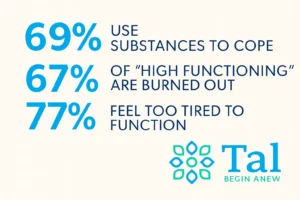
You Don’t Have to Fall Apart First
If you’re still holding it together on the outside but feel like you’re slipping inside, let me say this clearly:
You don’t have to wait until it gets worse.
You don’t need to hit bottom. You don’t need to lose everything. You don’t need to prove your pain.
If you’re already hurting, that’s reason enough.
I waited longer than I should have because I didn’t “look sick.” But burnout is real. Disconnection is real. Self-erasure is real. And those wounds deserve attention just as much as the visible ones.
What Life Looks Like Now (Spoiler: Still Messy, But Real)
I still have hard days. I still overthink. I still sometimes want to reach for old coping habits.
But I also now know what it feels like to tell the truth in a room that can hold it.
I’ve learned that functioning isn’t the same as living. That high-achieving isn’t the same as peace. That rest is not a reward—it’s a right.
And most importantly? I know now that I’m allowed to say, “I need help.”
That sentence used to terrify me. Now, it feels like freedom.
FAQs for the “Put-Together” Struggler
Can I go to IOP if I’m still working?
Yes. The whole point of an Intensive Outpatient Program is that it fits around your life. You attend therapy several times per week—but you go home after. No need to pause work or family life.
What if I don’t think I’m “bad enough” for treatment?
If you’re wondering whether things are “bad enough,” they probably feel bad enough to you. That’s valid. You don’t need a crisis to qualify for care.
Do I have to call myself an addict to attend IOP?
No. You don’t need a label. You just need to be open to change and ready to talk about what’s not working. Whether it’s substances, stress, or burnout—we’ll meet you where you are.
What happens in IOP?
At Tal, IOP includes group therapy, individual counseling, and educational sessions. You’ll explore coping tools, patterns, emotions, and relationships in a supportive space.
Will I be judged if I seem “too put-together”?
Not at all. We work with professionals, parents, students—people who function well and struggle silently. We see past appearances. And we honor what’s real.
Ready to Stop Pretending?
Call (216) 480-4860 to learn more about our Intensive Outpatient Program services in Beachwood, Ohio. You don’t need to fall apart to start healing. You just need a safe place to tell the truth. We’re here when you’re ready.